
Takatsuki Arts Theatre design by Nikken Sekkei LTD
Project: Takatsuki Arts Theatre
Location: Takatsuki City, Osaka Prefecture, Japan
Client: Takatsuki City
Architects: Nikken Sekkei LTD
Gross Area: 17,261 m2 | 185,793 Sq. Ft.
Project Years: 2015 – 2023
Construction company: Obayashi Corporation
Acoustics design cooperation: Nagata Acoustics
Wood supplier: Osaka Prefecture Forest Owners Association
Exterior finish: OSHIROX Water Jet Peeling Method, OSHIROX Co., Ltd.
Research references or publications: Project description and press release provided by Nikken Sekkei LTD
Photographs: Akira Ito
Location: Takatsuki City, Osaka Prefecture, Japan
Client: Takatsuki City
Architects: Nikken Sekkei LTD
Gross Area: 17,261 m2 | 185,793 Sq. Ft.
Project Years: 2015 – 2023
Construction company: Obayashi Corporation
Acoustics design cooperation: Nagata Acoustics
Wood supplier: Osaka Prefecture Forest Owners Association
Exterior finish: OSHIROX Water Jet Peeling Method, OSHIROX Co., Ltd.
Research references or publications: Project description and press release provided by Nikken Sekkei LTD
Photographs: Akira Ito
Cultural Landscape and Urban Continuity
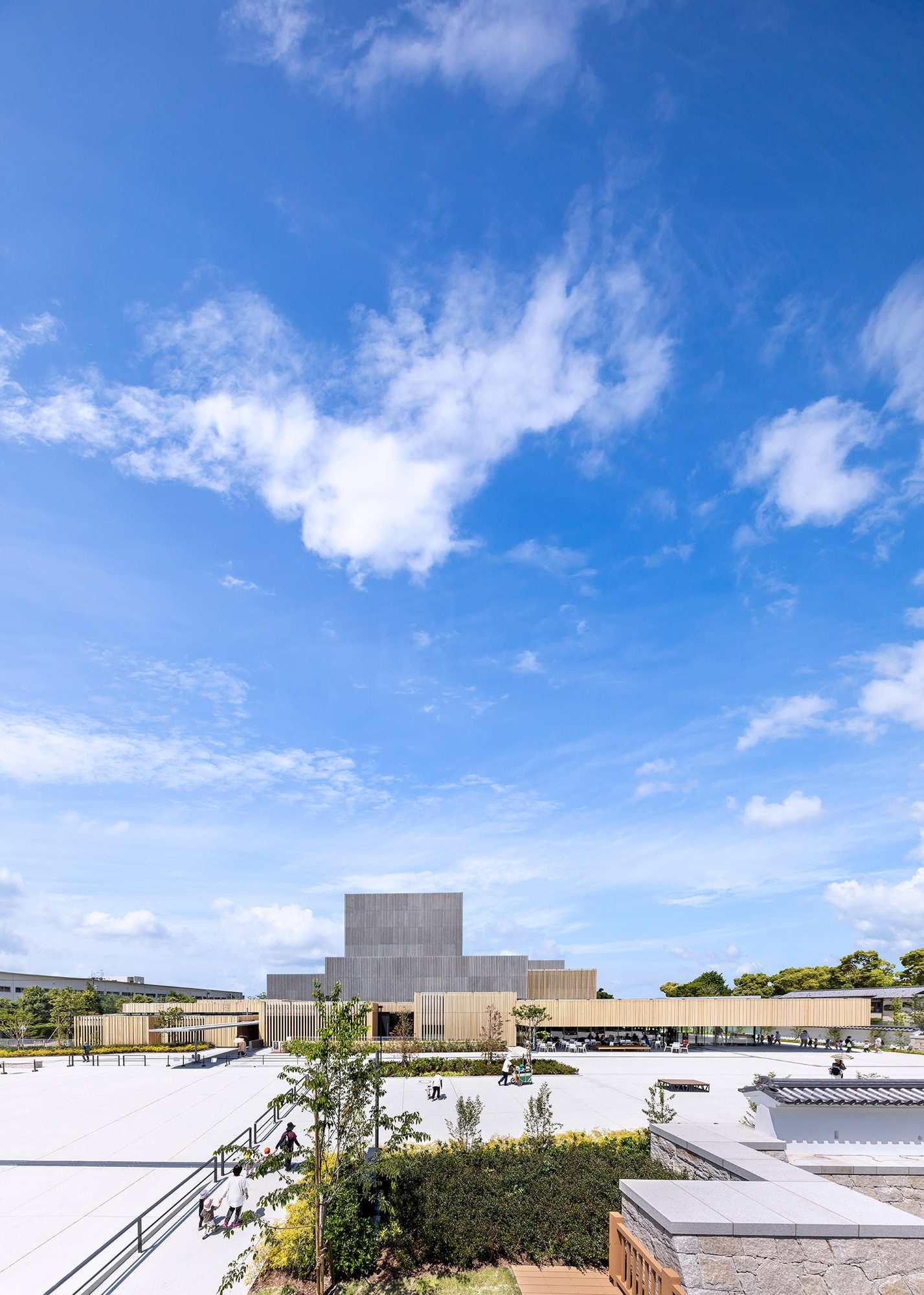
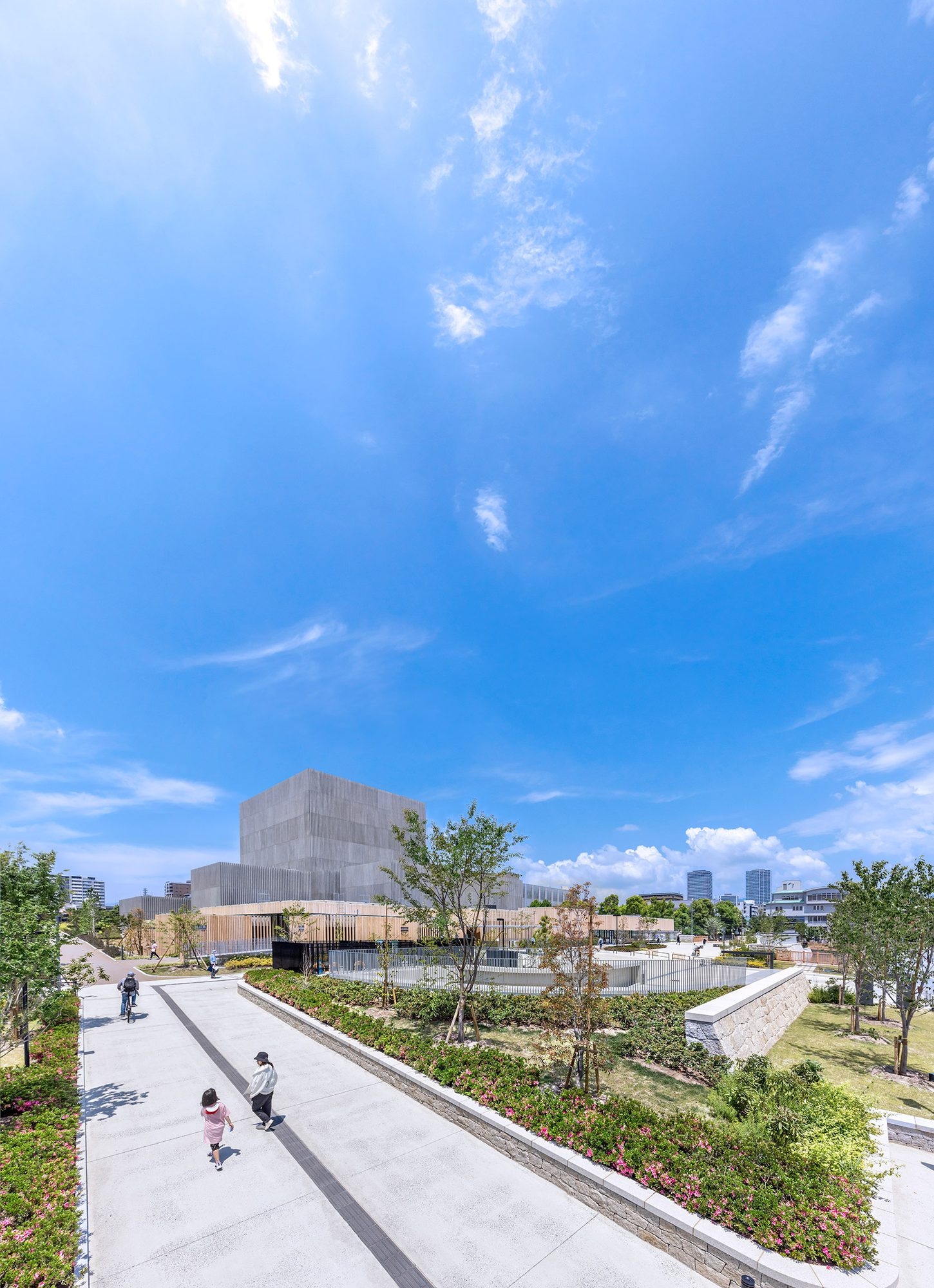
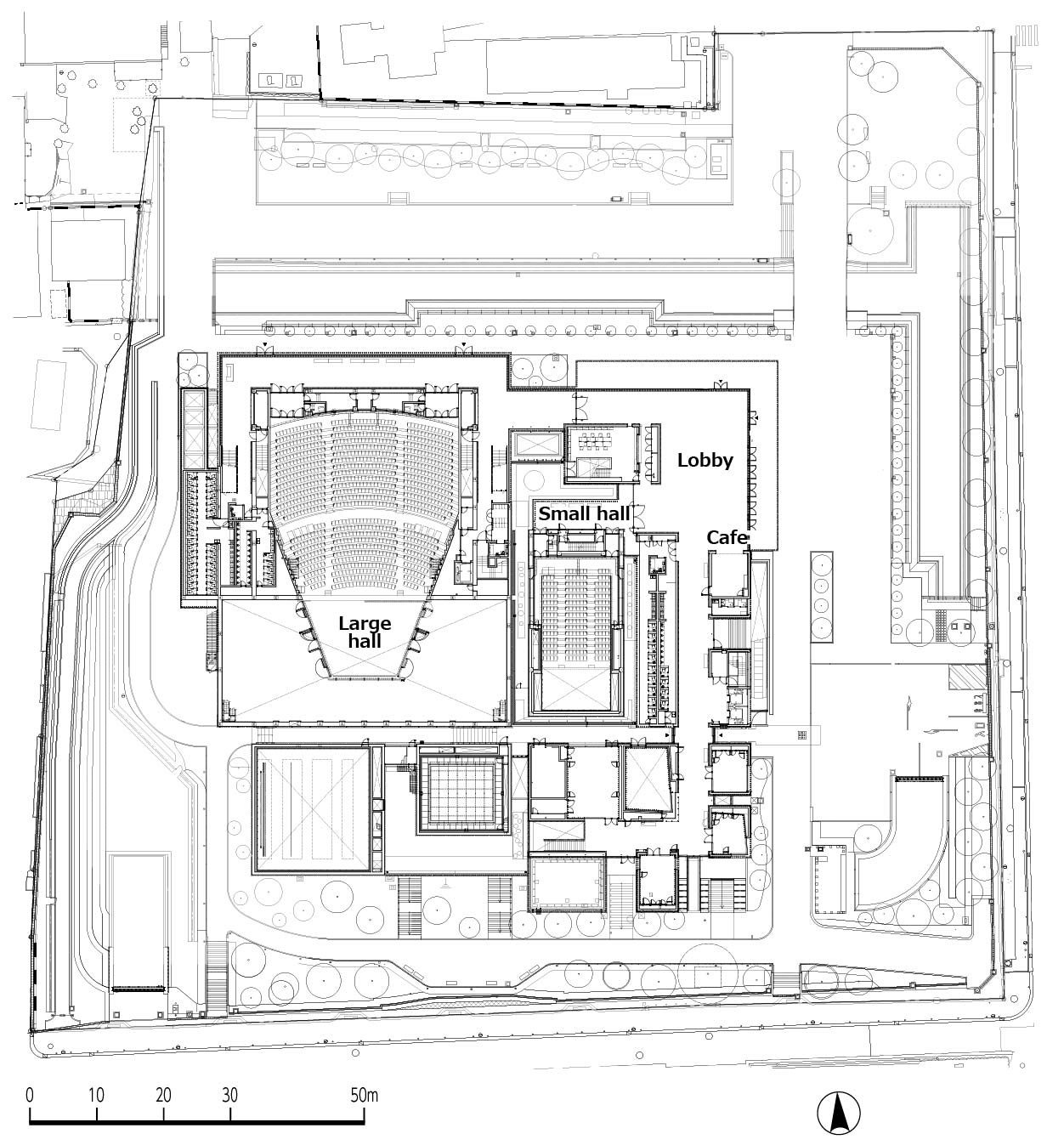
The theatre stands within a municipal park that occupies the historic site of Takatsuki Castle. This context informs both its footprint and architectural language. Rather than consolidating the program into a singular mass, the building distributes its volume across the site, allowing existing pathways and green zones to remain legible. The resulting composition reads as an inhabited landscape, one in which cultural infrastructure is embedded within daily patterns of movement.
The theatre stands within a municipal park that occupies the historic site of Takatsuki Castle. This context informs both its footprint and architectural language. Rather than consolidating the program into a singular mass, the building distributes its volume across the site, allowing existing pathways and green zones to remain legible. The resulting composition reads as an inhabited landscape, one in which cultural infrastructure is embedded within daily patterns of movement.
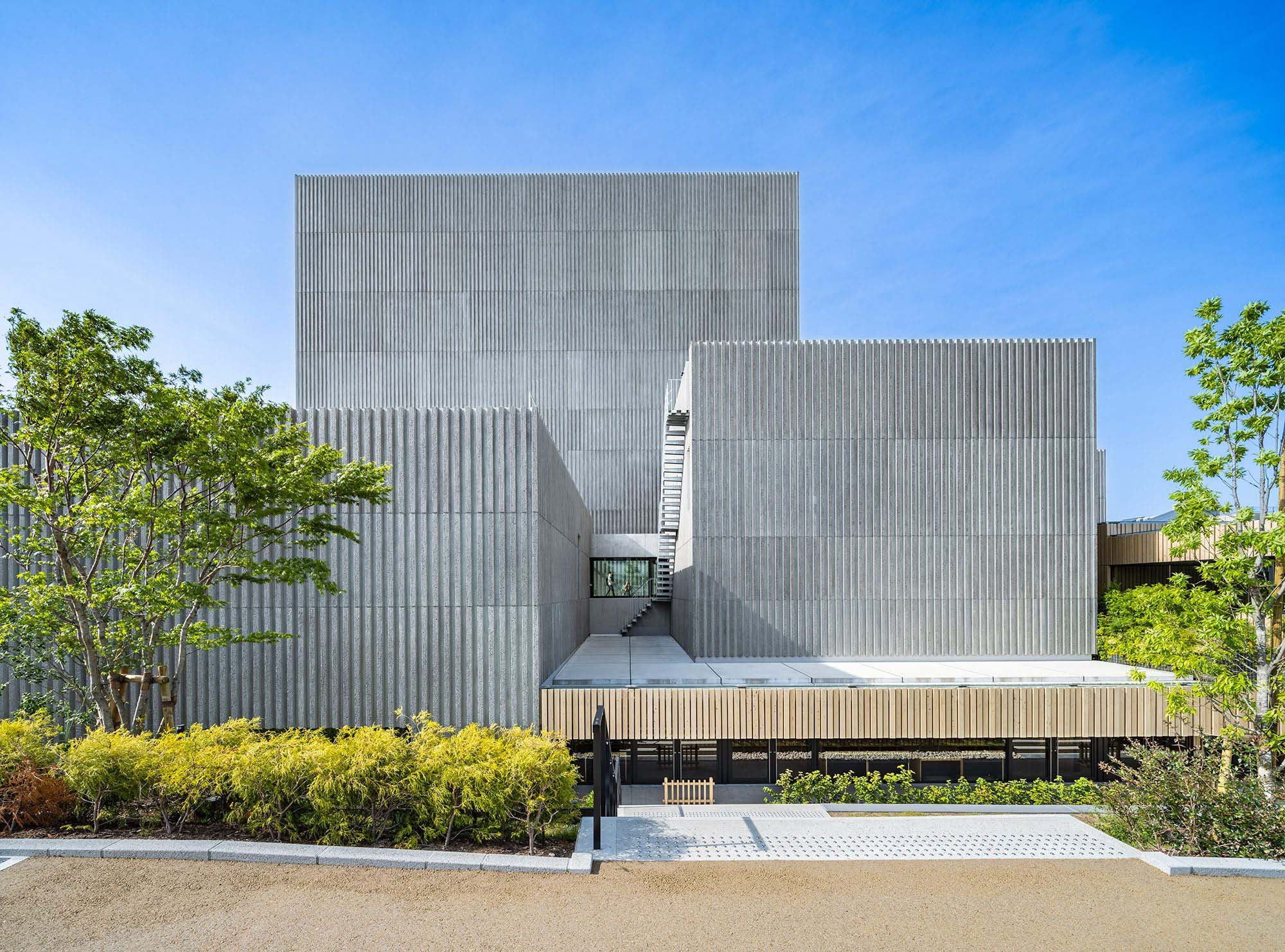
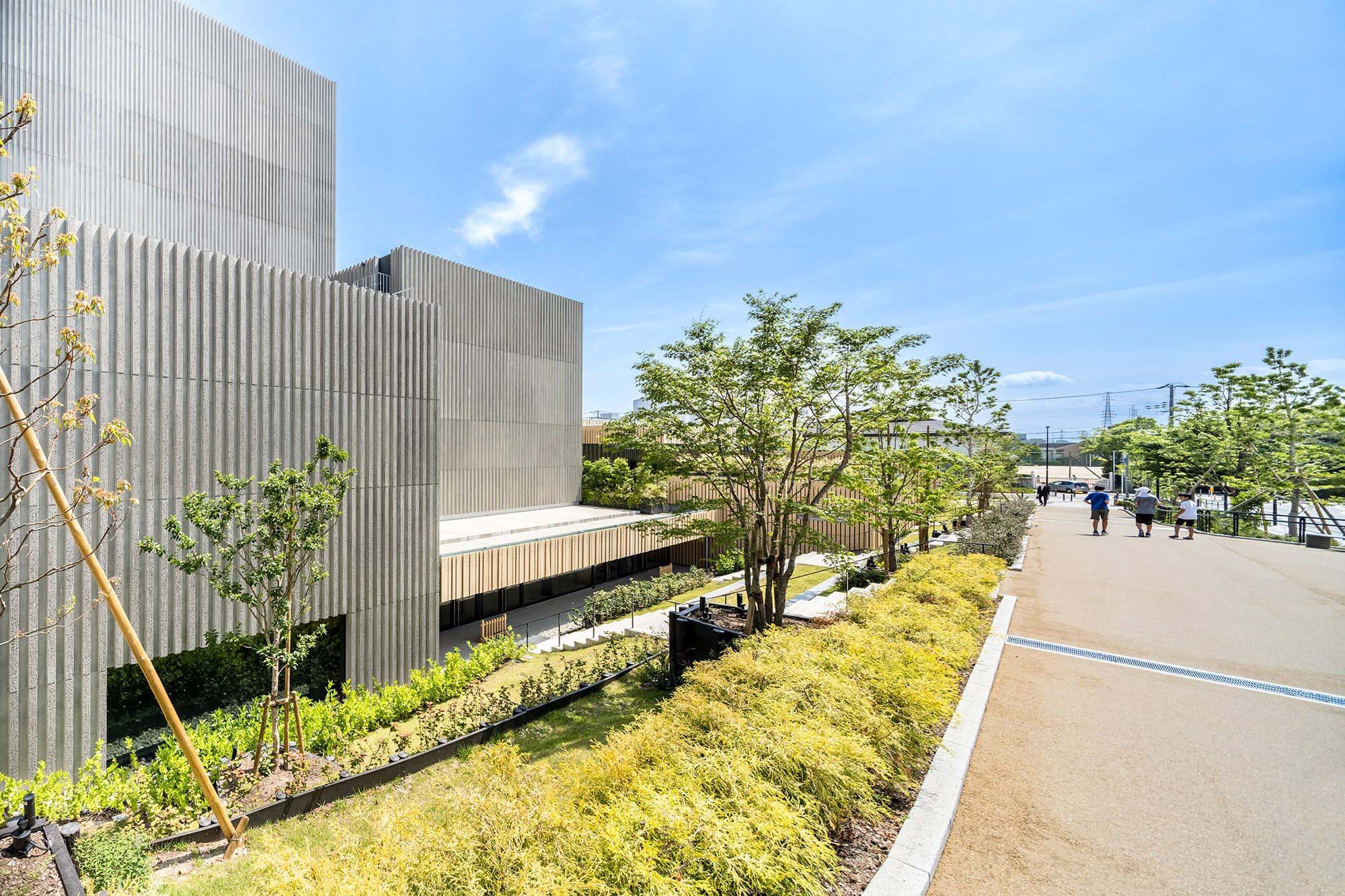
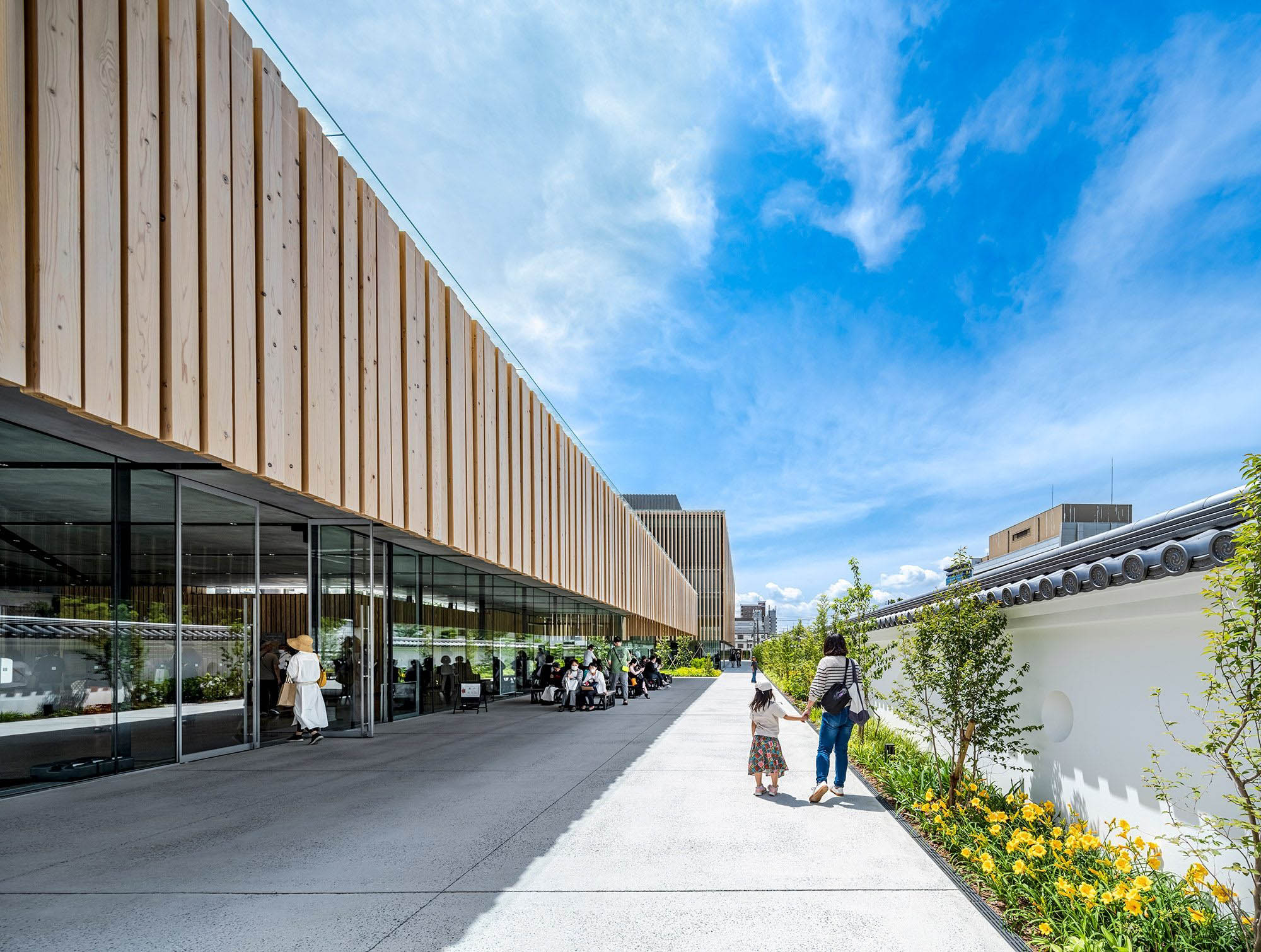
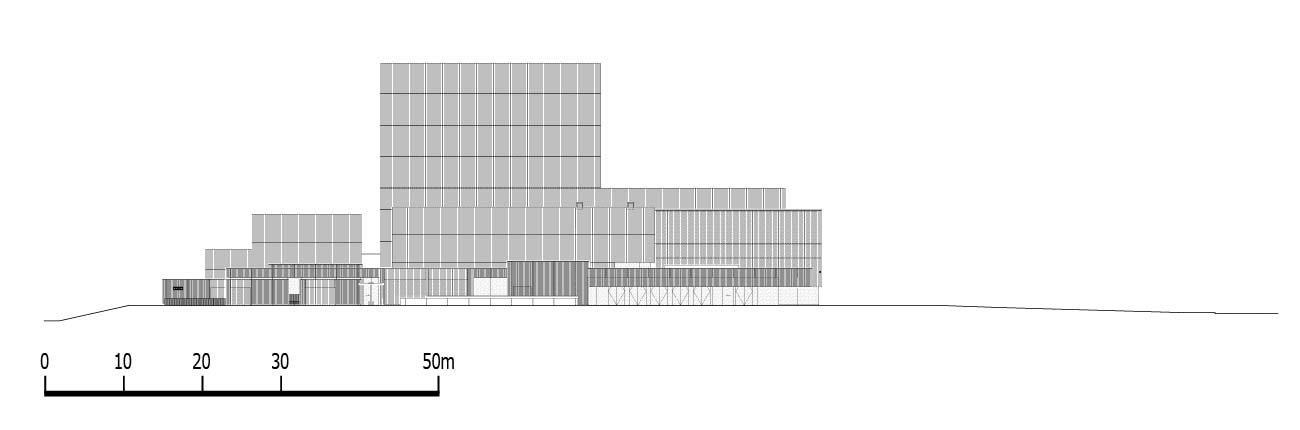
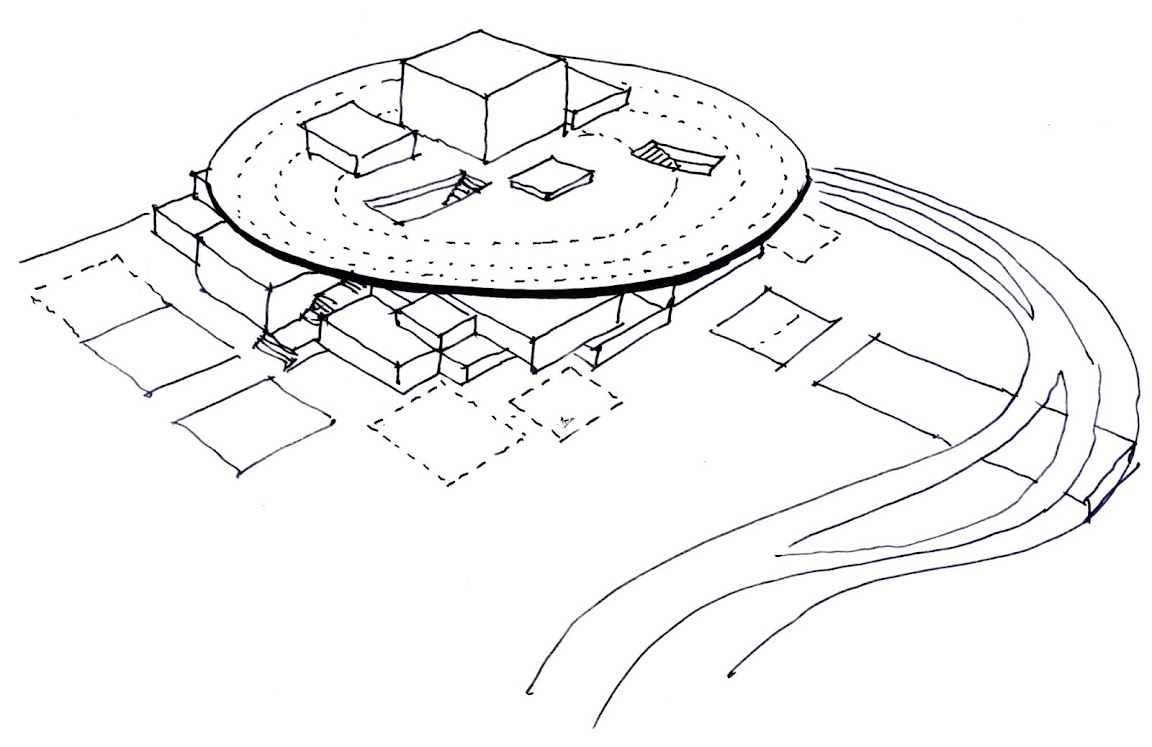
From a distance, stepped concrete volumes rise above a continuous cedar-clad base. The taller fly towers register against the skyline, while the horizontal timber screen at ground level aligns with the scale of pedestrians and trees. The stratification of mass negotiates the disparity between the technical demands of stage houses and the openness of the surrounding park. Landscaped edges and plazas blur the institutional threshold, positioning the theatre as civic infrastructure rather than an enclosed object.
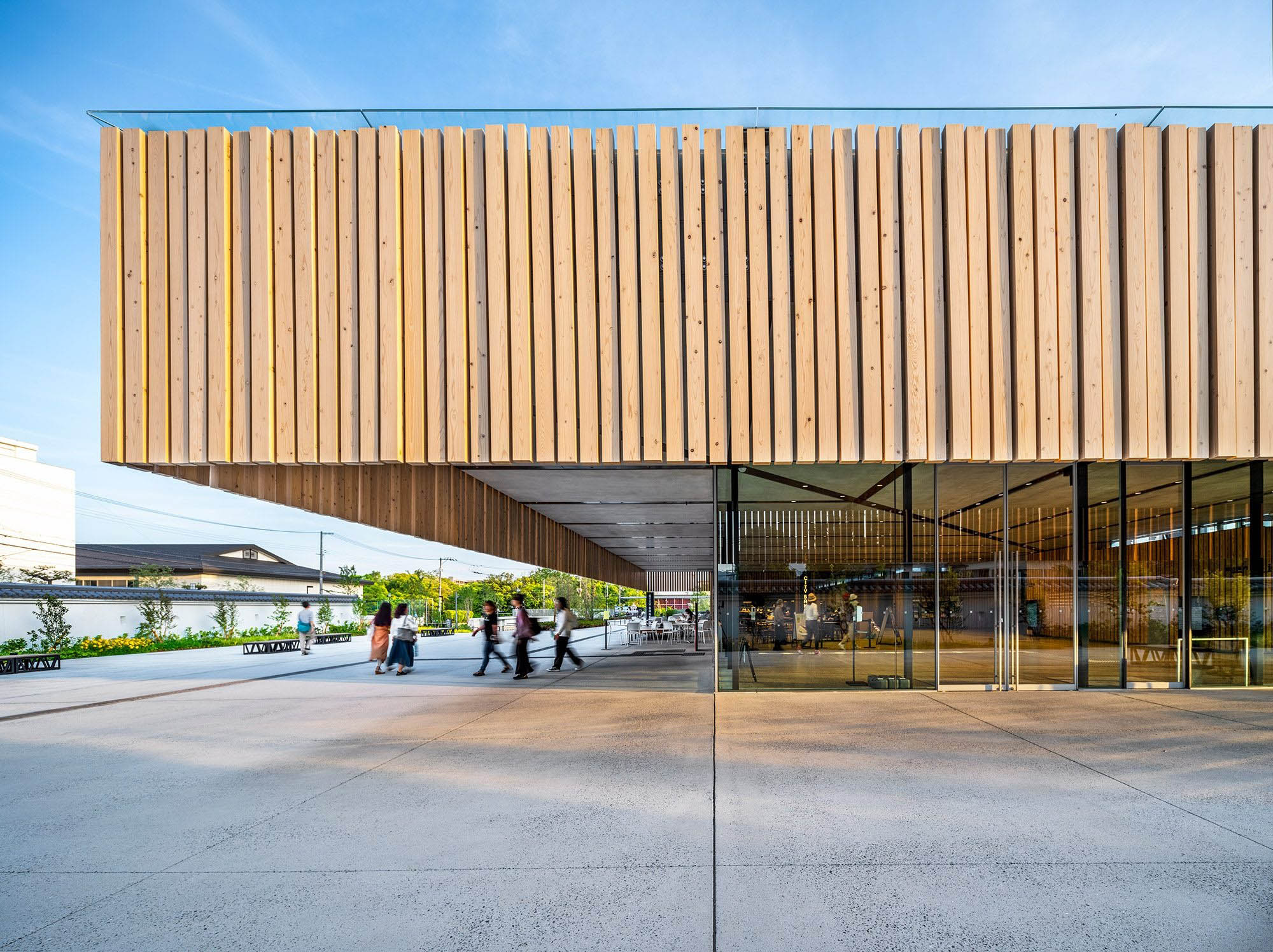
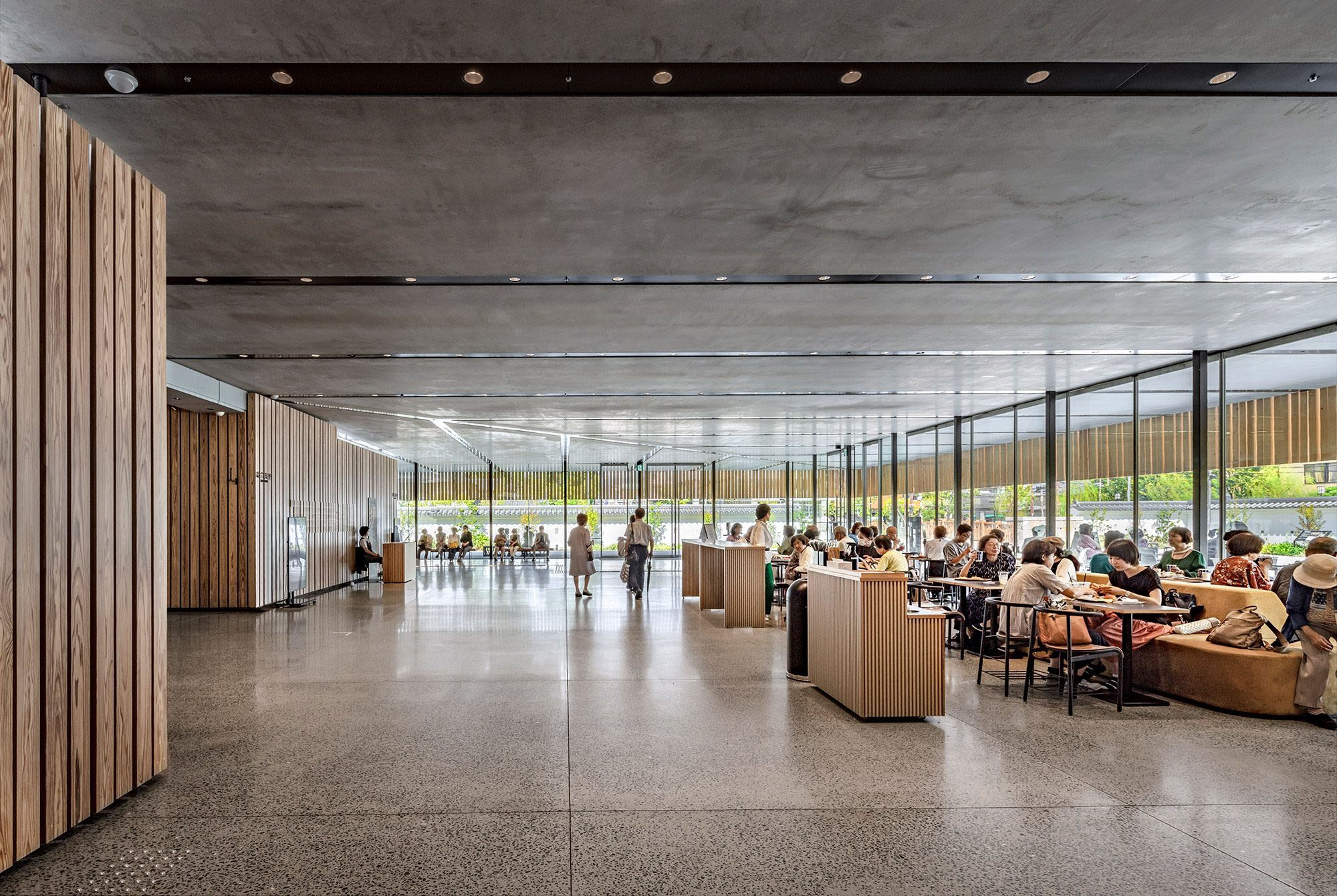
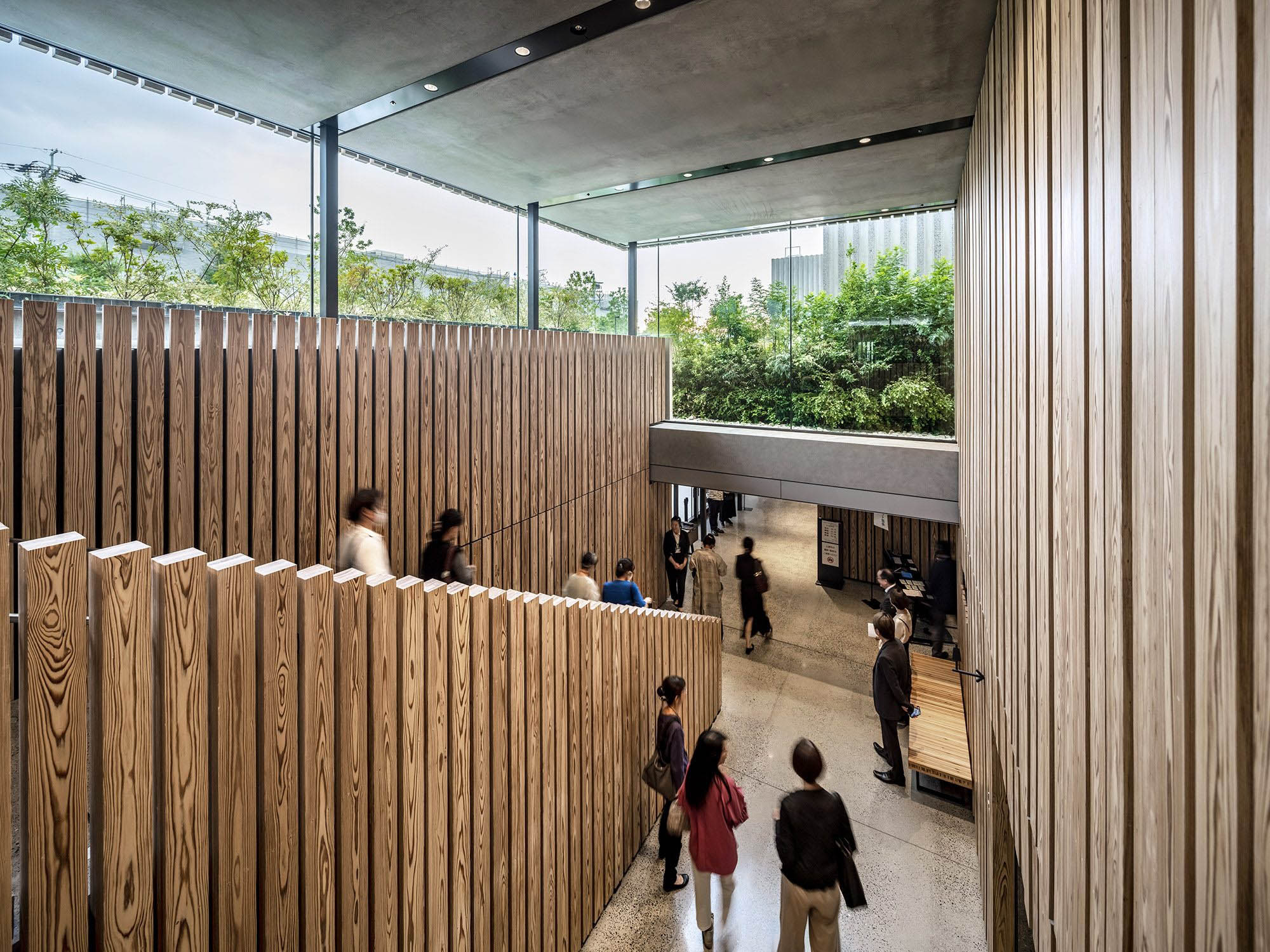
Transparency at the perimeter further reinforces this urban continuity. Full-height glazing behind cedar louvers reveals foyer and café activity, allowing passersby to read the building as an extension of the public realm. The boundary between park and theatre is therefore spatially and visually porous, encouraging informal occupation independent of scheduled performances.
The “Gap” as Spatial and Acoustic Strategy
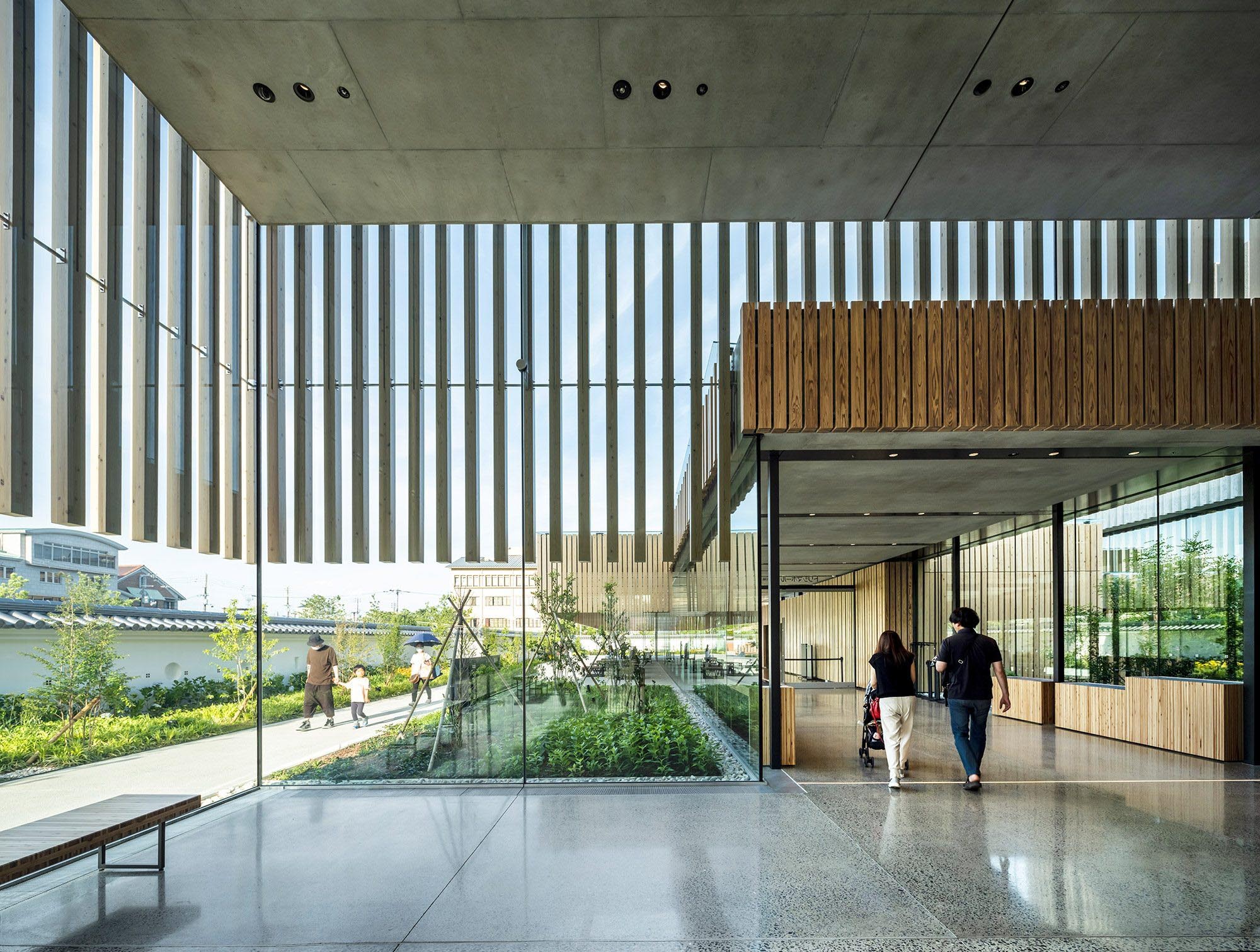
The project organizes its three halls and ten studios as discrete volumes separated by courtyards, voids, and circulation bands. These interstitial “gaps” are not residual spaces but the primary ordering device of the plan. They admit daylight deep into the building, create framed views of planted courts, and establish a sequence of interior streets that connect entrances, foyers, and rehearsal rooms.
The project organizes its three halls and ten studios as discrete volumes separated by courtyards, voids, and circulation bands. These interstitial “gaps” are not residual spaces but the primary ordering device of the plan. They admit daylight deep into the building, create framed views of planted courts, and establish a sequence of interior streets that connect entrances, foyers, and rehearsal rooms.
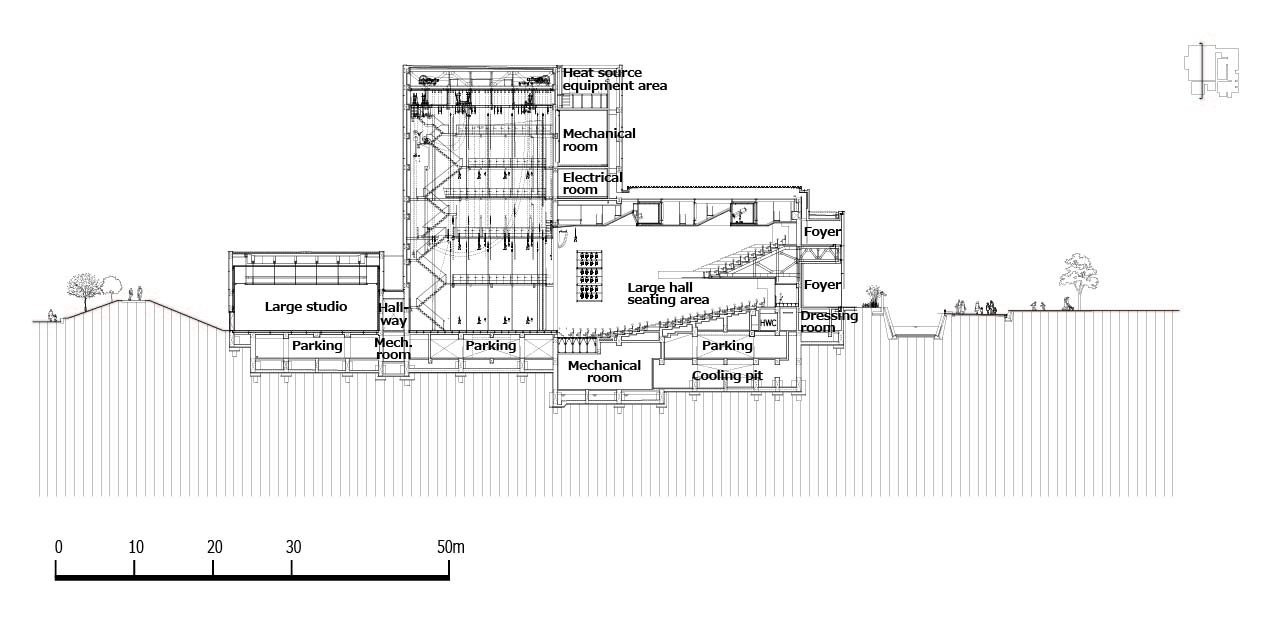
Acoustically, the separation is essential. Performance spaces with differing sound requirements avoid direct adjacency by inserting corridors, service zones, and gardens that serve as buffers. This layered strategy enables strict sound insulation while maintaining a sense of openness. In the section, glazed walkways and double-height foyers overlook planted courts, making the spatial discontinuities visible and experiential rather than concealed within technical assemblies.
The experience of moving through the building resembles a promenade through a series of exterior and interior rooms. Narrow gaps between ribbed concrete walls frame strips of sky, while broader courtyards introduce trees and gravel surfaces into the heart of the complex. Circulation areas are thus transformed into spatial episodes that connect performance, landscape, and everyday use.
Timber as Cultural and Material Framework
At ground level, vertical cedar louvers wrap the perimeter as a permeable belt. Their varying widths and rhythms filter sunlight, temper glare, and produce a shifting moiré effect as one walks along the façade. Mounted in front of a glazed curtain wall, the screen operates as an environmental mediator and civic invitation. From within, the louvers read as a grove-like filter, establishing visual continuity with surrounding trees.
At ground level, vertical cedar louvers wrap the perimeter as a permeable belt. Their varying widths and rhythms filter sunlight, temper glare, and produce a shifting moiré effect as one walks along the façade. Mounted in front of a glazed curtain wall, the screen operates as an environmental mediator and civic invitation. From within, the louvers read as a grove-like filter, establishing visual continuity with surrounding trees.
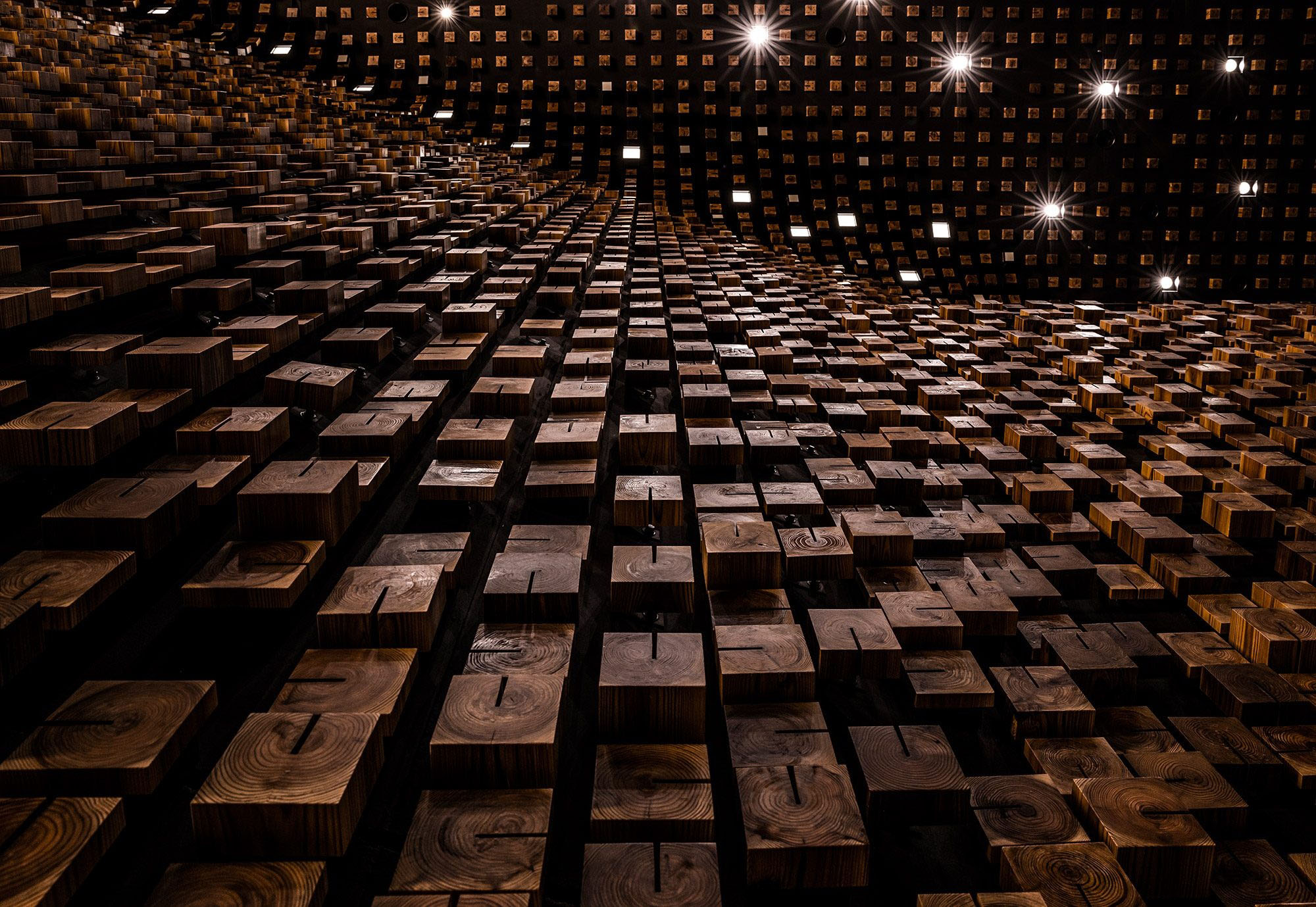
The material strategy extends to careful differentiation between species characteristics. Weather-resistant red heartwood is used externally, while sapwood suited for fire-retardant treatment is used internally. Offcuts and typically discarded core sections are repurposed, most notably in the large hall where small cubic elements form a textured acoustic surface. Material economy becomes an architectural generator rather than a concealed constraint.
Interior Typologies: Atmosphere, Acoustics, and Flexibility
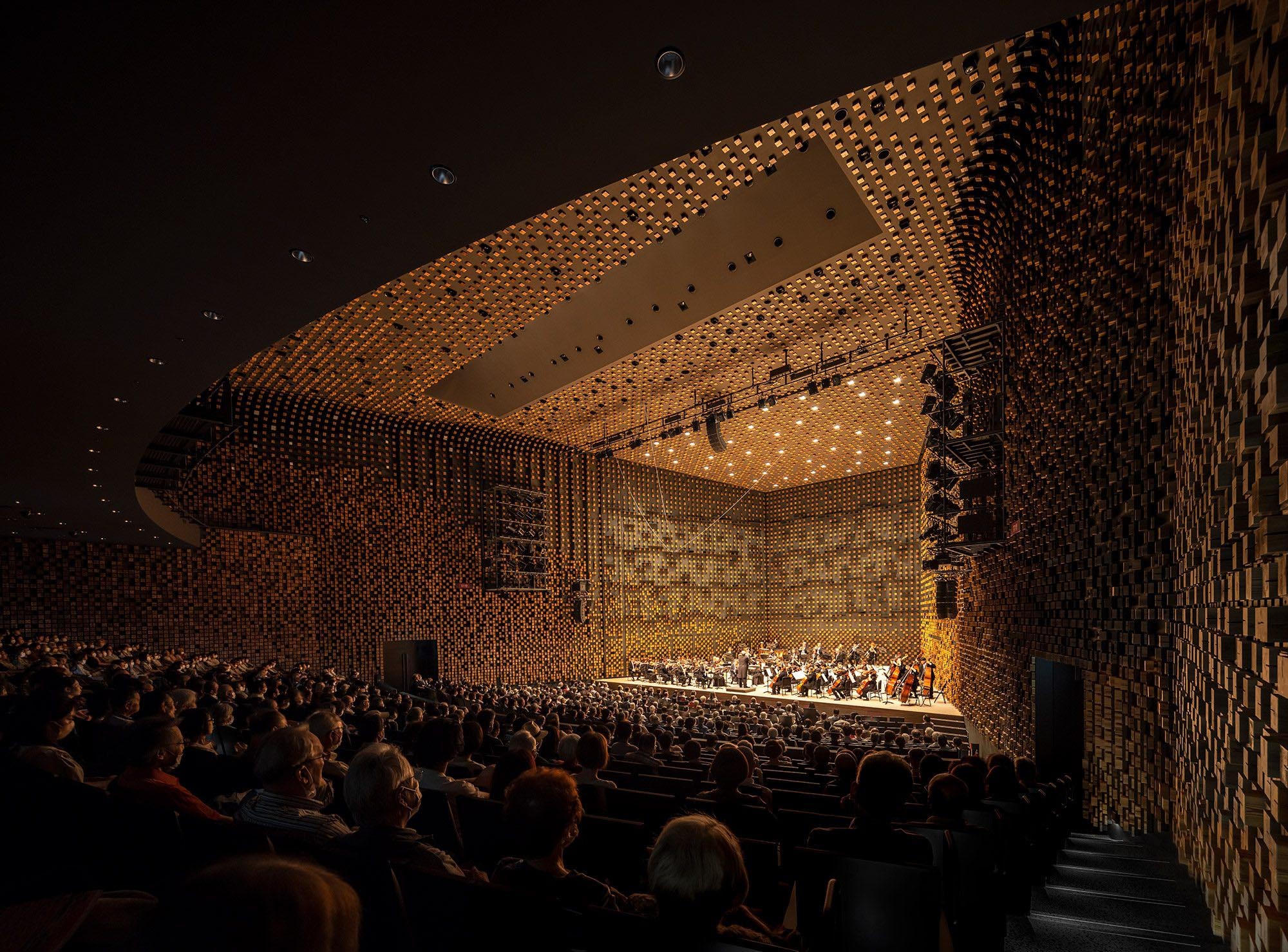
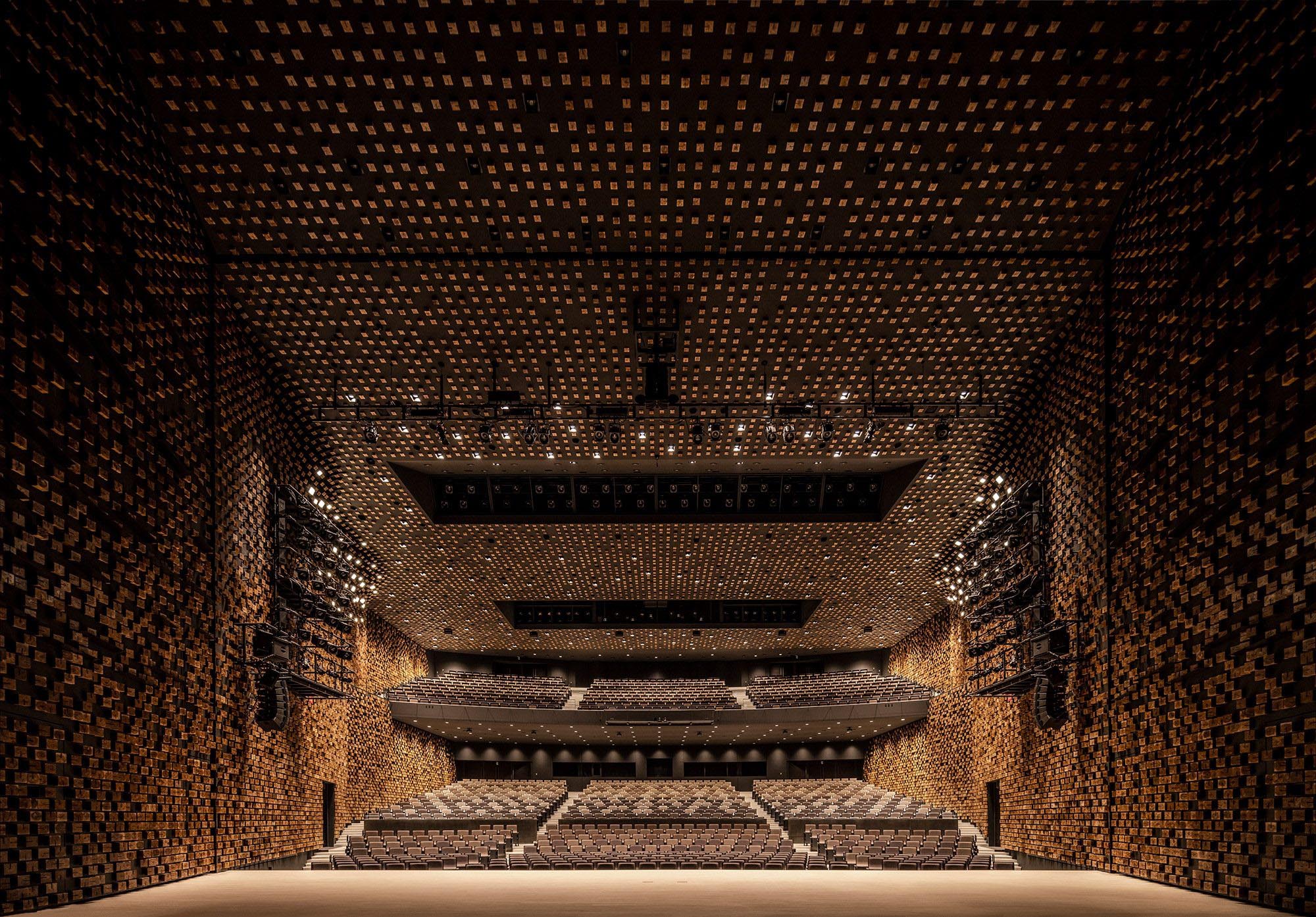
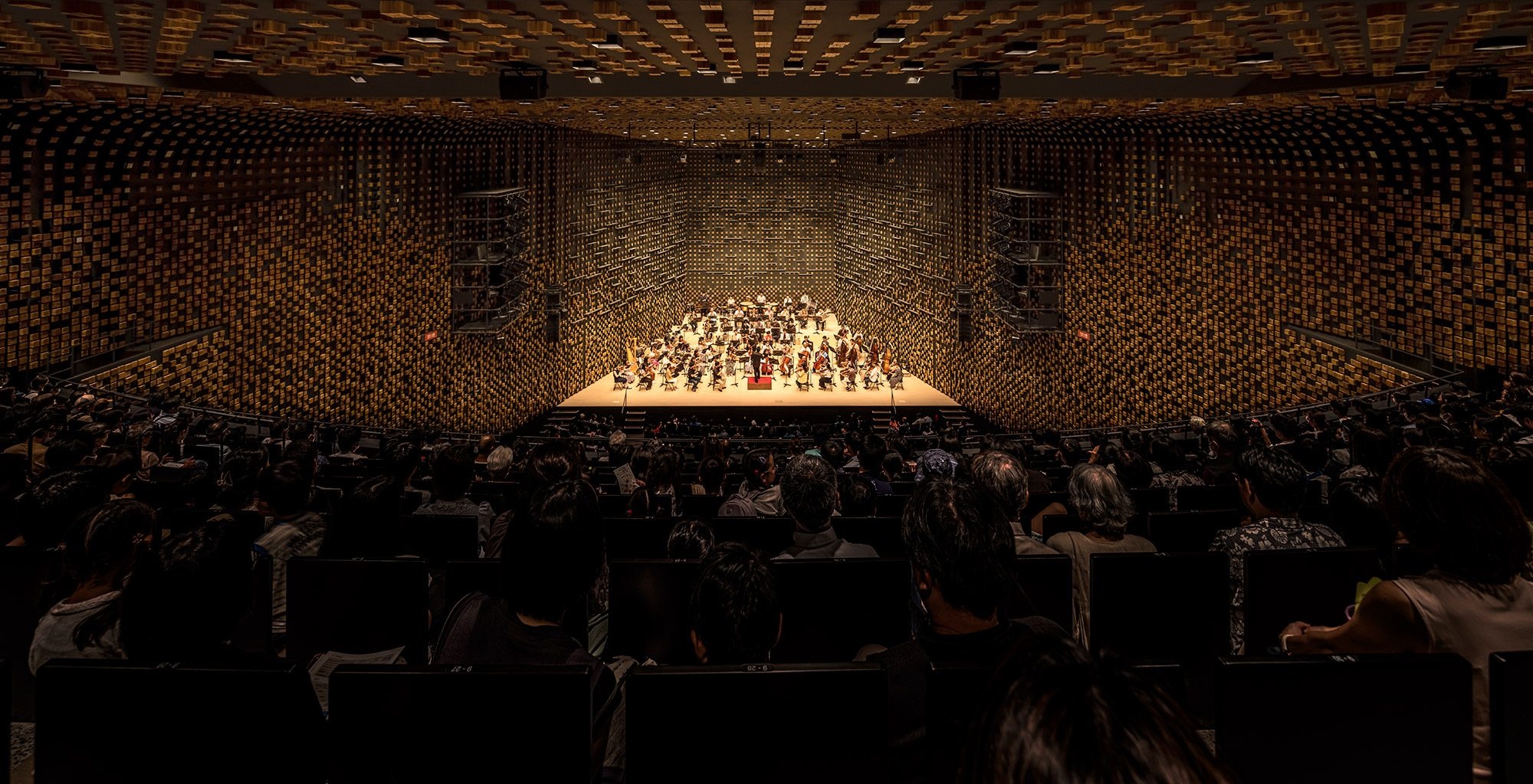
The large hall adopts a shoebox configuration scaled for orchestral performance. Its walls and ceilings are clad in thousands of cedar cubes, each projecting at varying depths to create a three-dimensional acoustic diffuser. The cumulative effect is immersive: surfaces dissolve into a granular field that modulates sound while producing a warm amber interior under stage lighting. Technical rigging and balcony fronts are integrated into this timber matrix, linking performance infrastructure to spatial expression.
The large hall adopts a shoebox configuration scaled for orchestral performance. Its walls and ceilings are clad in thousands of cedar cubes, each projecting at varying depths to create a three-dimensional acoustic diffuser. The cumulative effect is immersive: surfaces dissolve into a granular field that modulates sound while producing a warm amber interior under stage lighting. Technical rigging and balcony fronts are integrated into this timber matrix, linking performance infrastructure to spatial expression.
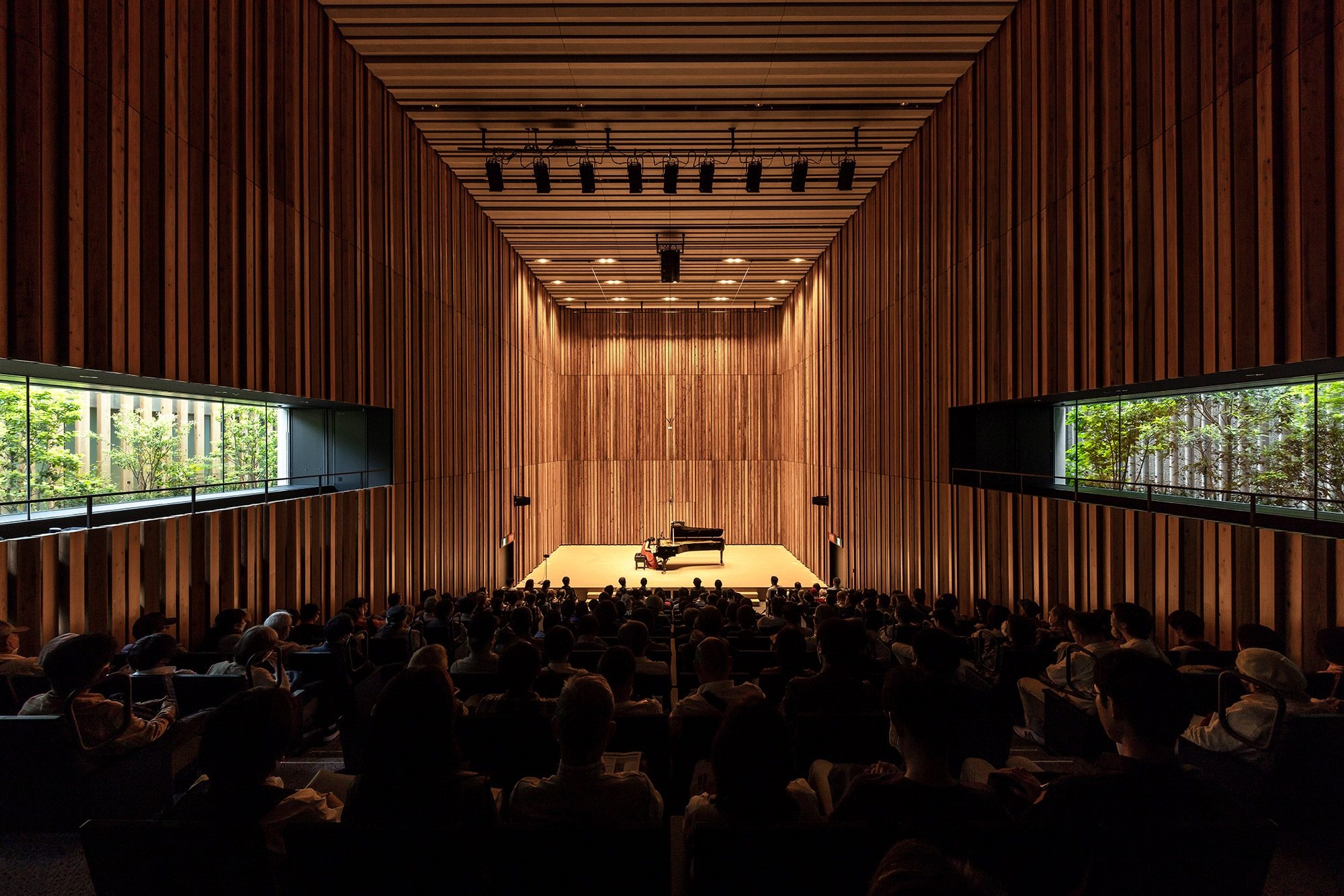
In contrast, the smaller hall is lined with vertical cedar planks of varying widths, creating a quieter, more intimate environment. Horizontal strip windows frame views to courtyard gardens, reintroducing landscape into a typology often defined by introspection. The presence of daylight and greenery during performances challenges conventional expectations of the sealed concert box, situating music within a broader environmental context.
Studios and rehearsal rooms extend the building’s function beyond formal performance. Larger spaces adopt adaptable black-box configurations with retractable seating and exposed technical grids, supporting concerts, lectures, and community events. Smaller seminar rooms incorporate timber louvers and full-height glazing to gravel courts, creating contemplative settings for everyday cultural activity. Circulation corridors, lined with cedar and punctuated by views to planted voids, maintain continuity between these varied interior typologies and the park that surrounds them.
Source: Nikken Sekkei LTD
m i l i m e t d e s i g n – w h e r e t h e c o n v e r g e n c e o f u n i q u e c r e a t i v e s
m i l i m e t d e s i g n – w h e r e t h e c o n v e r g e n c e o f u n i q u e c r e a t i v e s











Since 2009. Copyright © 2026 milimetdesign. All rights reserved. Contact: milimetdesign@milimet.com