
Spherical Mixed-Use Arena with Hotel & Apartments design by MVRDV
© MVRDV
© MVRDV
© MVRDV
© MVRDV
© MVRDV
© MVRDV
© MVRDV
© MVRDV
© MVRDV
© MVRDV
© MVRDV
© MVRDV
© MVRDV
© MVRDV
© MVRDV
© MVRDV
© MVRDV
© MVRDV
© MVRDV
© MVRDV
© MVRDV
© MVRDV
© MVRDV
© MVRDV
© MVRDV
© MVRDV
© MVRDV
© MVRDV
© MVRDV
© MVRDV
© MVRDV
© MVRDV
© MVRDV
© MVRDV
© MVRDV
© MVRDV
© MVRDV
© MVRDV
© MVRDV
© MVRDV
© MVRDV
© MVRDV
Project: Spherical Mixed-Use Arena with Hotel & Apartments
Location: Tirana, Albania
Architects: MVRDV
Gross Area: 90,200 m2 | 970,900 Sq. Ft.
Client: Trema Tech shpk, Likado BV, Albanian Capital Group shpk, BCN Investments BV
Structural Engineers: DERBI-E
Other Contributors: UDV (Co-architect), Hellidon Xhixha (Artist), Ramboll (Consultant)
Competition Year: 2025
Images: MVRDV
Location: Tirana, Albania
Architects: MVRDV
Gross Area: 90,200 m2 | 970,900 Sq. Ft.
Client: Trema Tech shpk, Likado BV, Albanian Capital Group shpk, BCN Investments BV
Structural Engineers: DERBI-E
Other Contributors: UDV (Co-architect), Hellidon Xhixha (Artist), Ramboll (Consultant)
Competition Year: 2025
Images: MVRDV
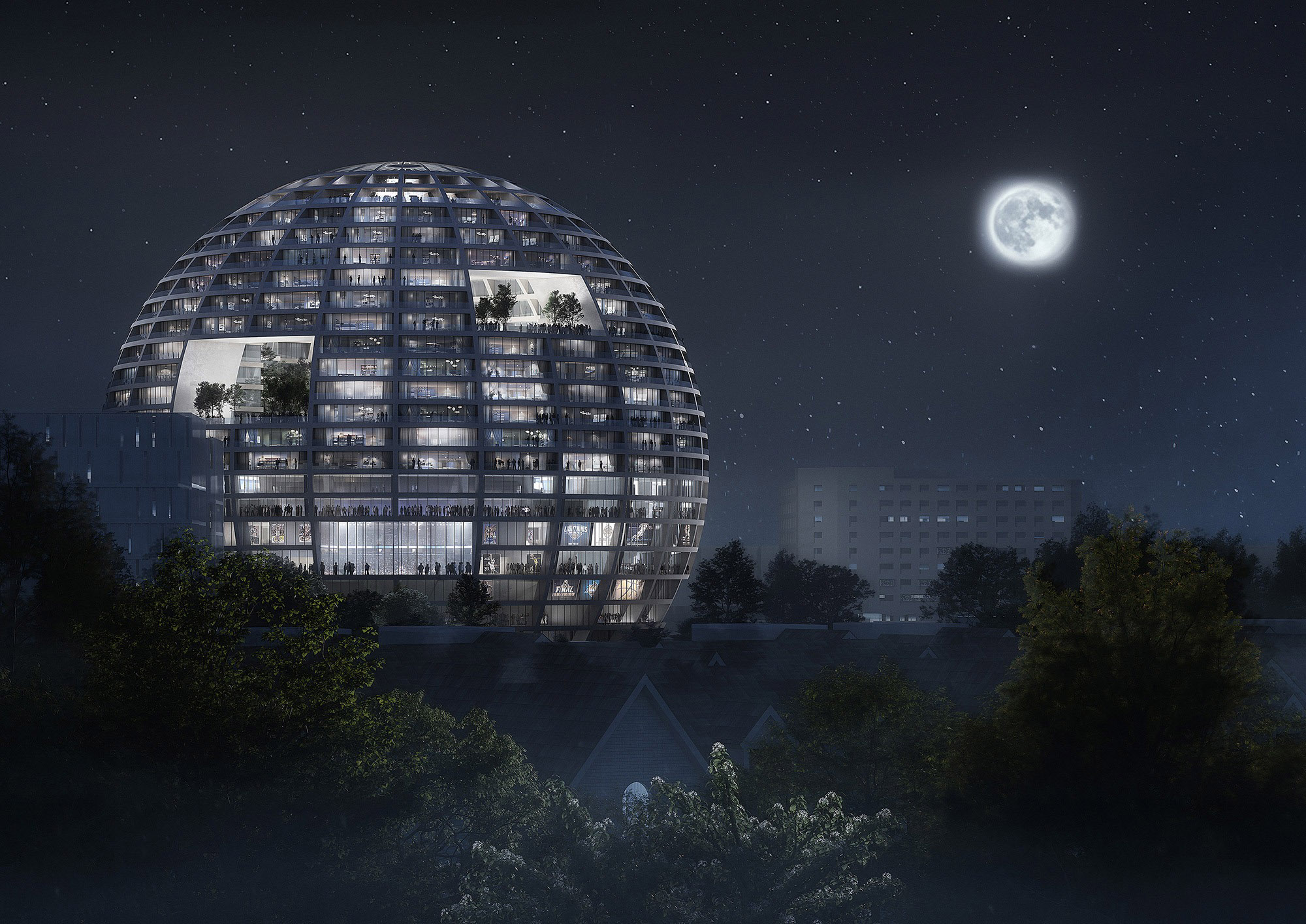
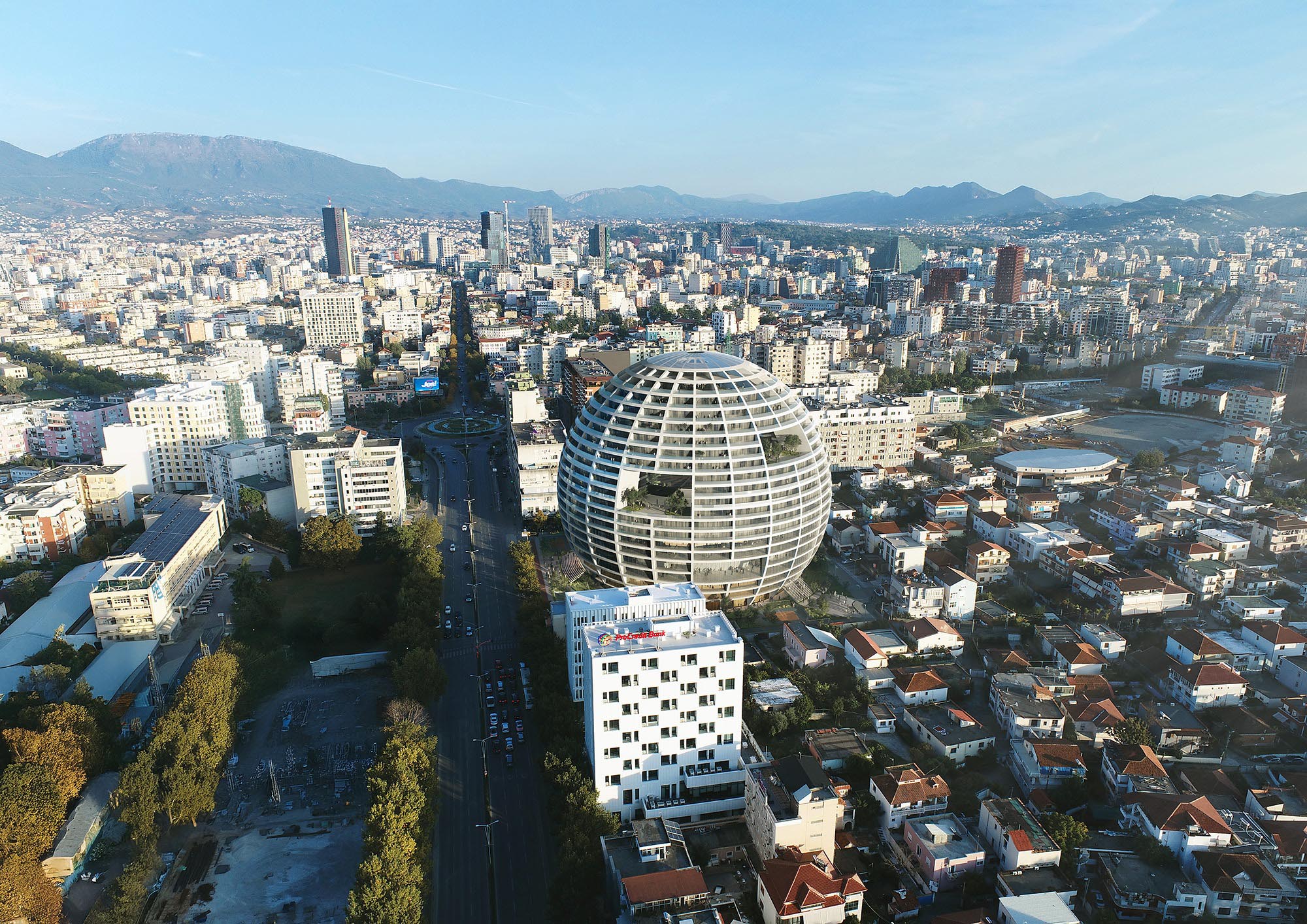
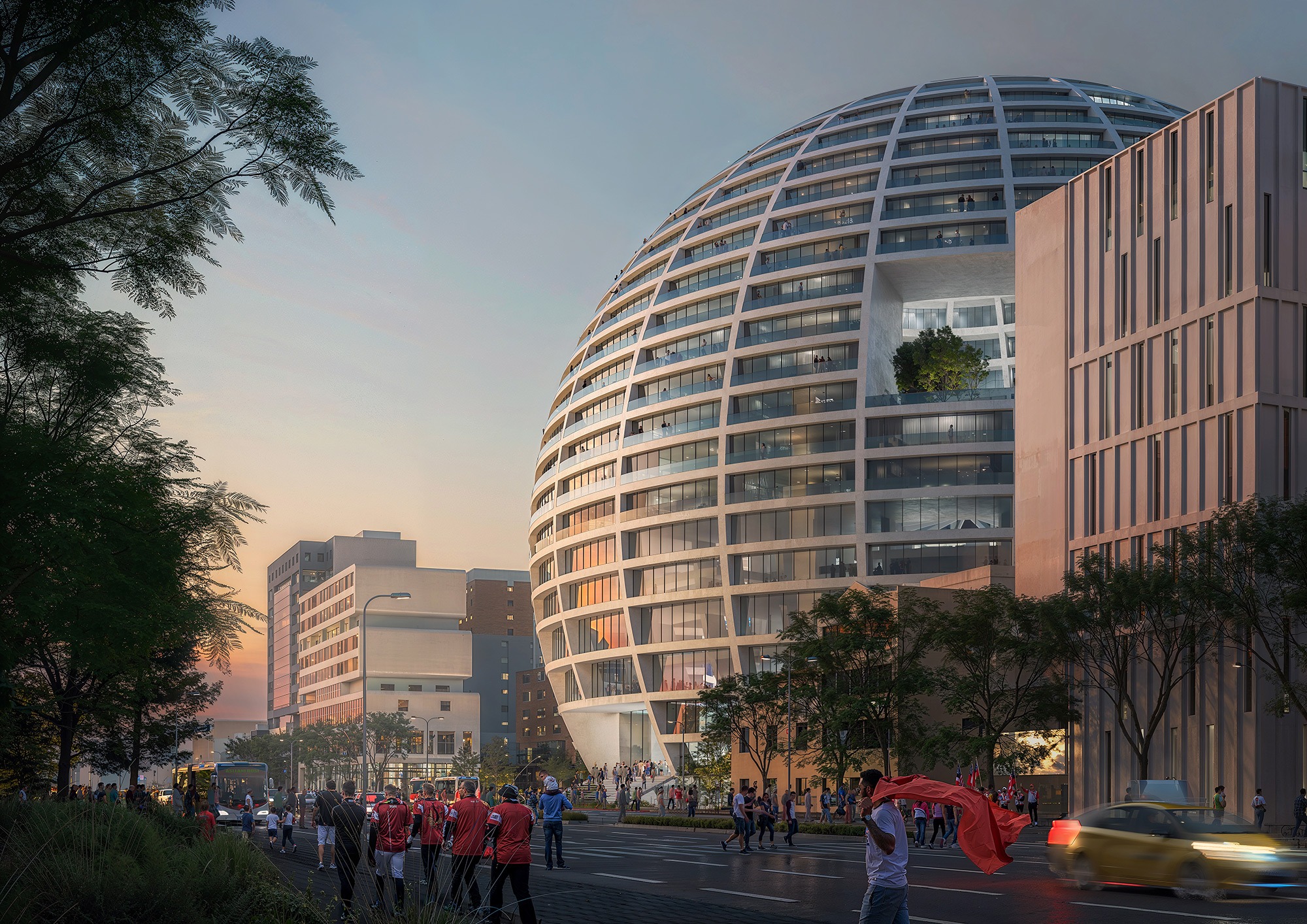
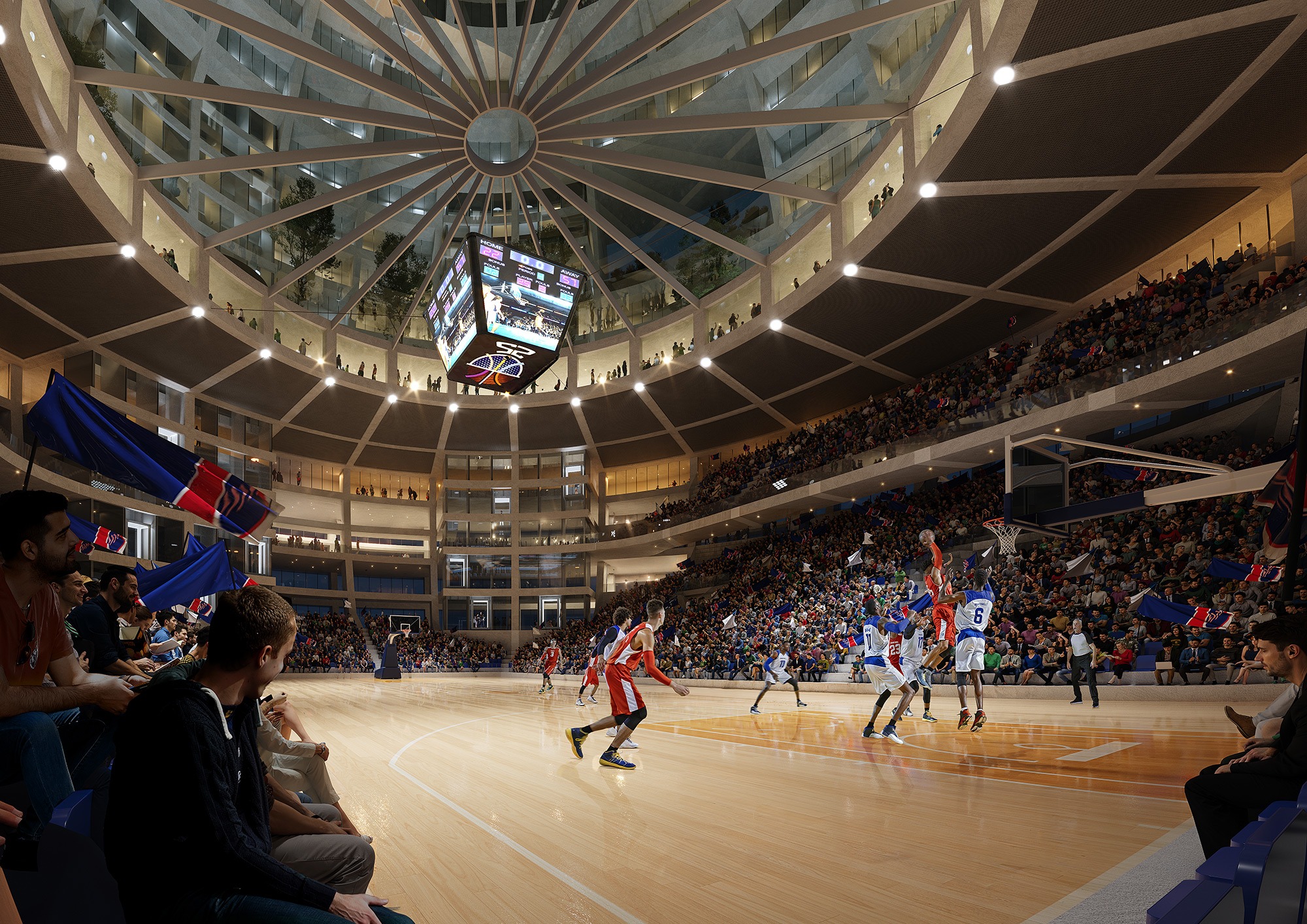
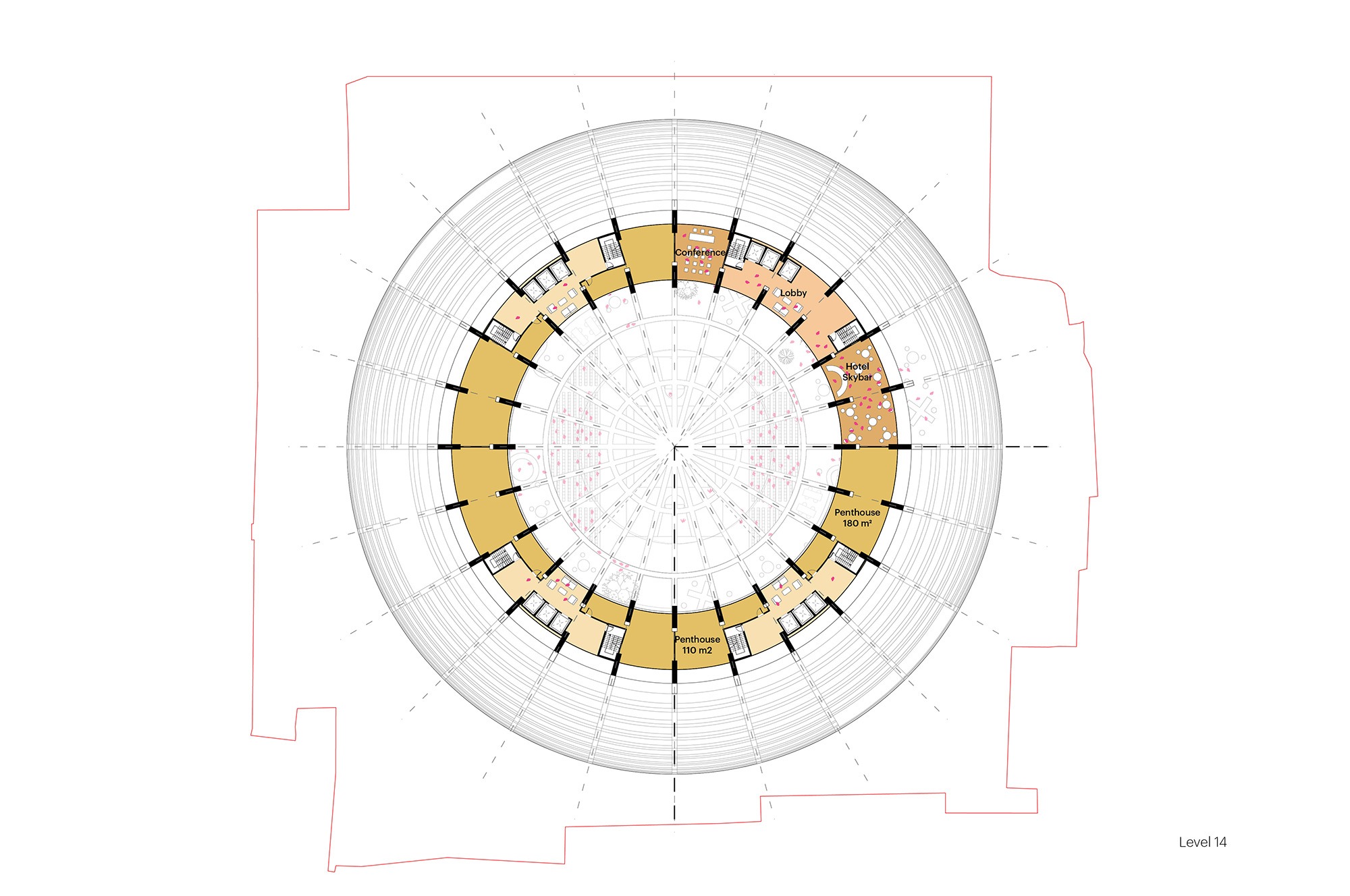
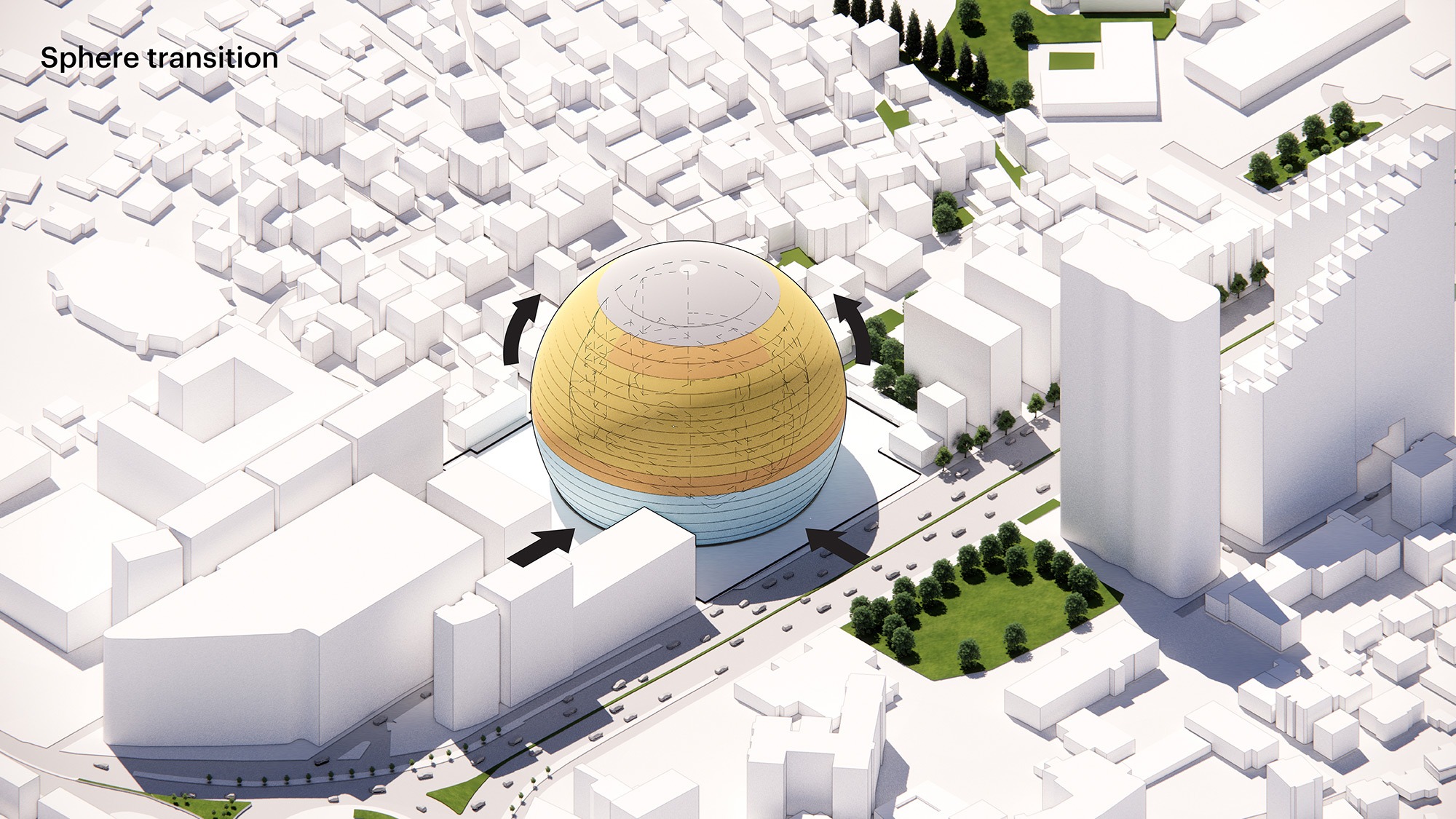
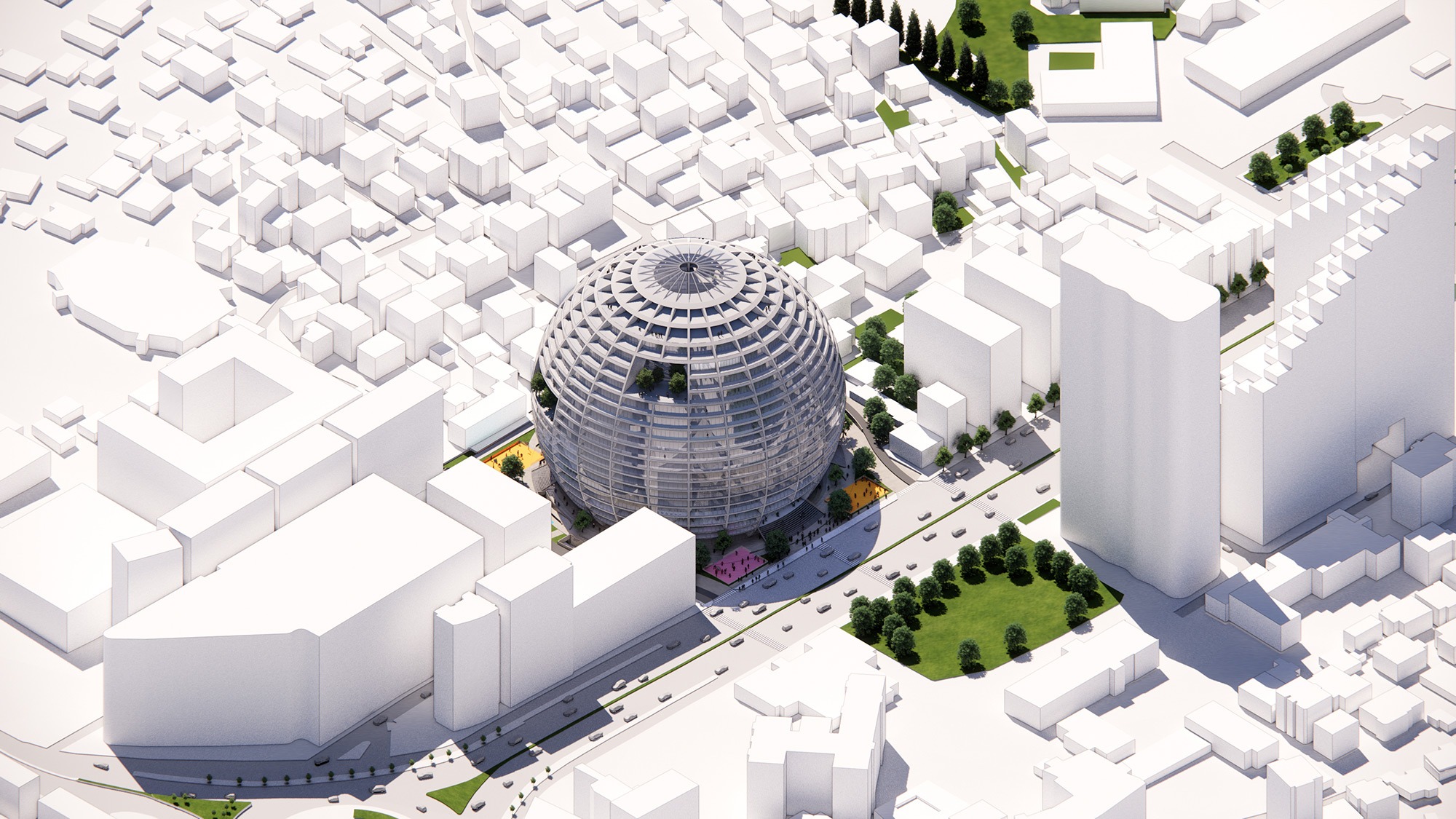
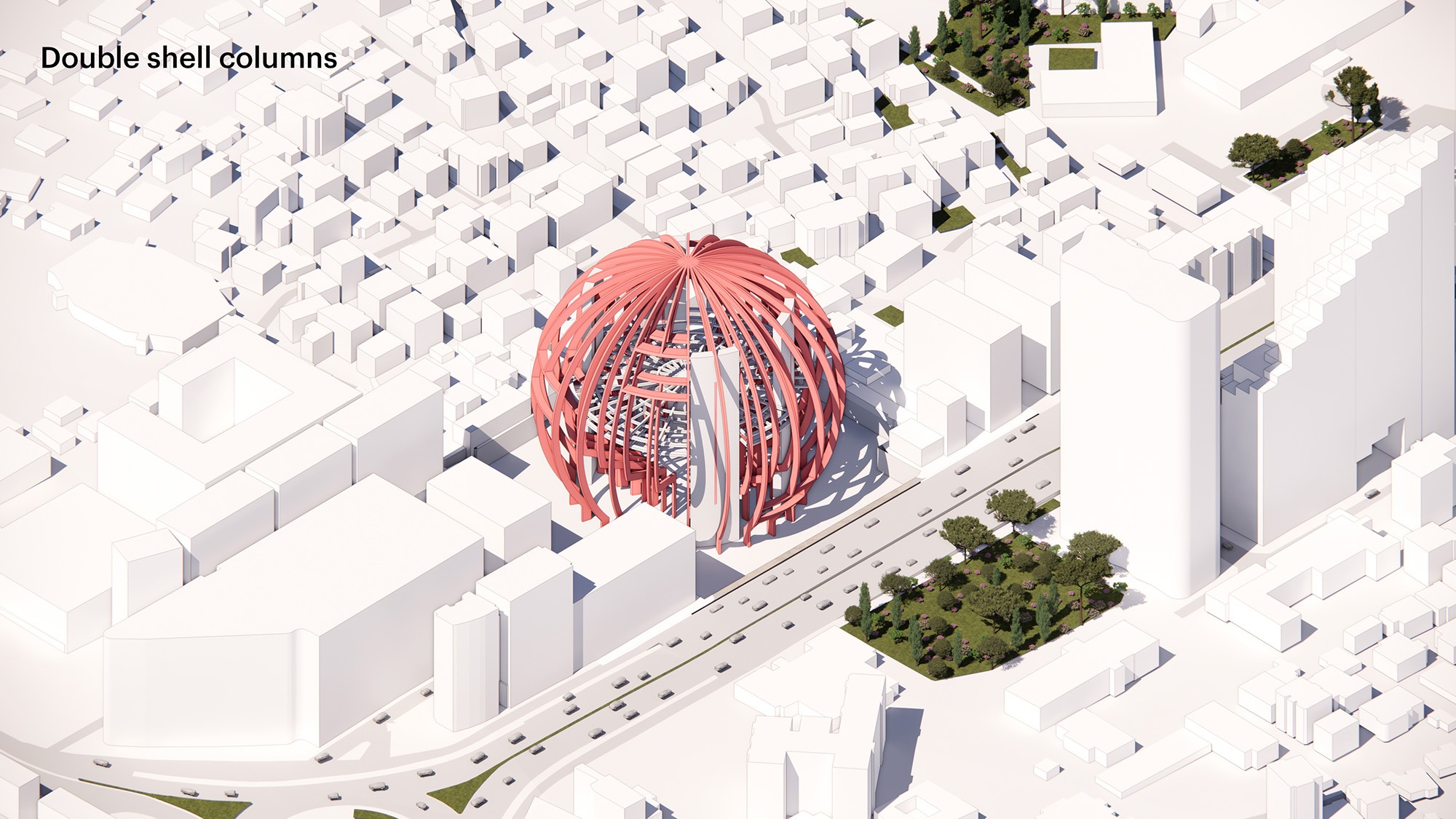
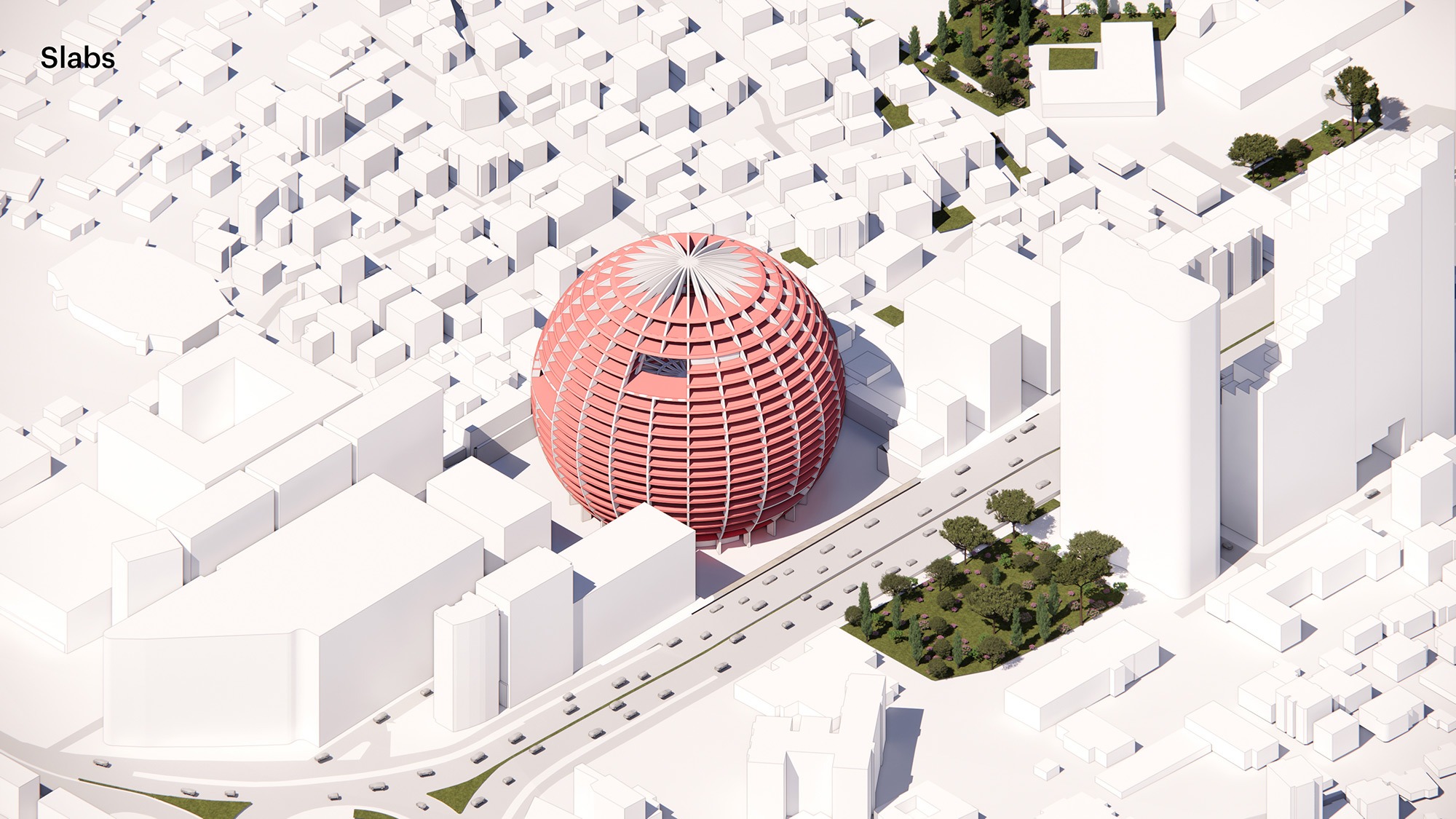
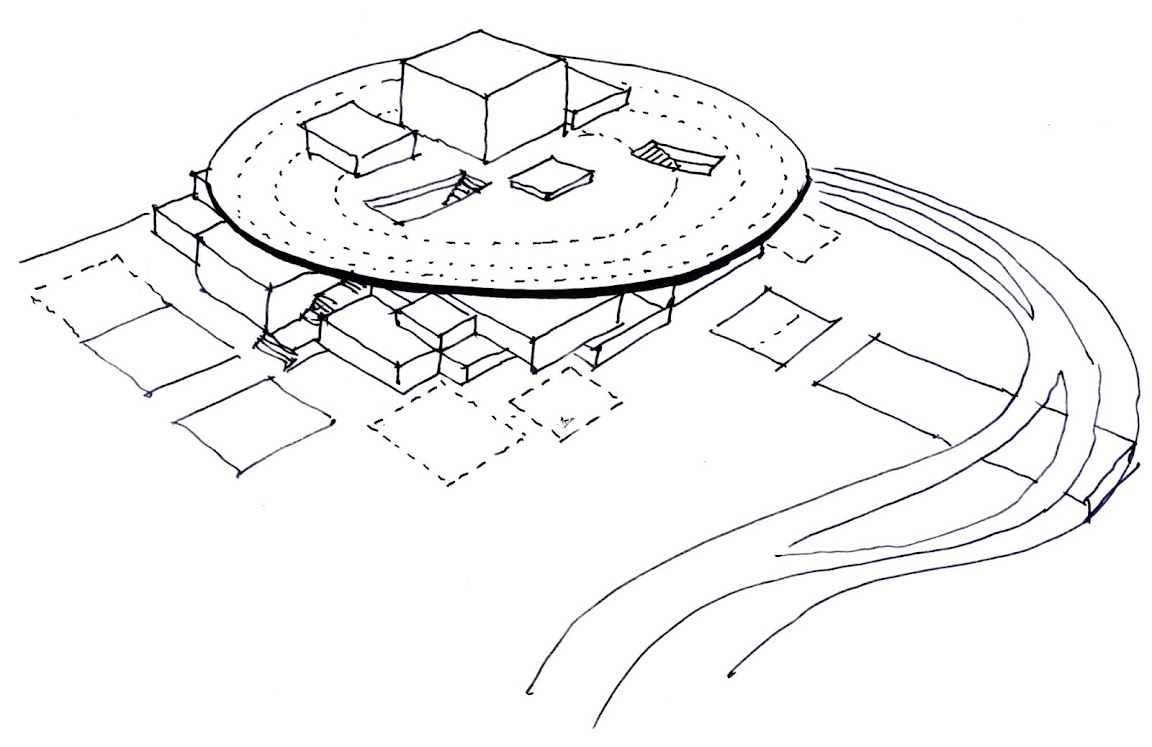
The Grand Ballroom in Tirana consolidates a 6,000-seat arena, hotel, and housing within a spherical envelope over 100 meters in diameter, using vertical stacking to intensify program on a constrained site while opening the ground level to the neighborhood. The scheme uses a double-shell structure to pair an event bowl with a semi-outdoor residential dome, interlacing public space, spectator infrastructure, and domestic terraces into a continuous civic frontage.
The spherical shape is a reference to the round ball used by so many sports, yet it also recalls enlightenment temples. By connecting the different functions, it invites everyone in the building to be part of the action. _ Winy Maas
The spherical shape is a reference to the round ball used by so many sports, yet it also recalls enlightenment temples. By connecting the different functions, it invites everyone in the building to be part of the action. _ Winy Maas
Urban Interface and Mixed-Use Density
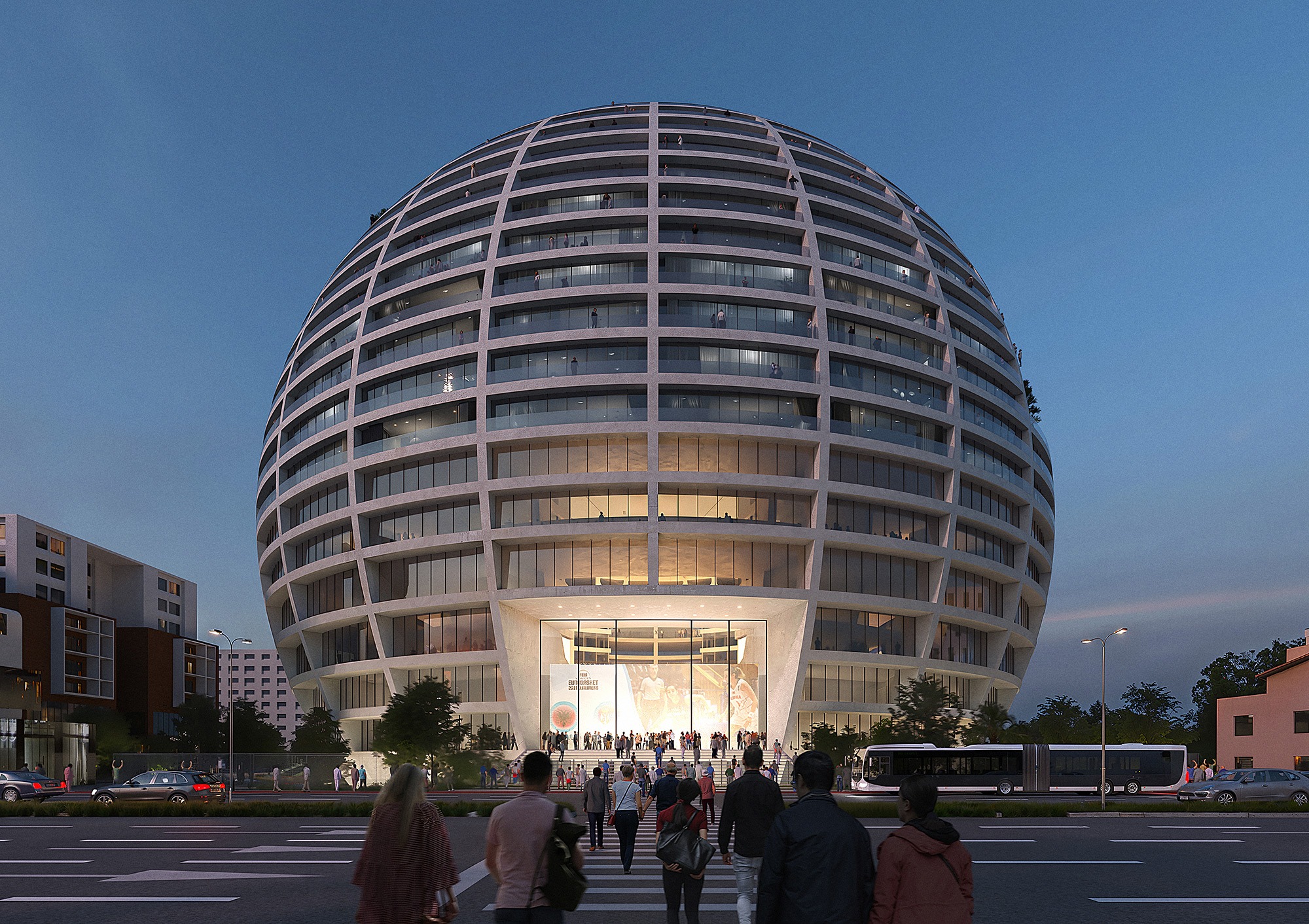
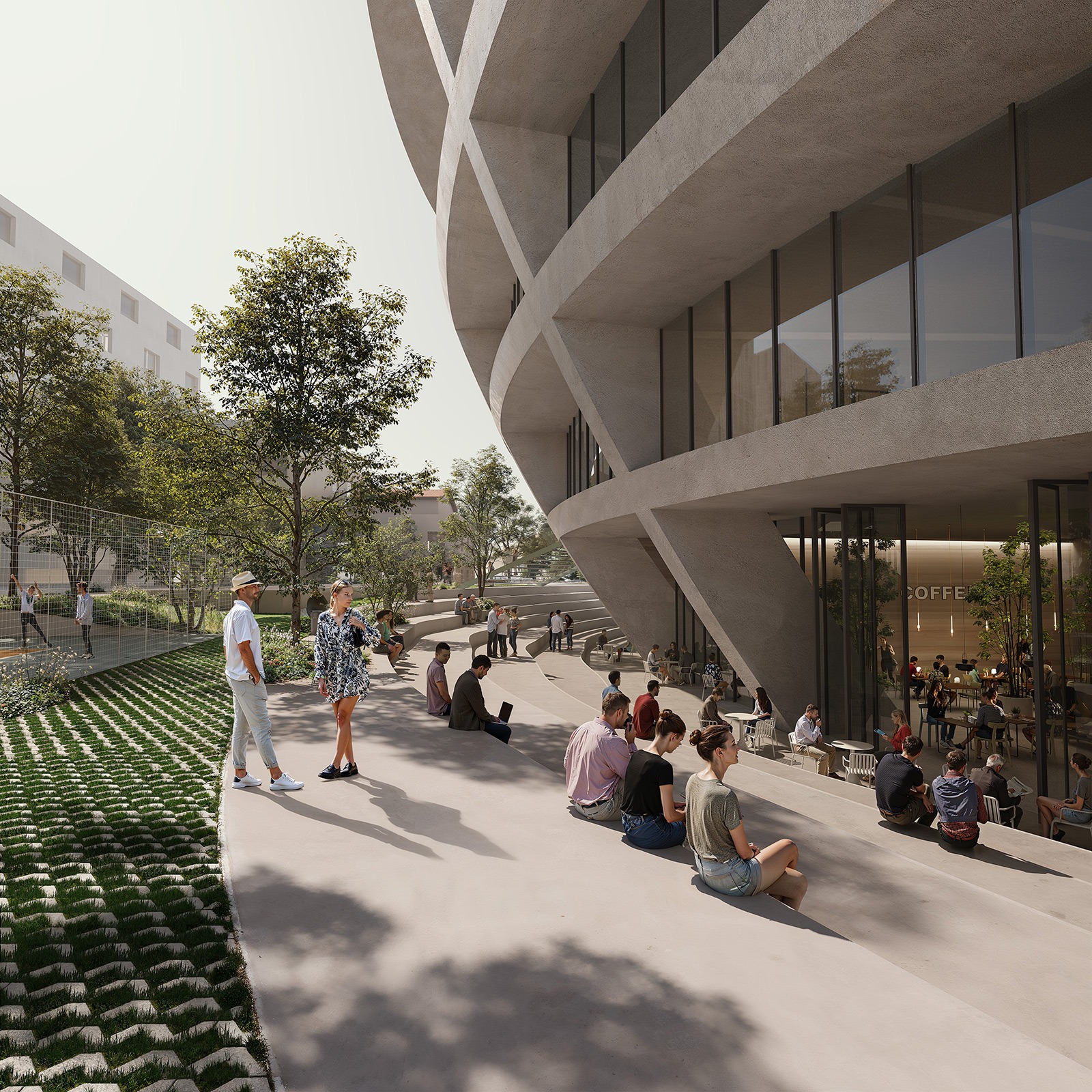
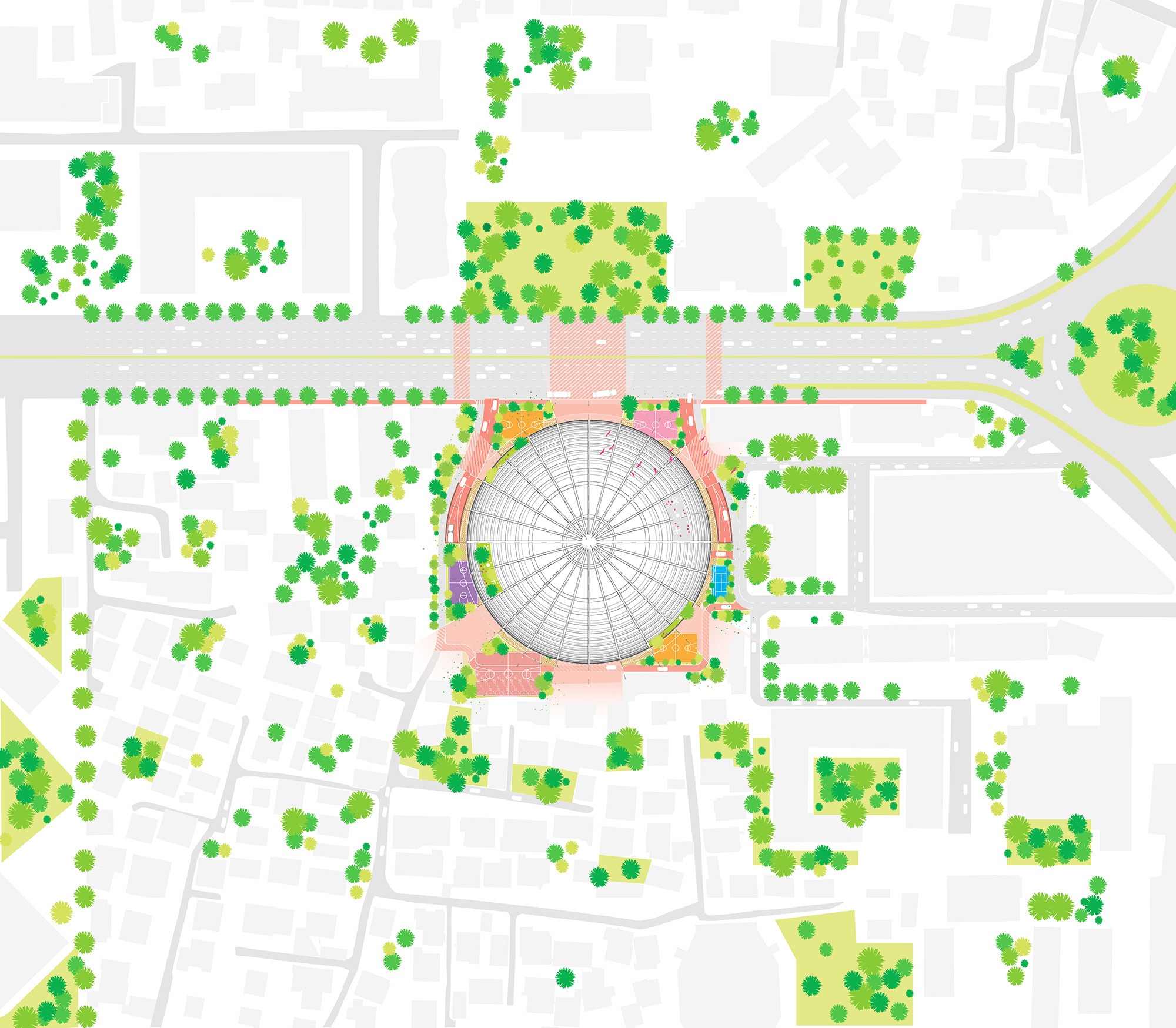
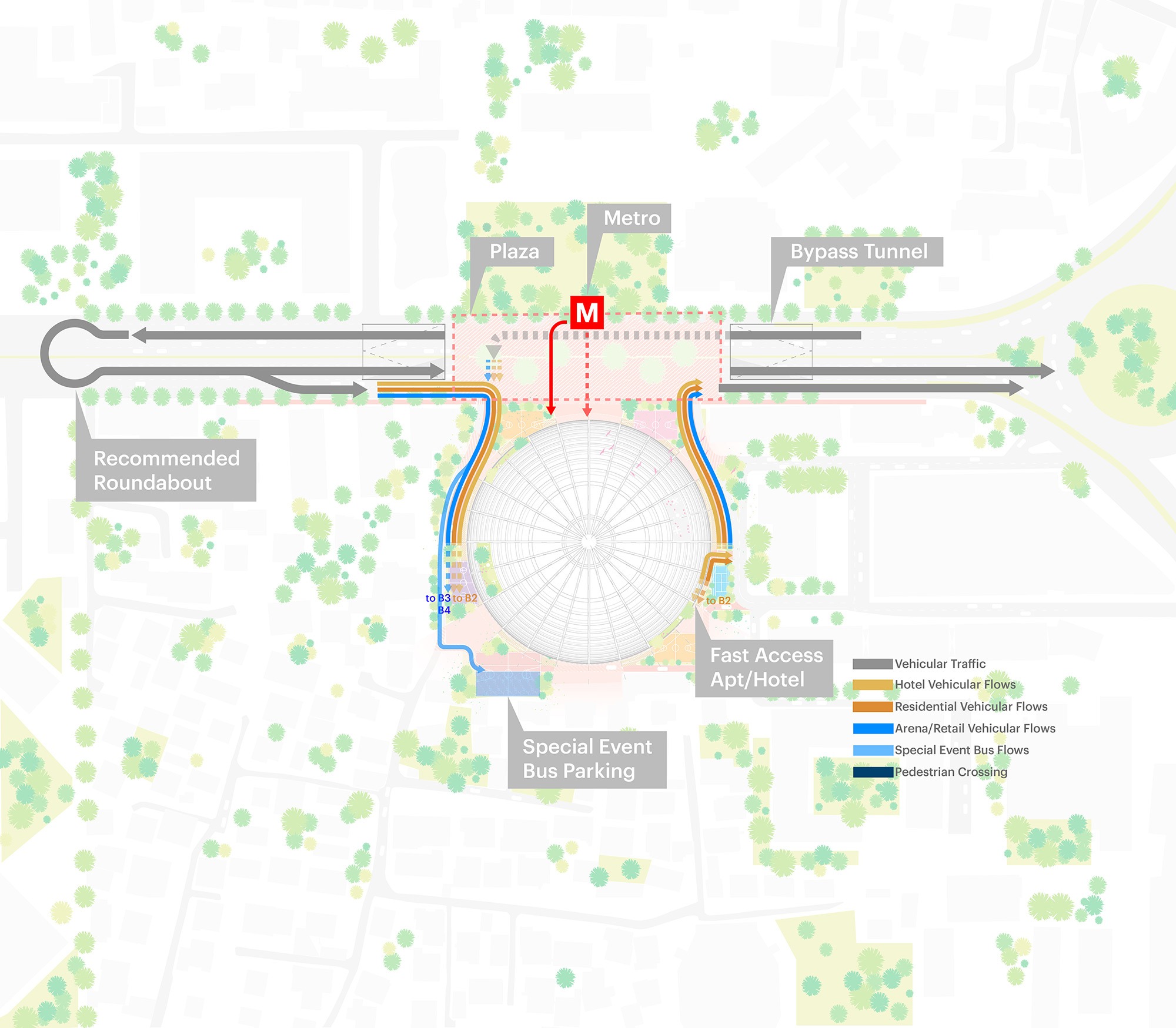
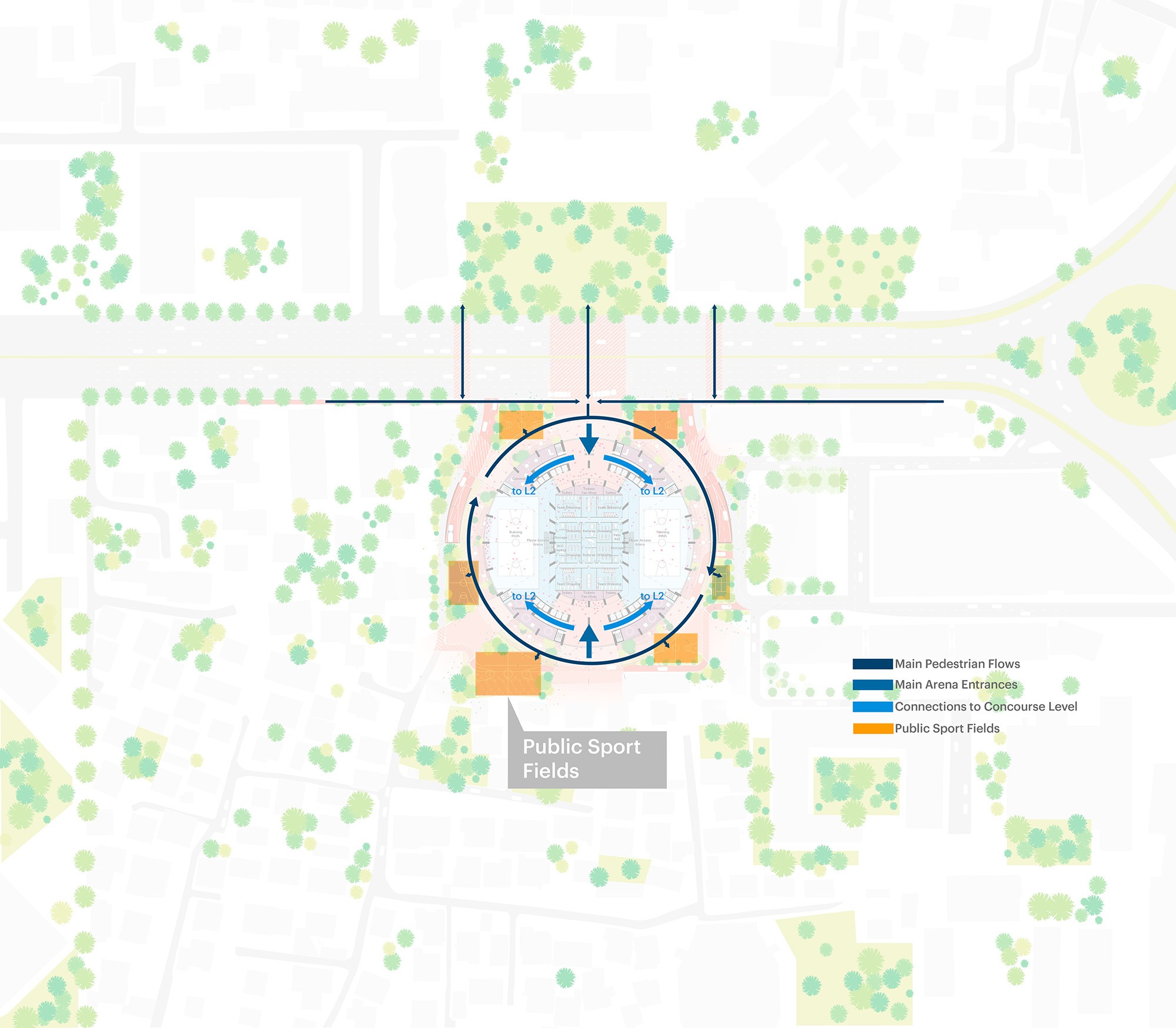
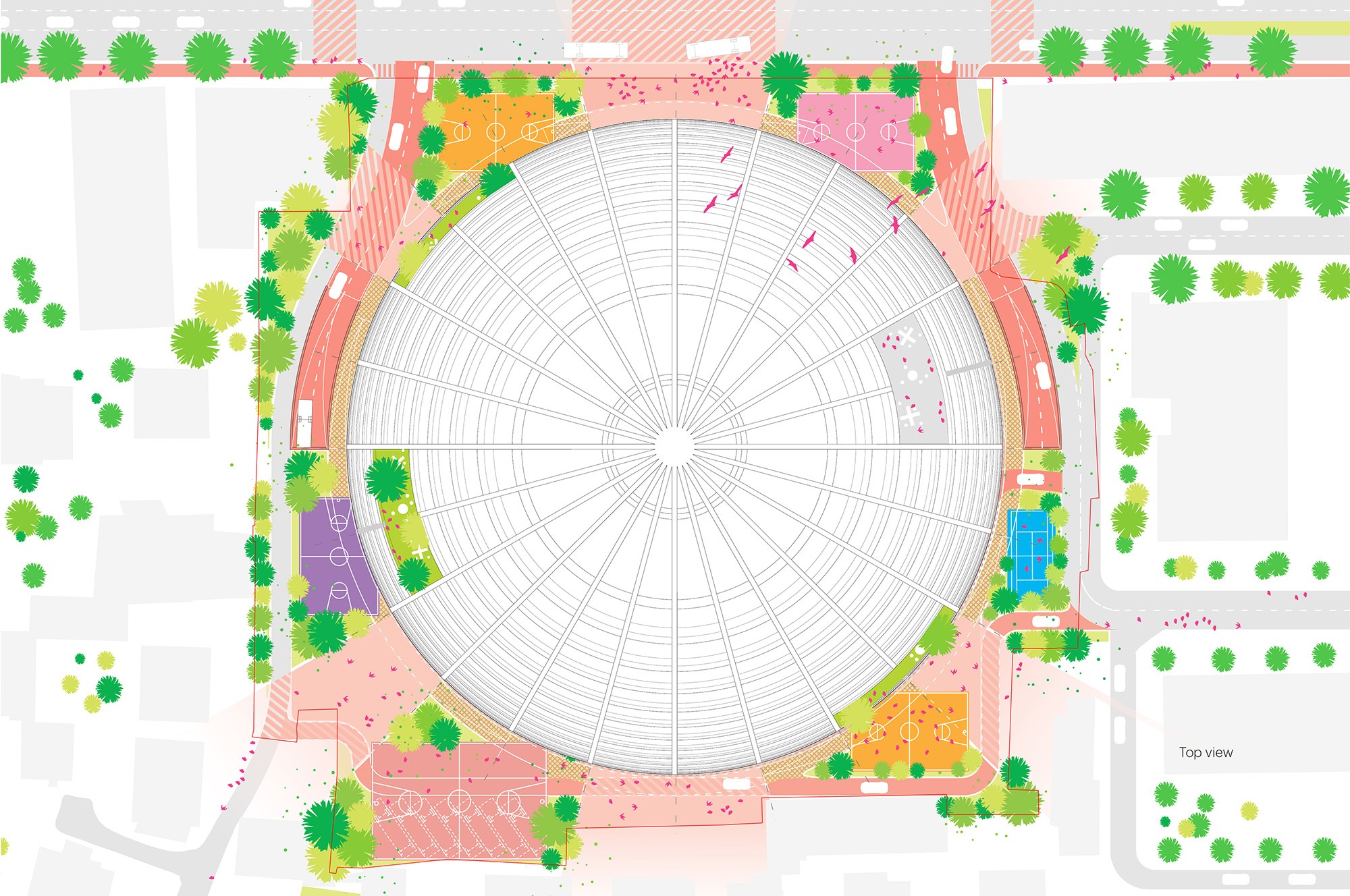
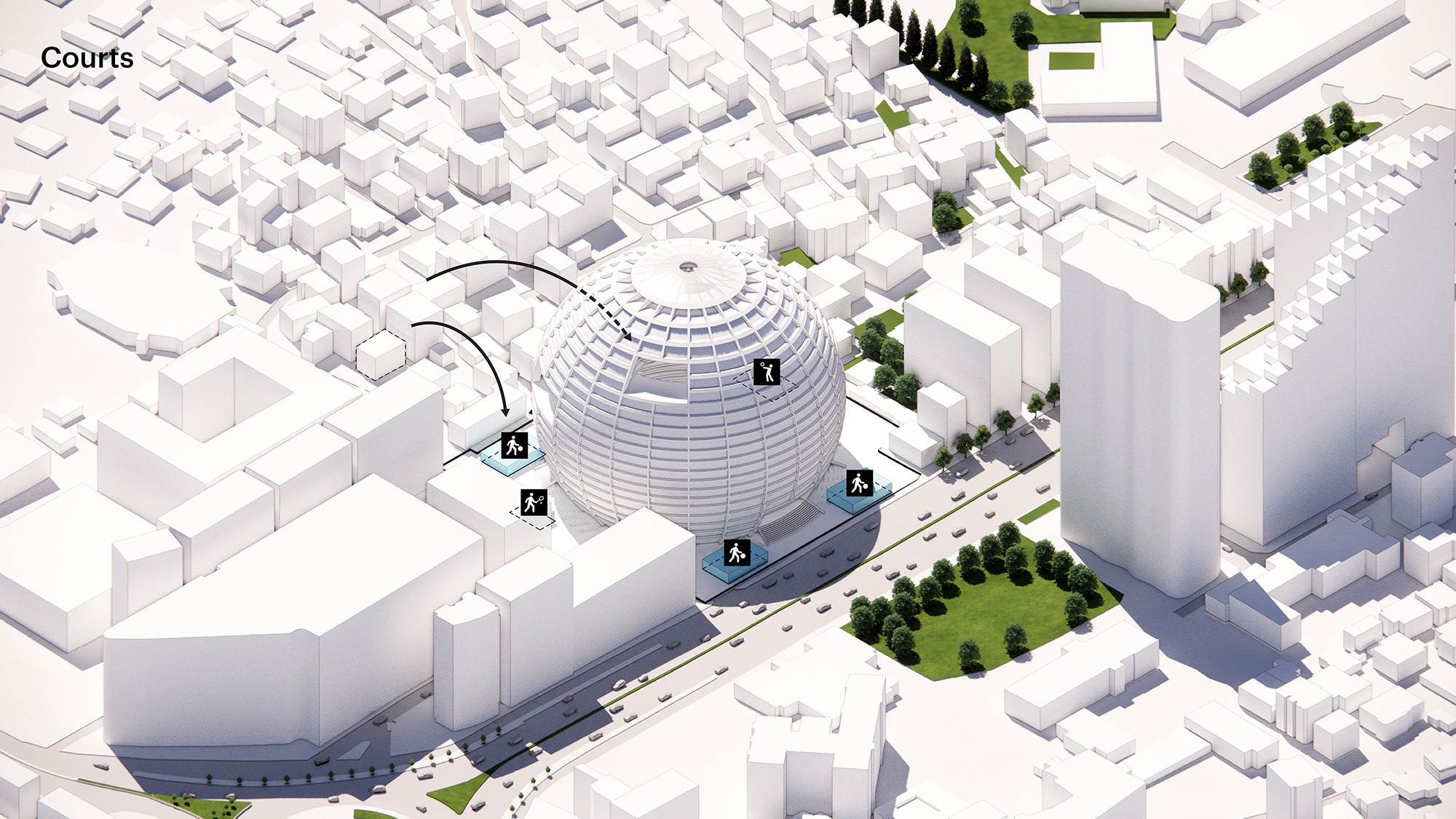
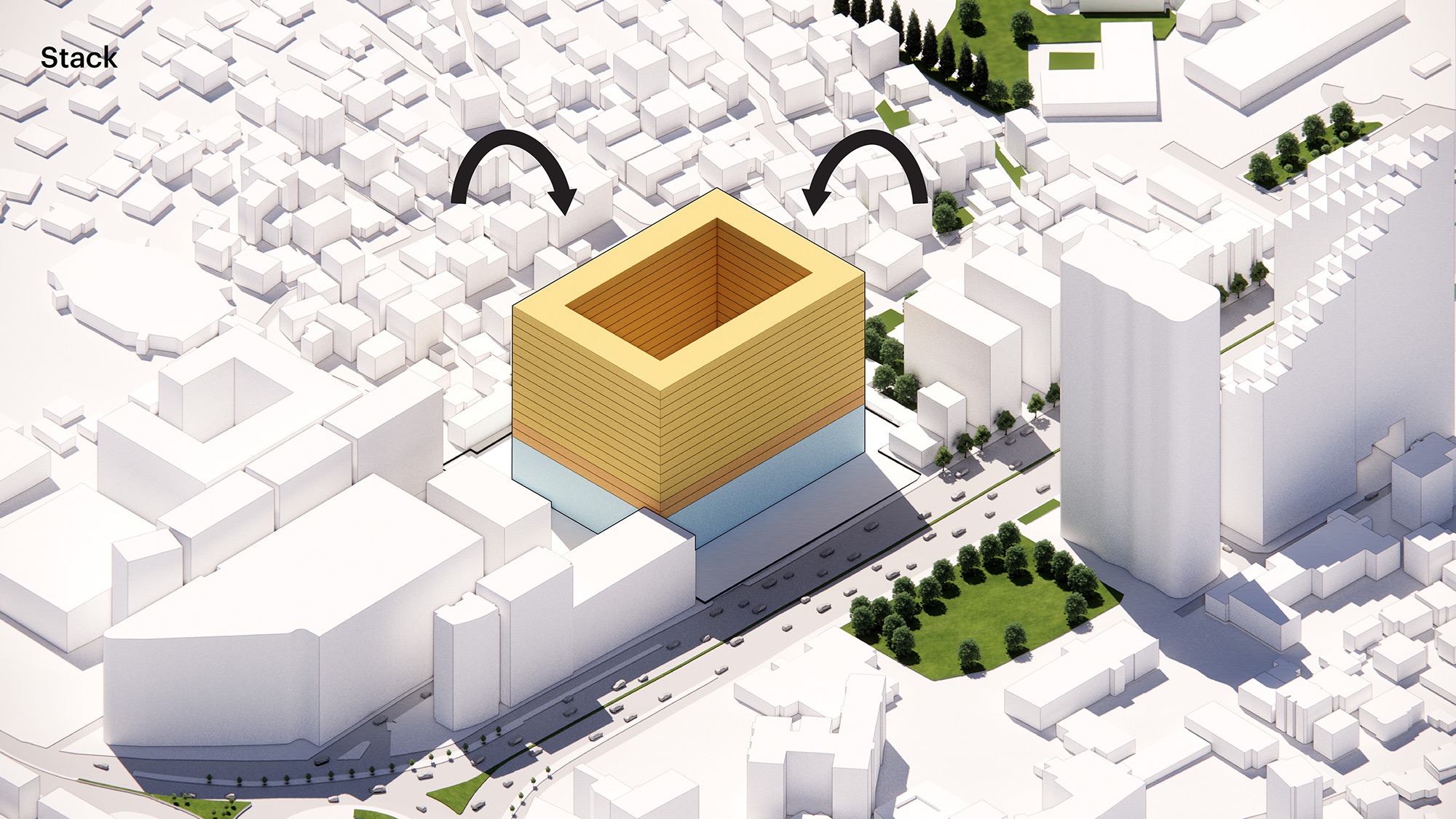
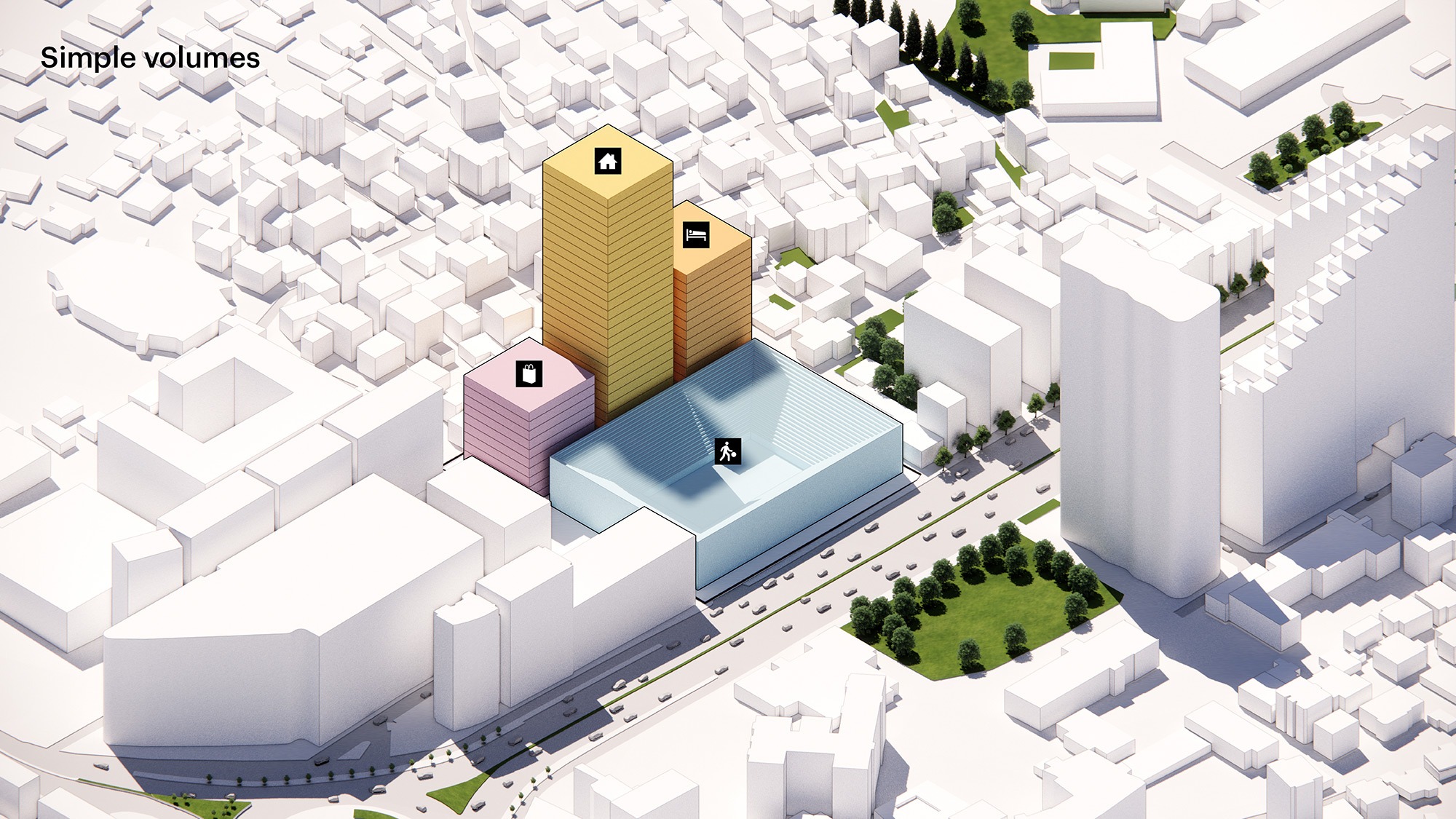
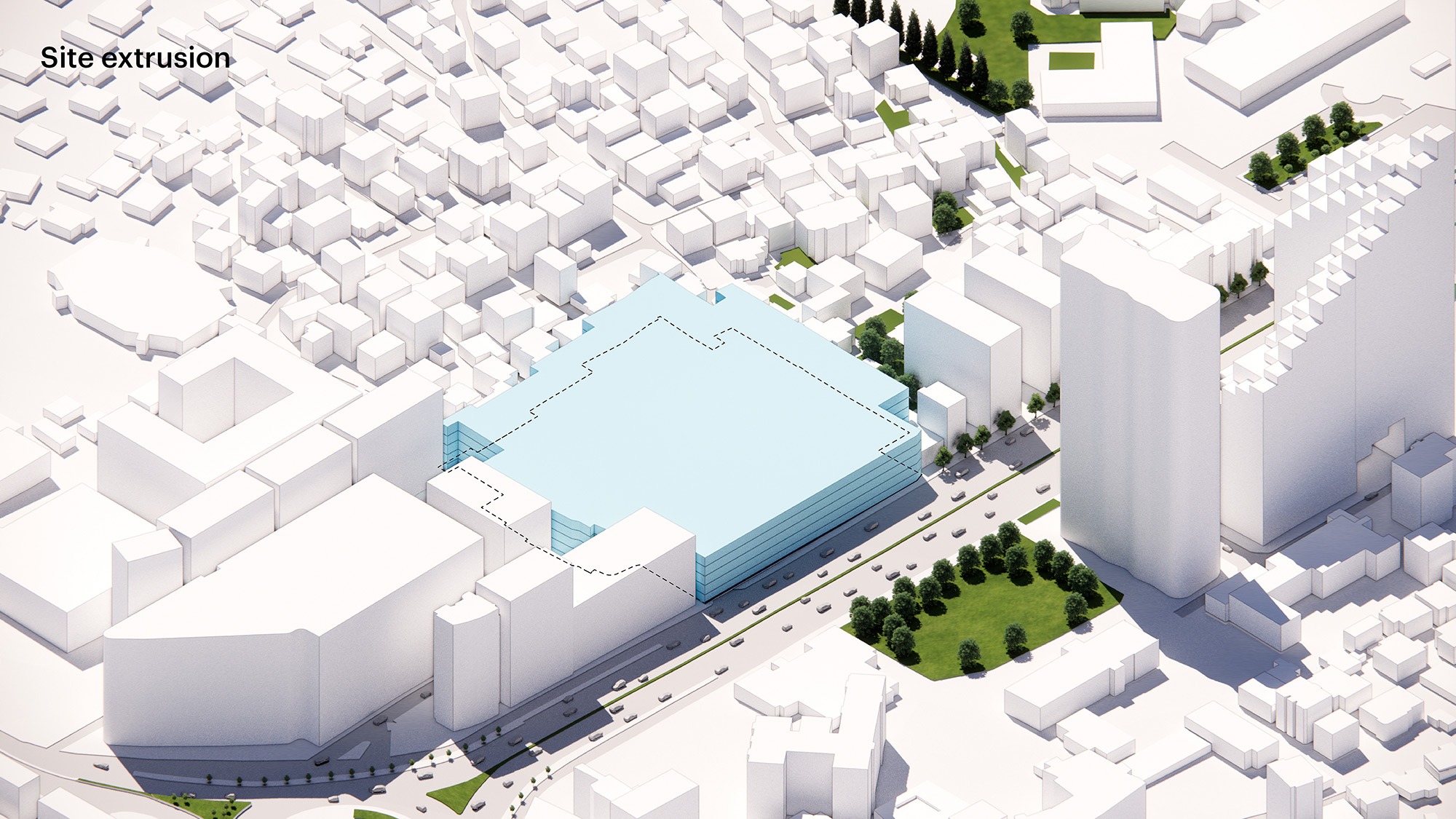
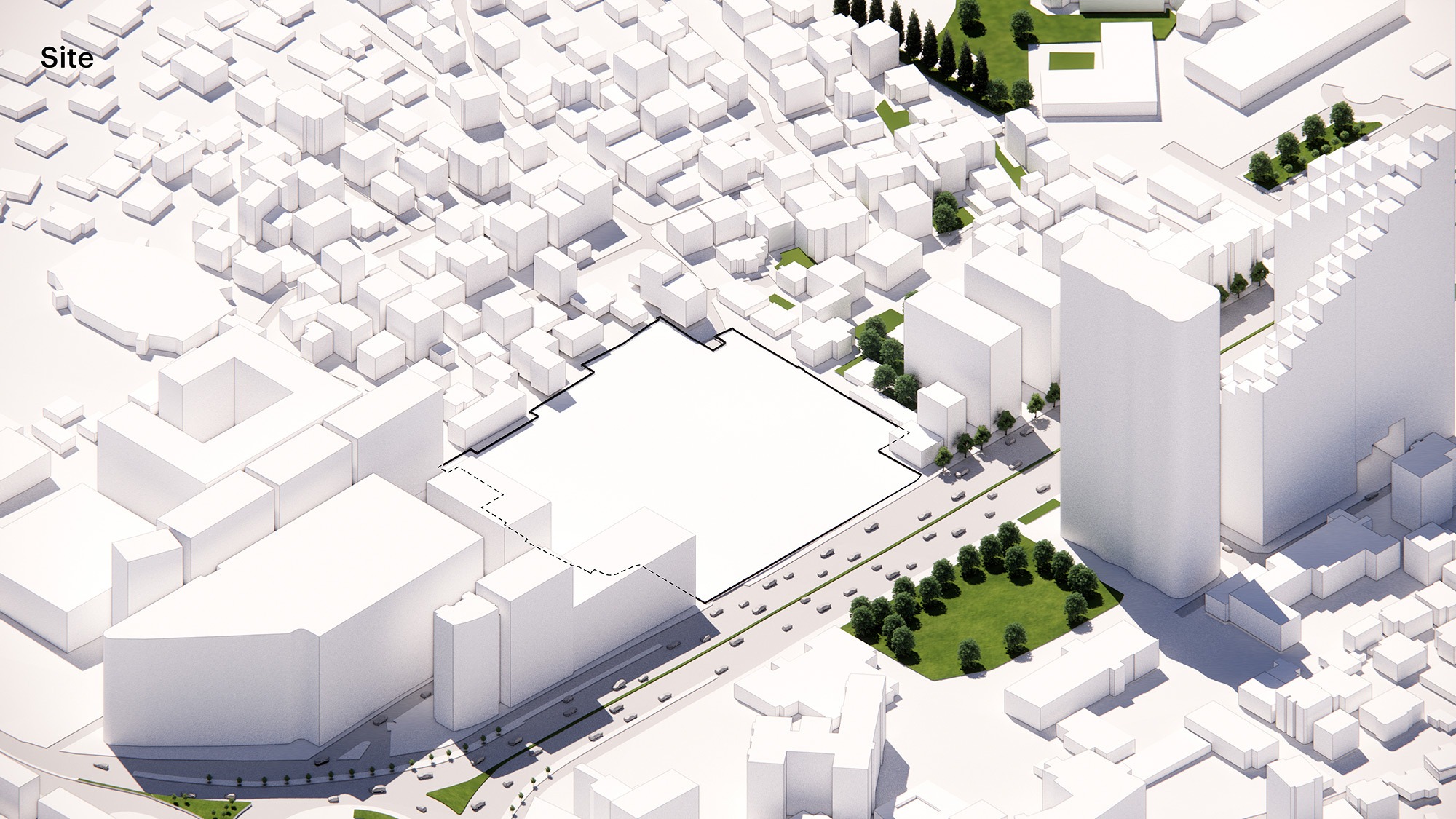
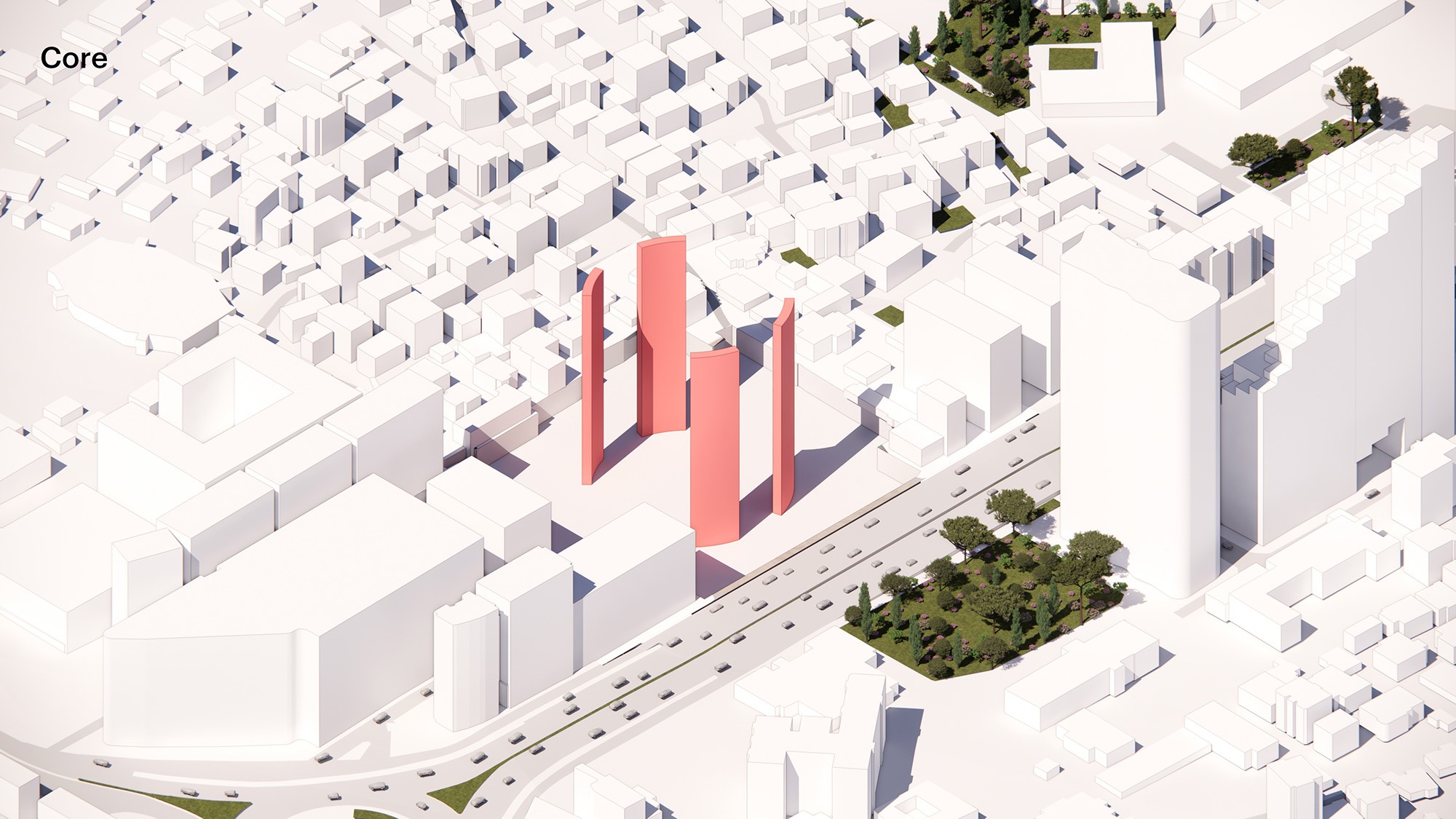
The project concentrates a substantial program on a limited footprint by stacking hotel and housing above a 6,000-seat basketball and volleyball arena. This vertical consolidation releases the ground plane for public plazas and outdoor courts that can be used irrespective of event schedules. The result is a civic threshold that mediates between a major corridor and the surrounding neighborhood, expanding the public realm rather than compressing it.
The project concentrates a substantial program on a limited footprint by stacking hotel and housing above a 6,000-seat basketball and volleyball arena. This vertical consolidation releases the ground plane for public plazas and outdoor courts that can be used irrespective of event schedules. The result is a civic threshold that mediates between a major corridor and the surrounding neighborhood, expanding the public realm rather than compressing it.
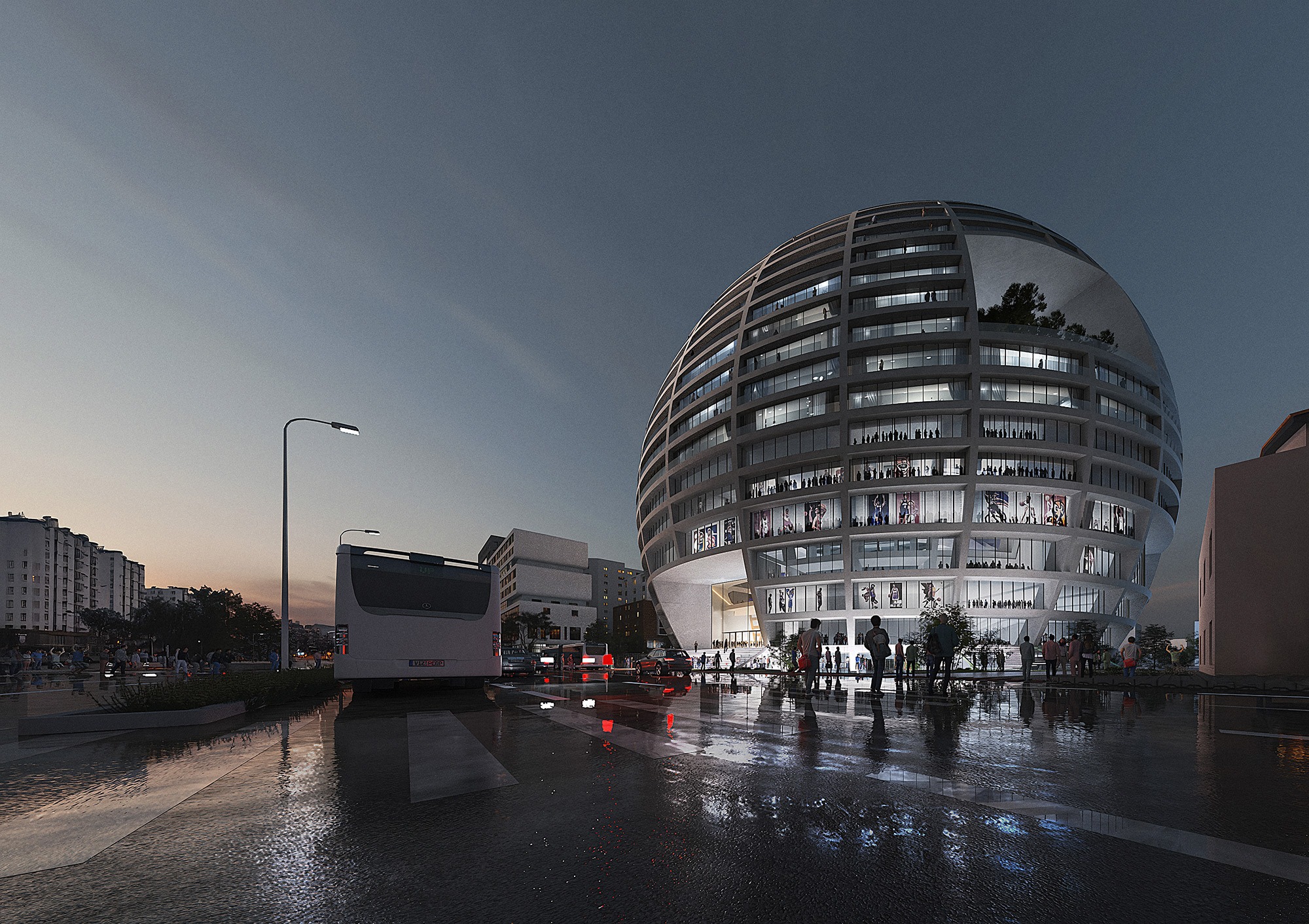
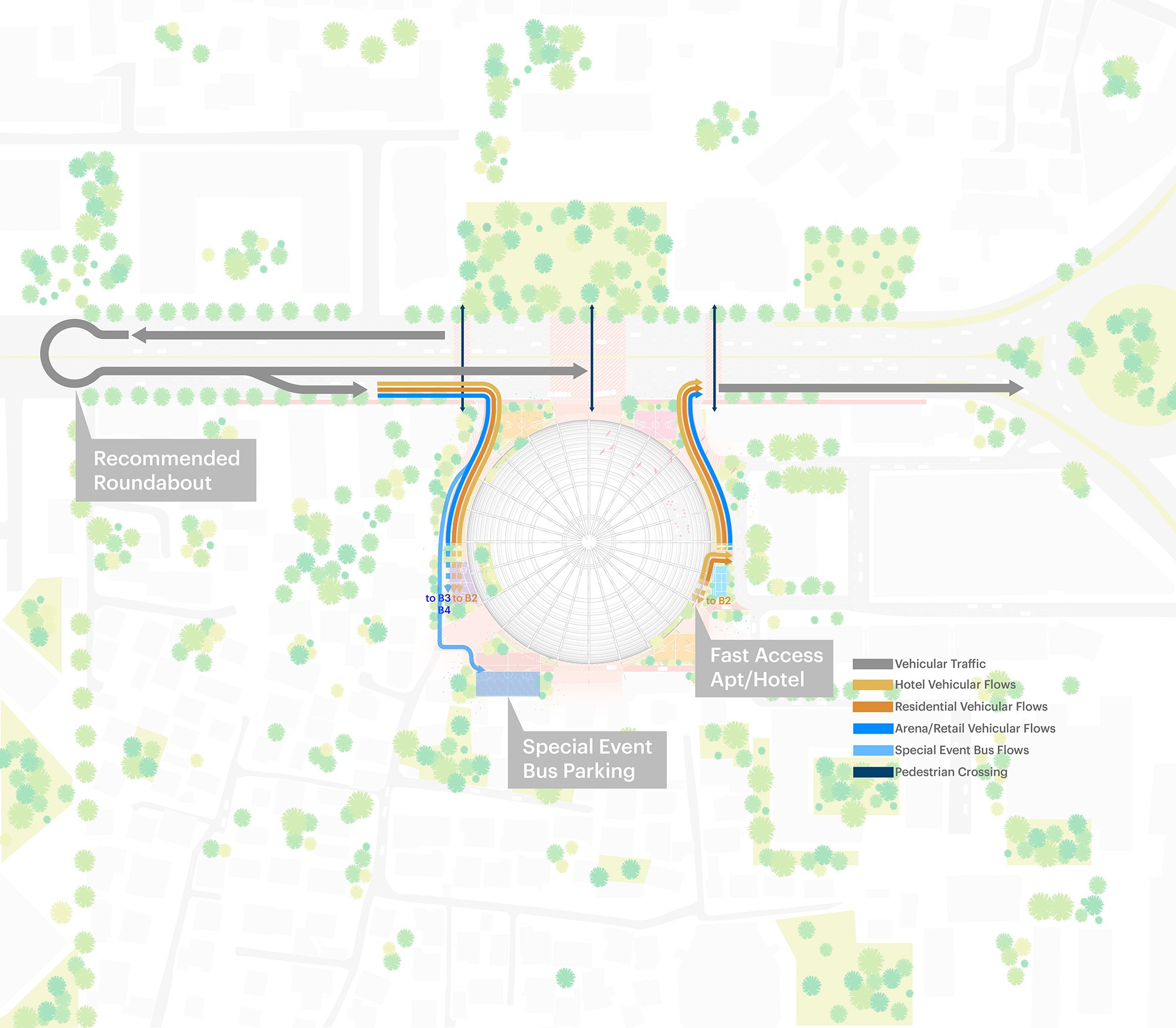
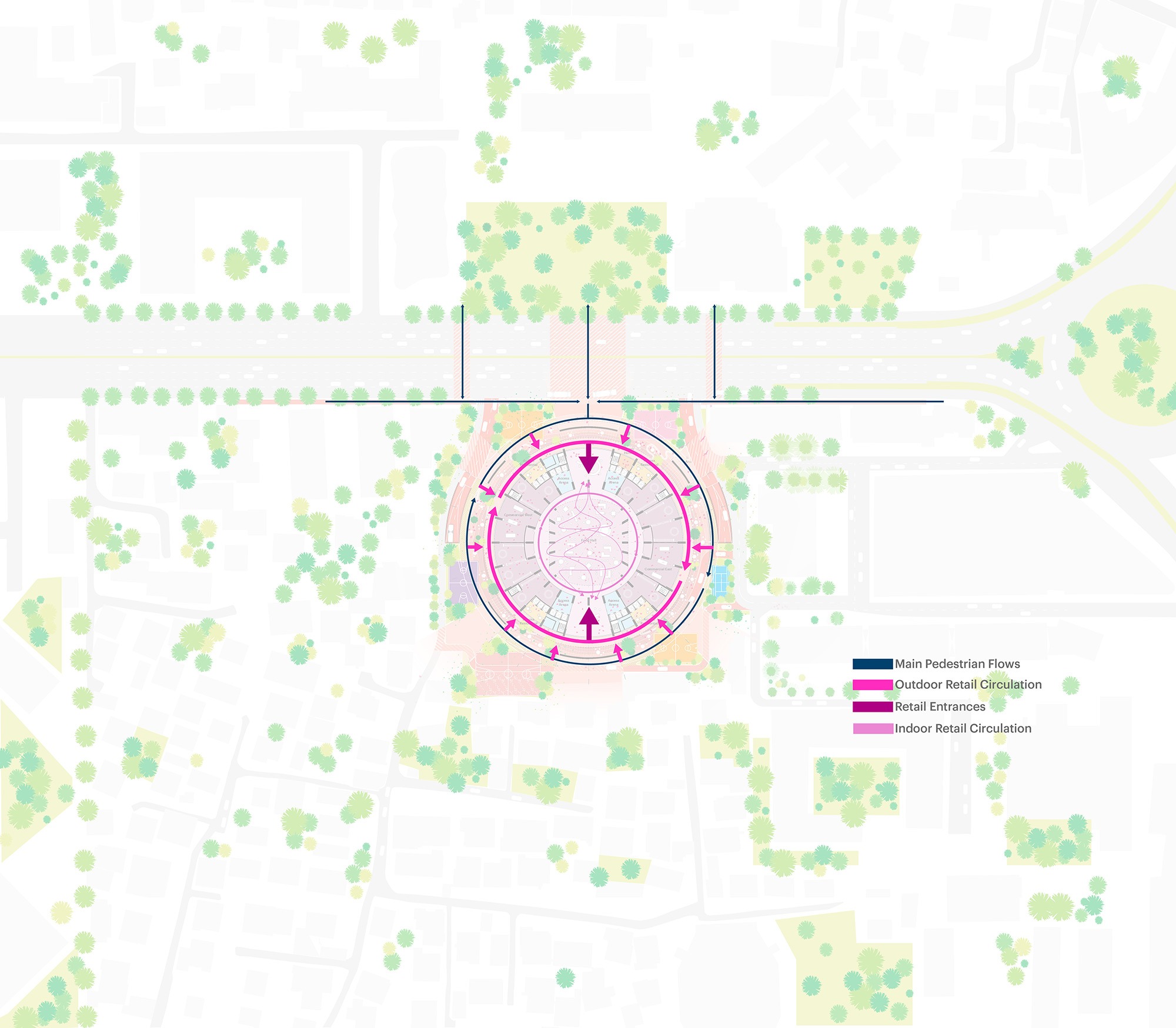
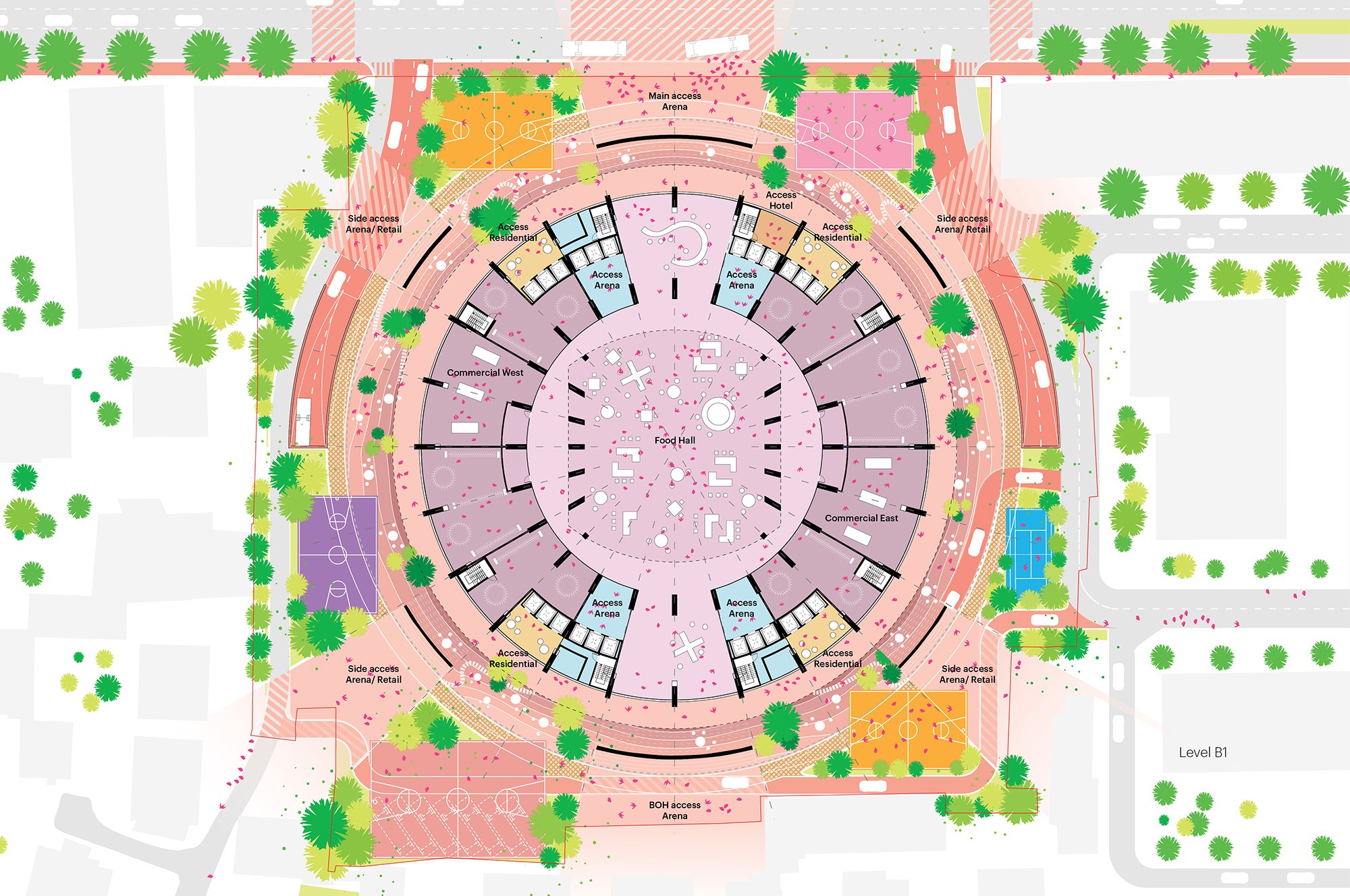
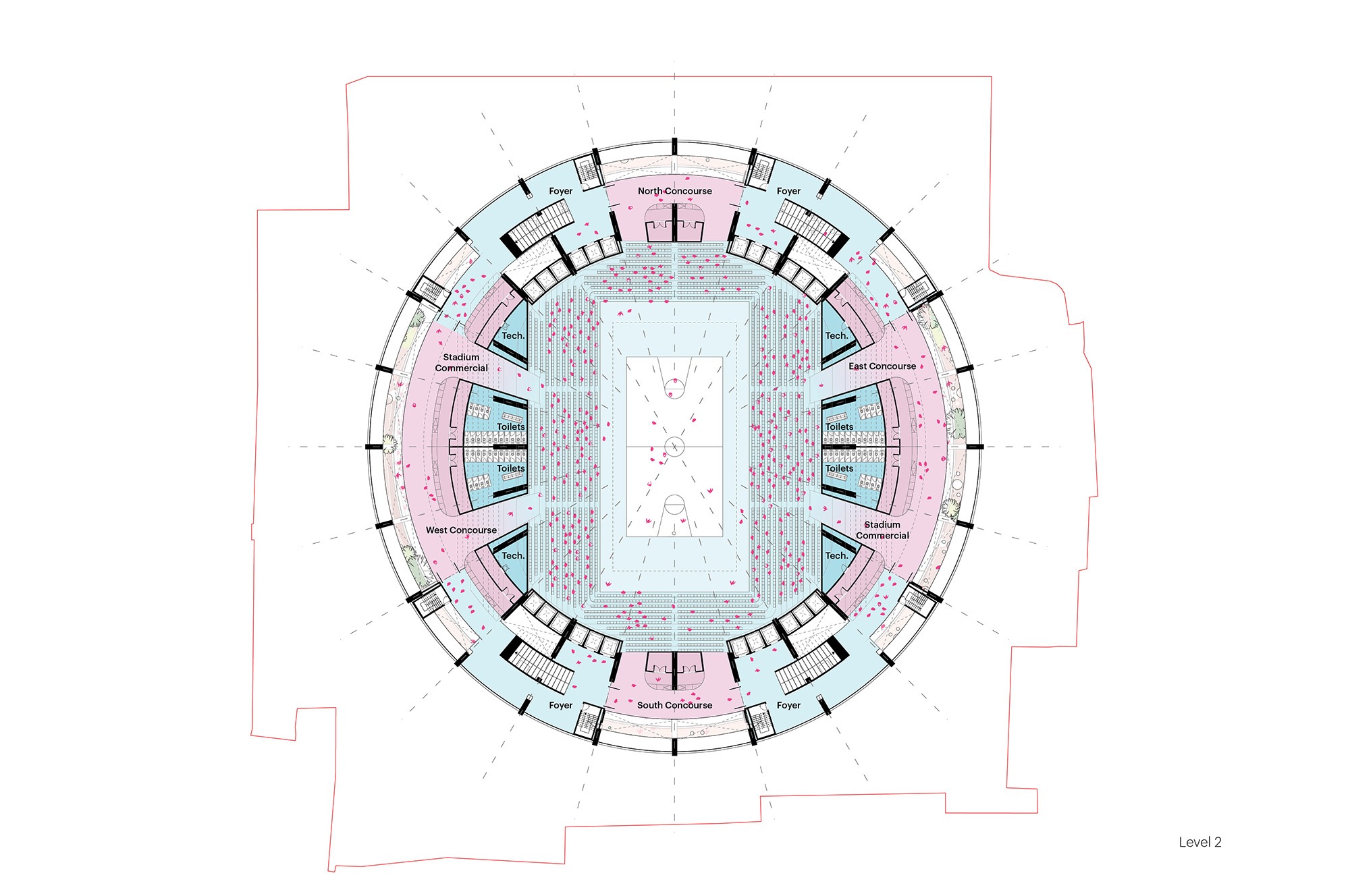
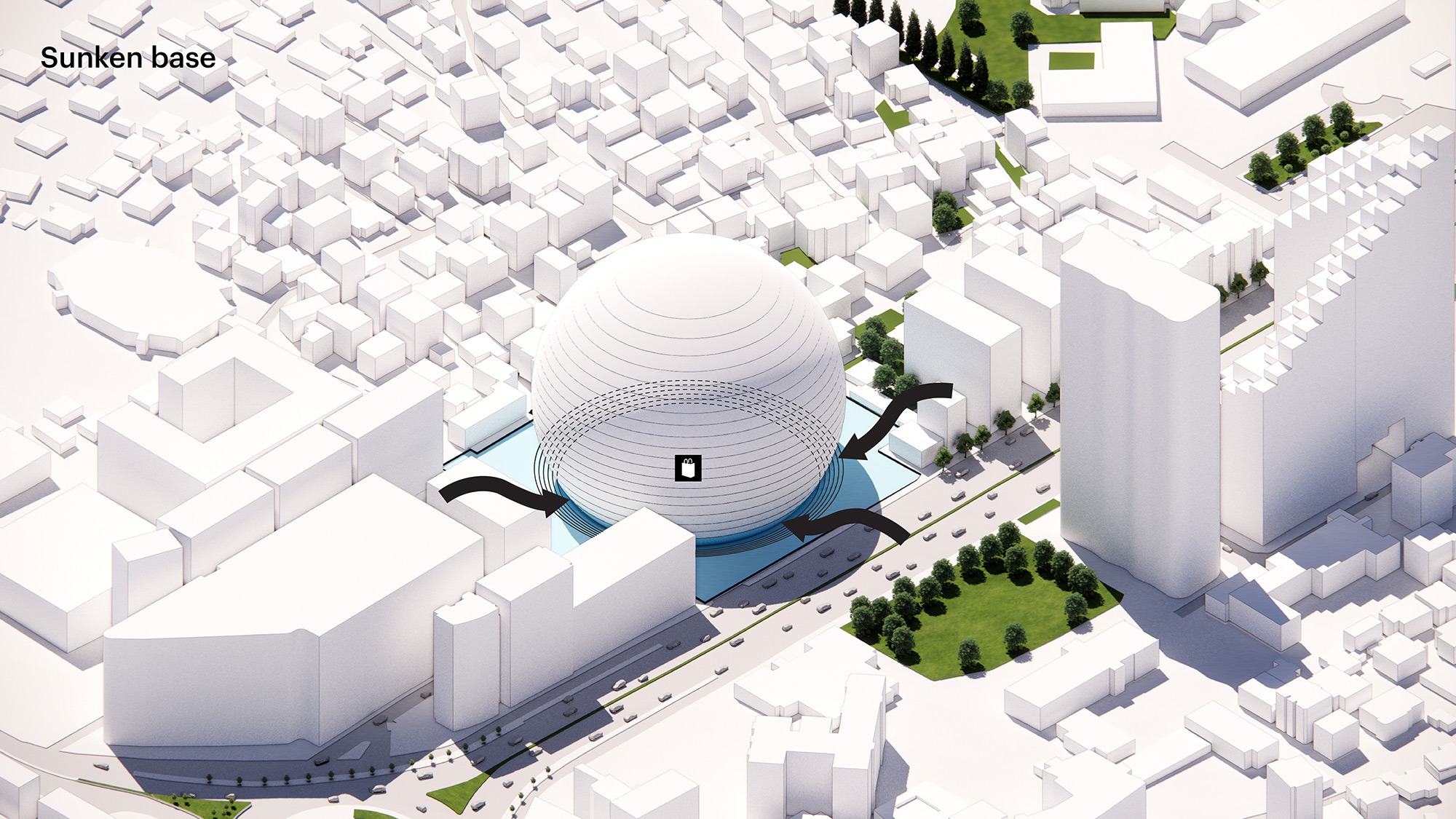
The spherical massing avoids rear elevations, producing a continuous 360-degree frontage that treats each side as a primary face. A tapered base widens the pedestrian domain and improves permeability across the site, inviting multiple approaches and dispersing event-day crowds. Below grade, a sunken plinth with steps and tribunes forms a retail and amenities ring that supports both match operations and daily urban life. This concourse framework aims to prevent the familiar pattern of mono-functional event precincts that lie dormant outside performance hours.
Form and Envelope as Spatial Framework
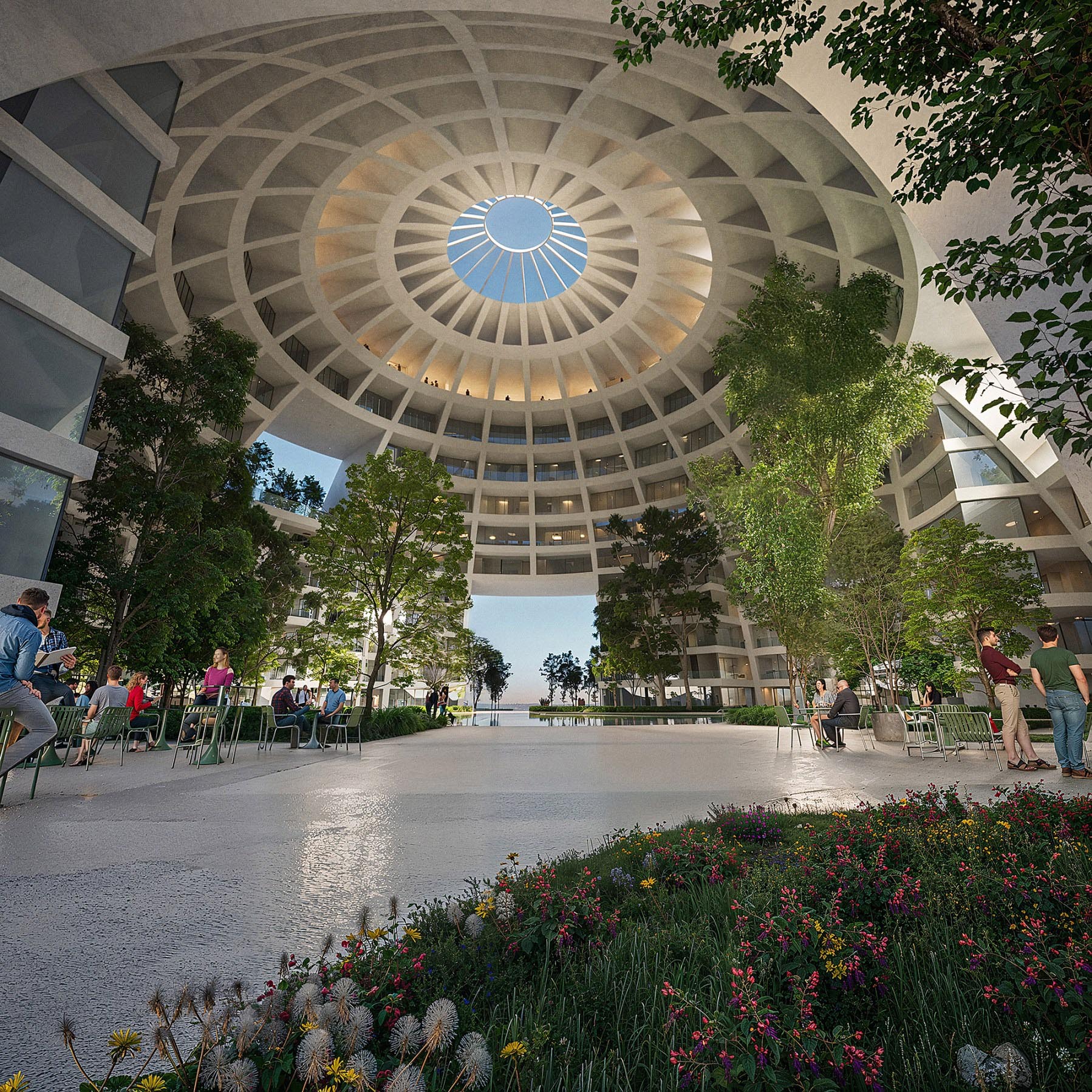
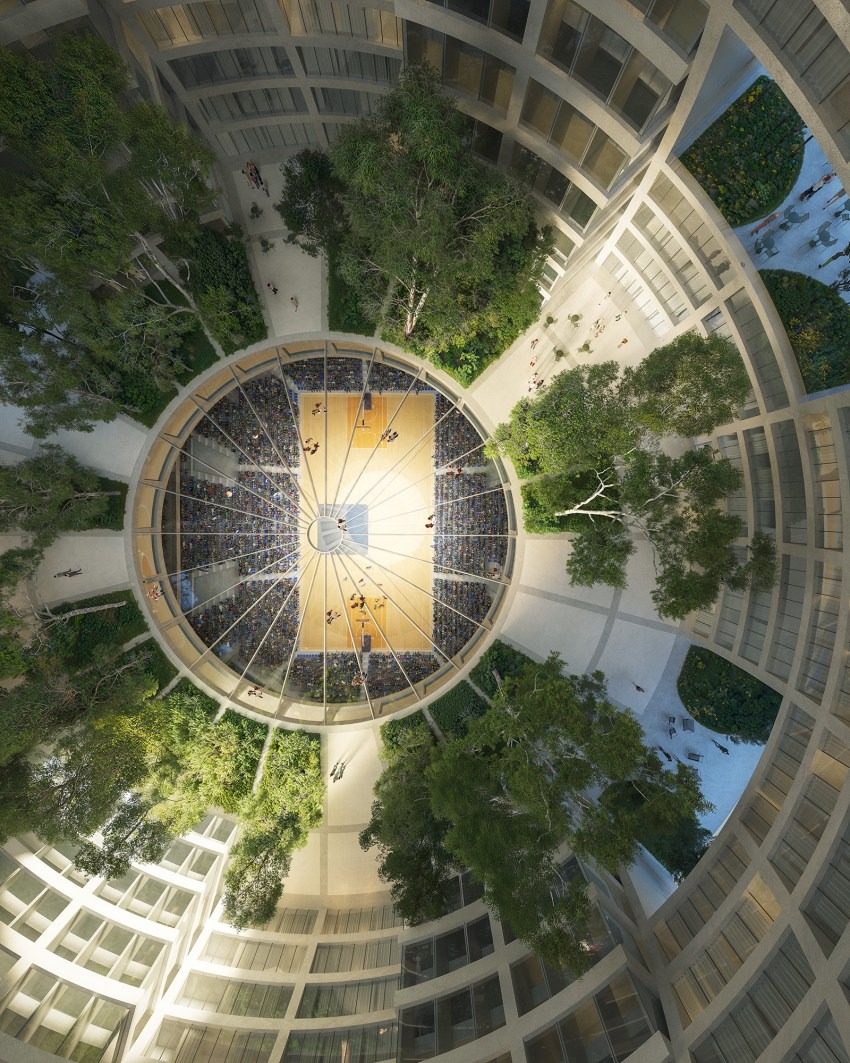
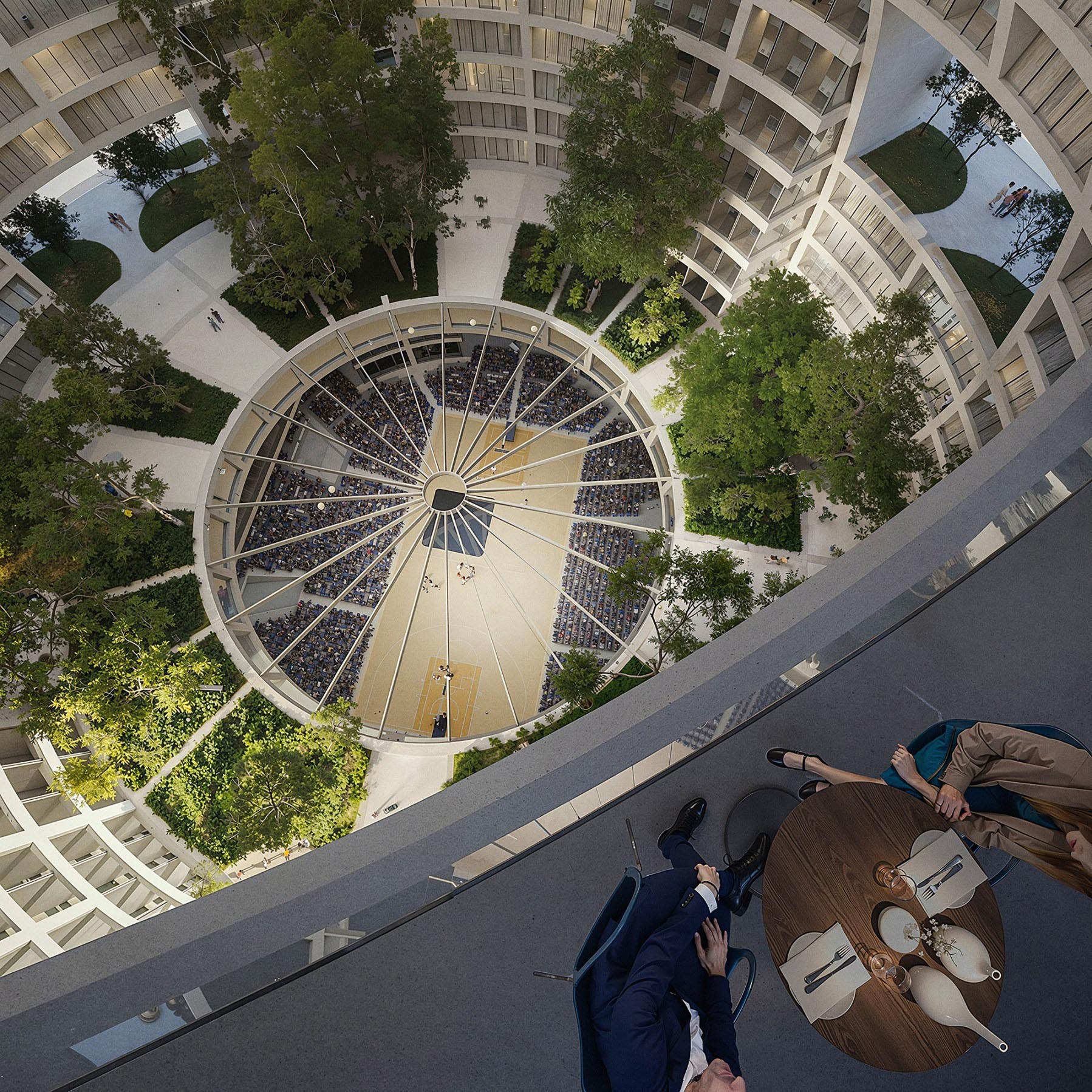
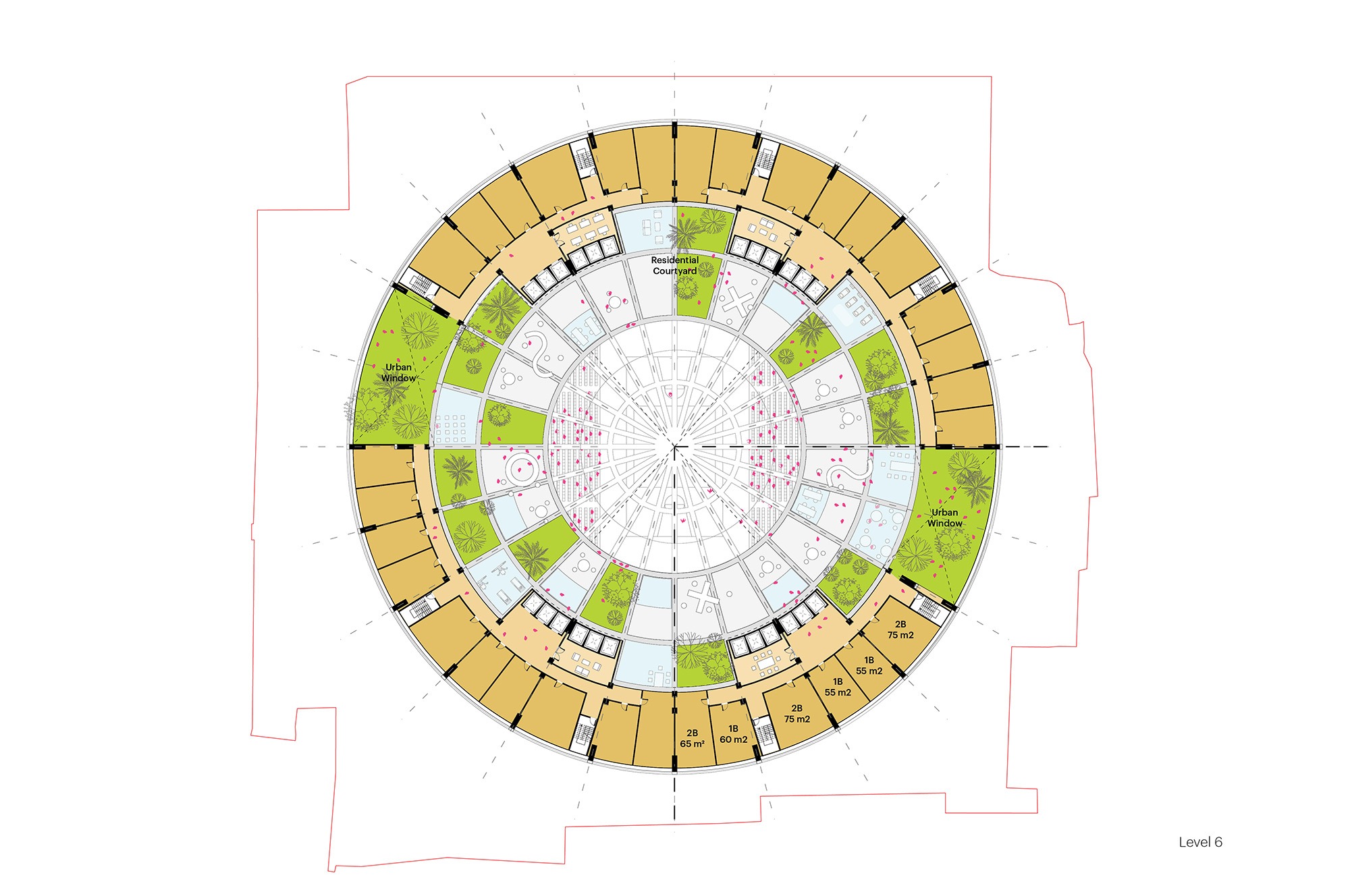
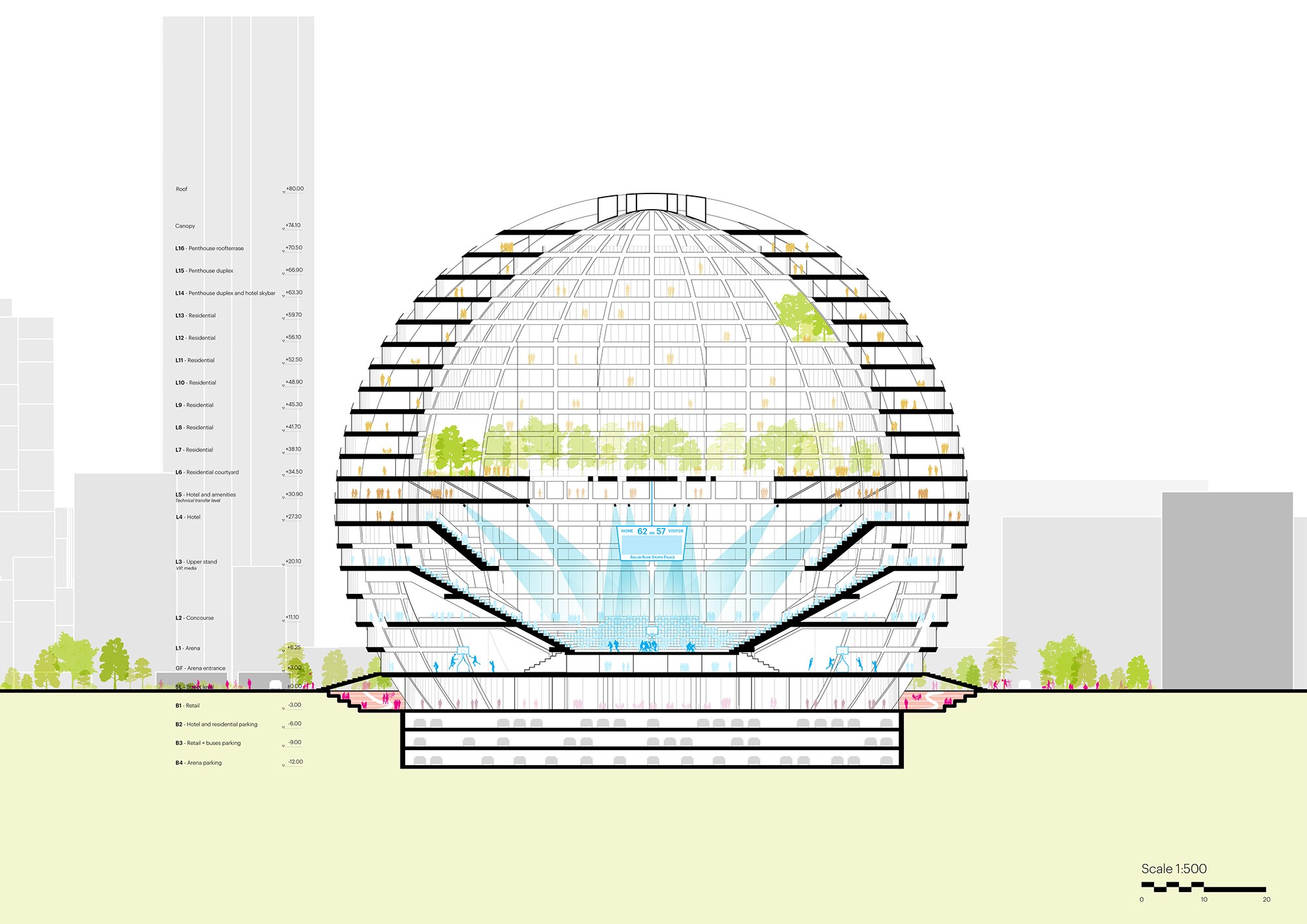
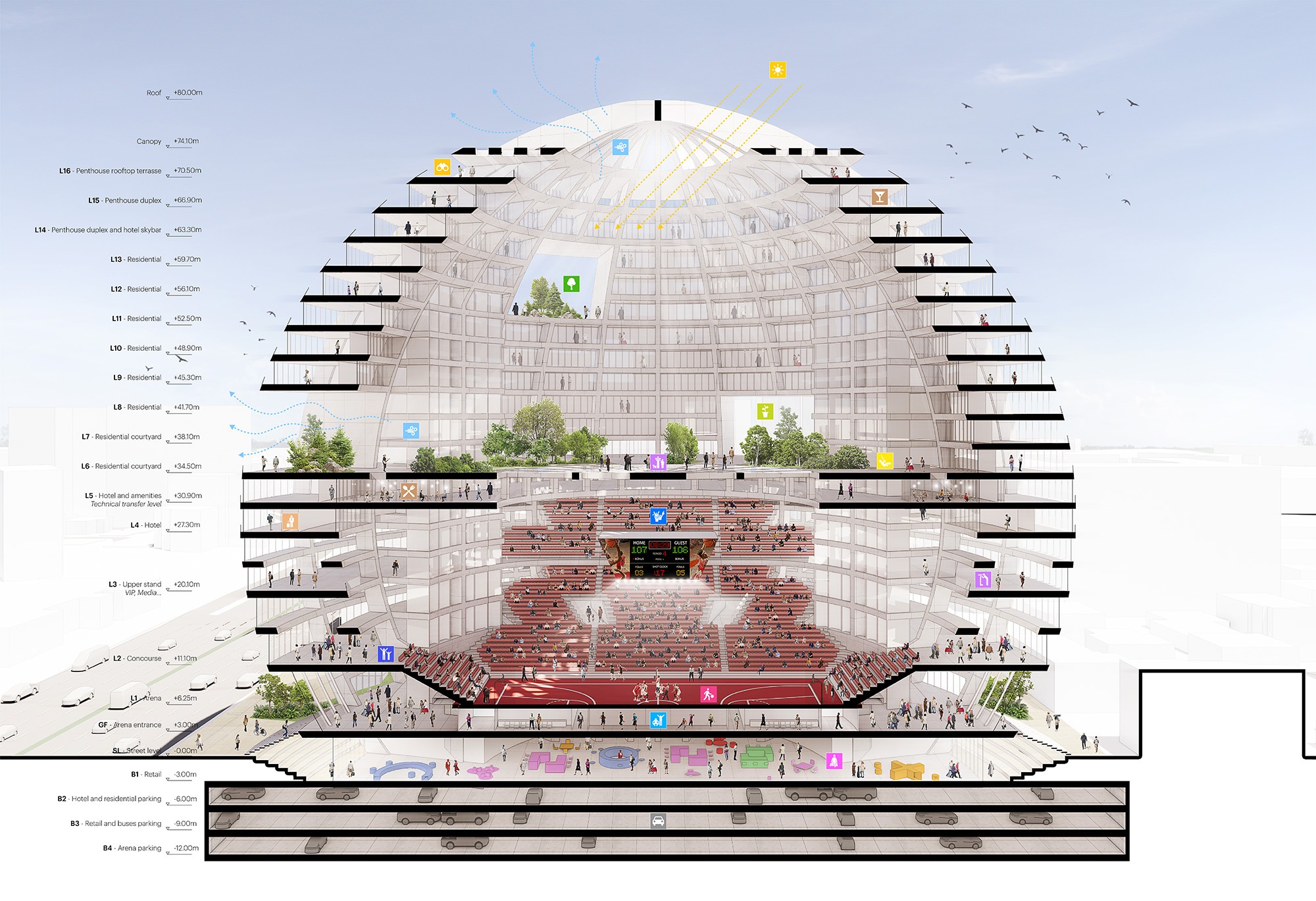
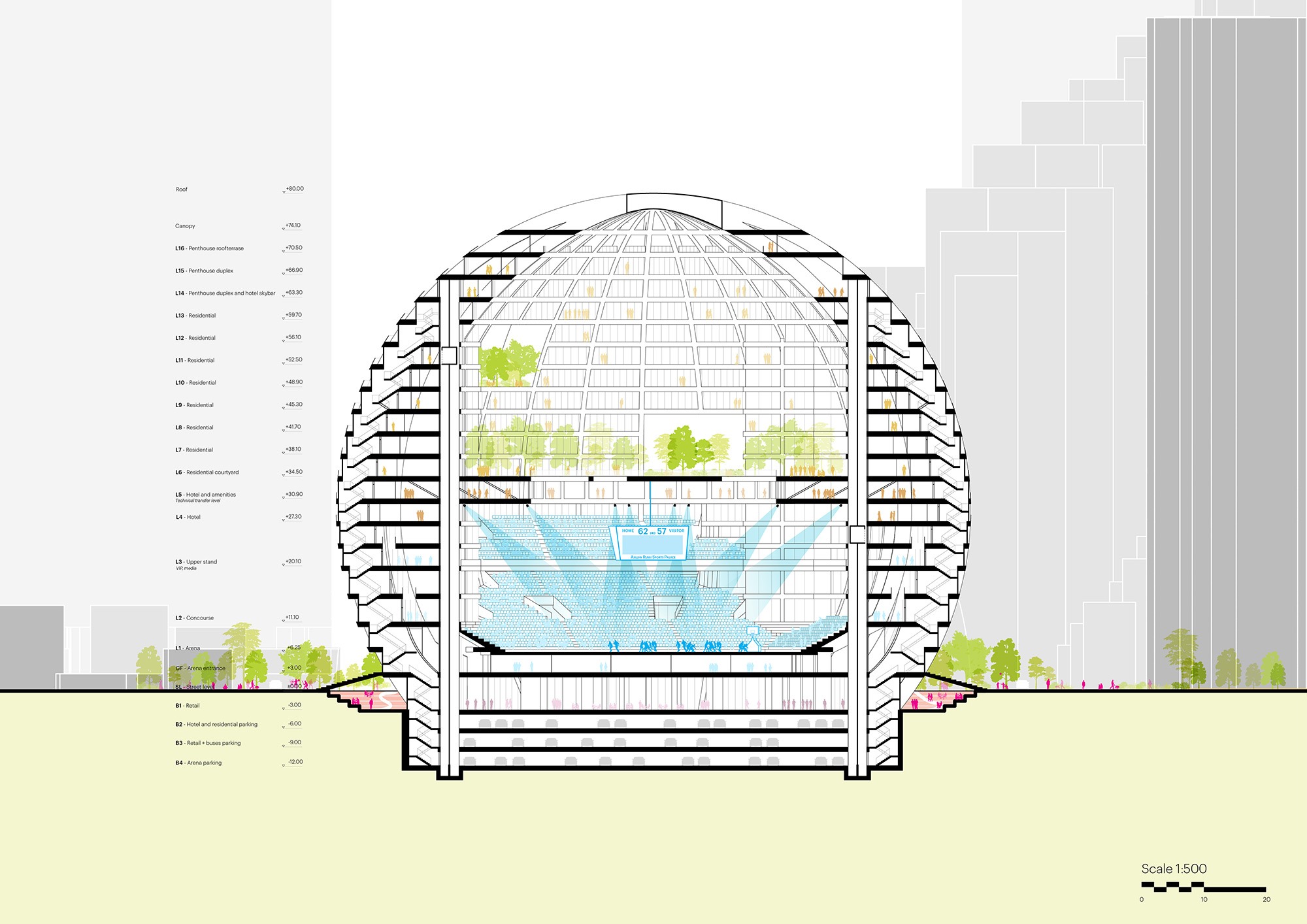
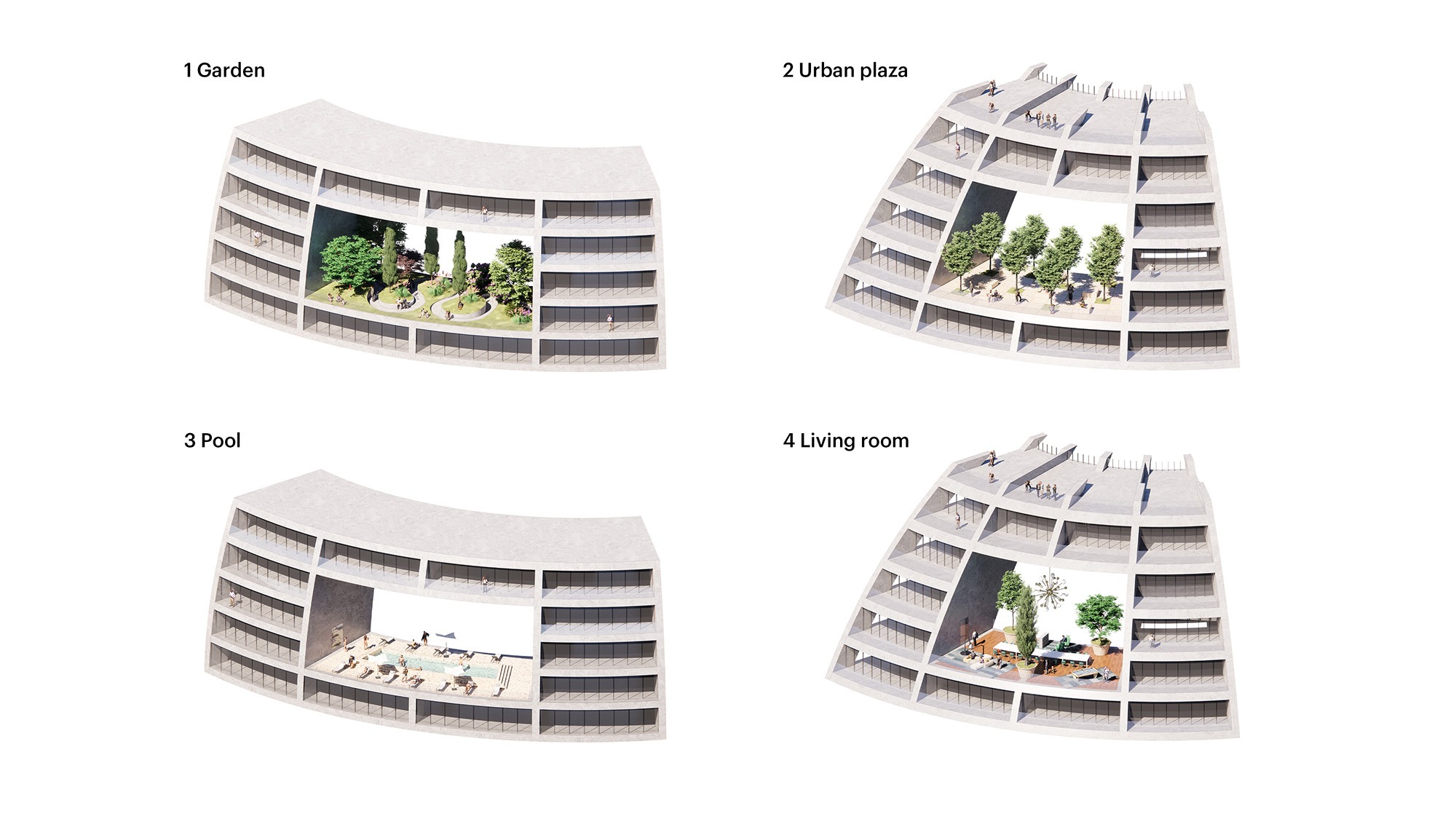
A sphere with a diameter of more than 100 meters serves as a unifying envelope and an environmental buffer. The double-shell configuration generates two complementary bowls: the lower event arena and an upper domed void that becomes a semi-outdoor communal garden for residents. The interior dome is scaled as a civic room in its own right, with mature planting and furniture that temper the hard geometries of the event bowl below.
A sphere with a diameter of more than 100 meters serves as a unifying envelope and an environmental buffer. The double-shell configuration generates two complementary bowls: the lower event arena and an upper domed void that becomes a semi-outdoor communal garden for residents. The interior dome is scaled as a civic room in its own right, with mature planting and furniture that temper the hard geometries of the event bowl below.
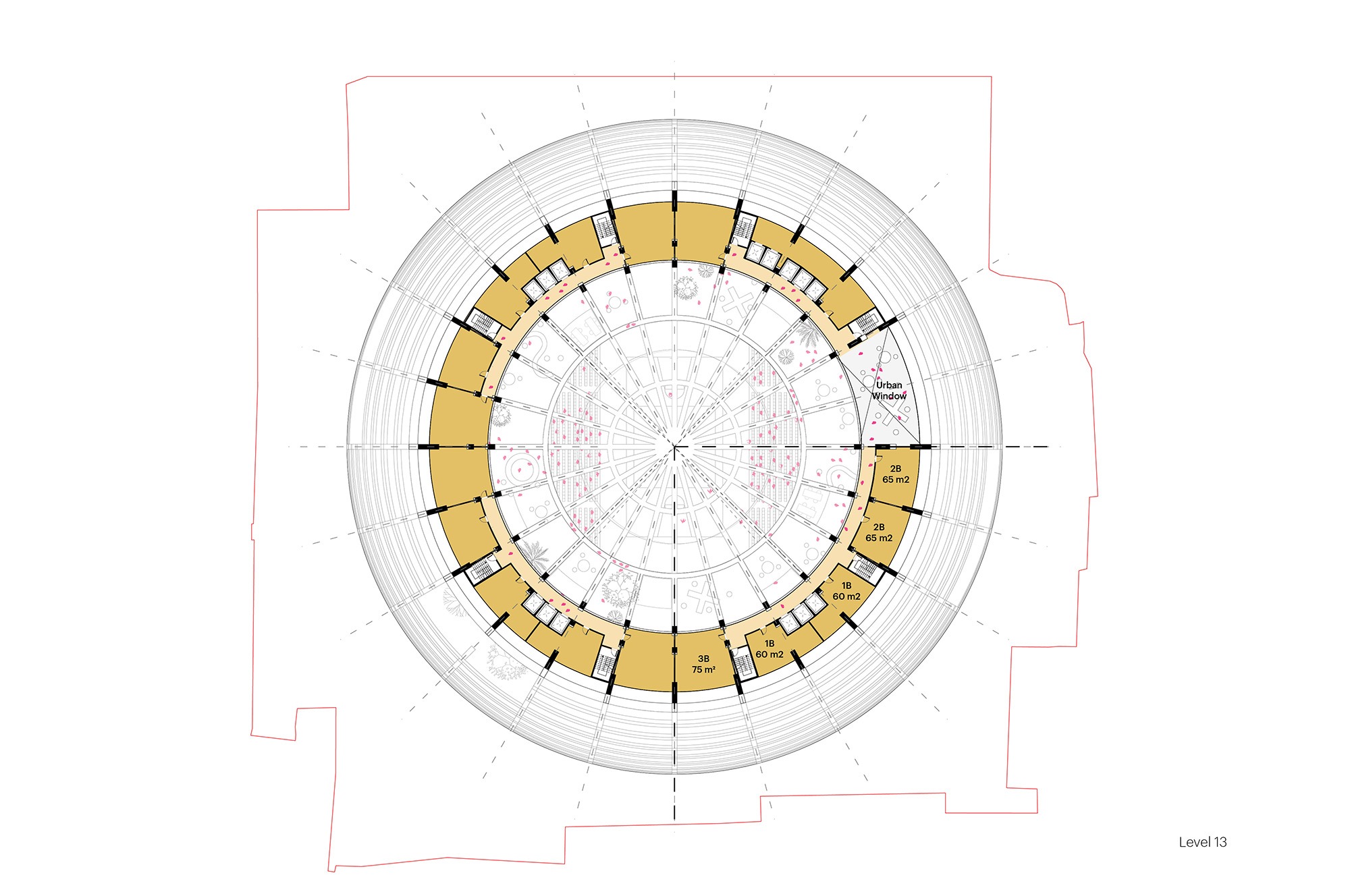
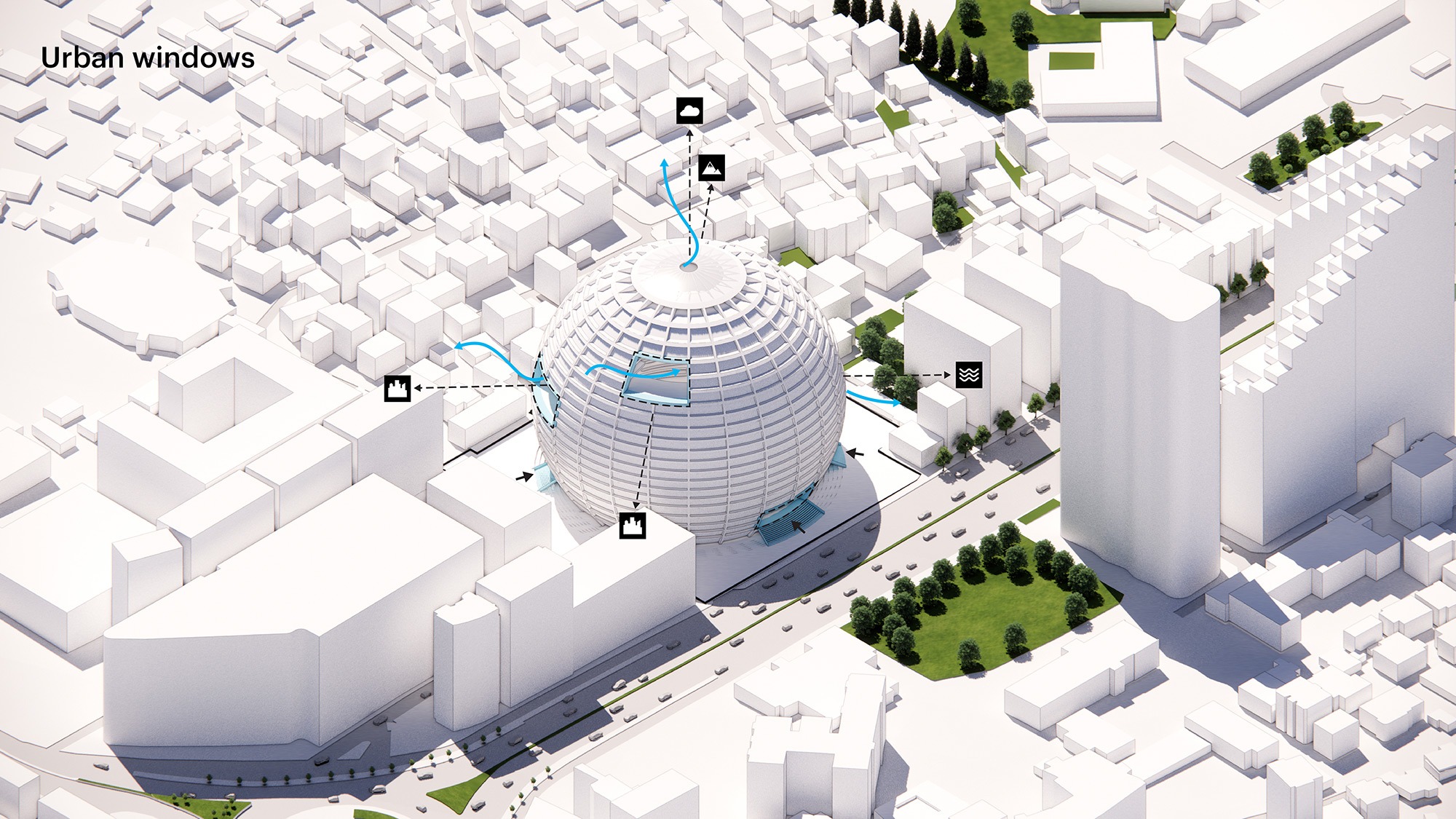
At the crown, the inward taper creates deep, shaded terraces that extend living space while managing solar gain. Apartment facades are recessed within the shell, leveraging the floor plates above as fixed brise-soleil and emphasizing the breadth of the terraces. Rectangular perforations are punched through the shell to admit daylight and promote cross-ventilation, while also providing space for planted communal decks. These calibrated voids prevent the continuous curve from becoming monolithic and diversify the social topography along the elevation.
Programmatic Layering and Viewing Relationships
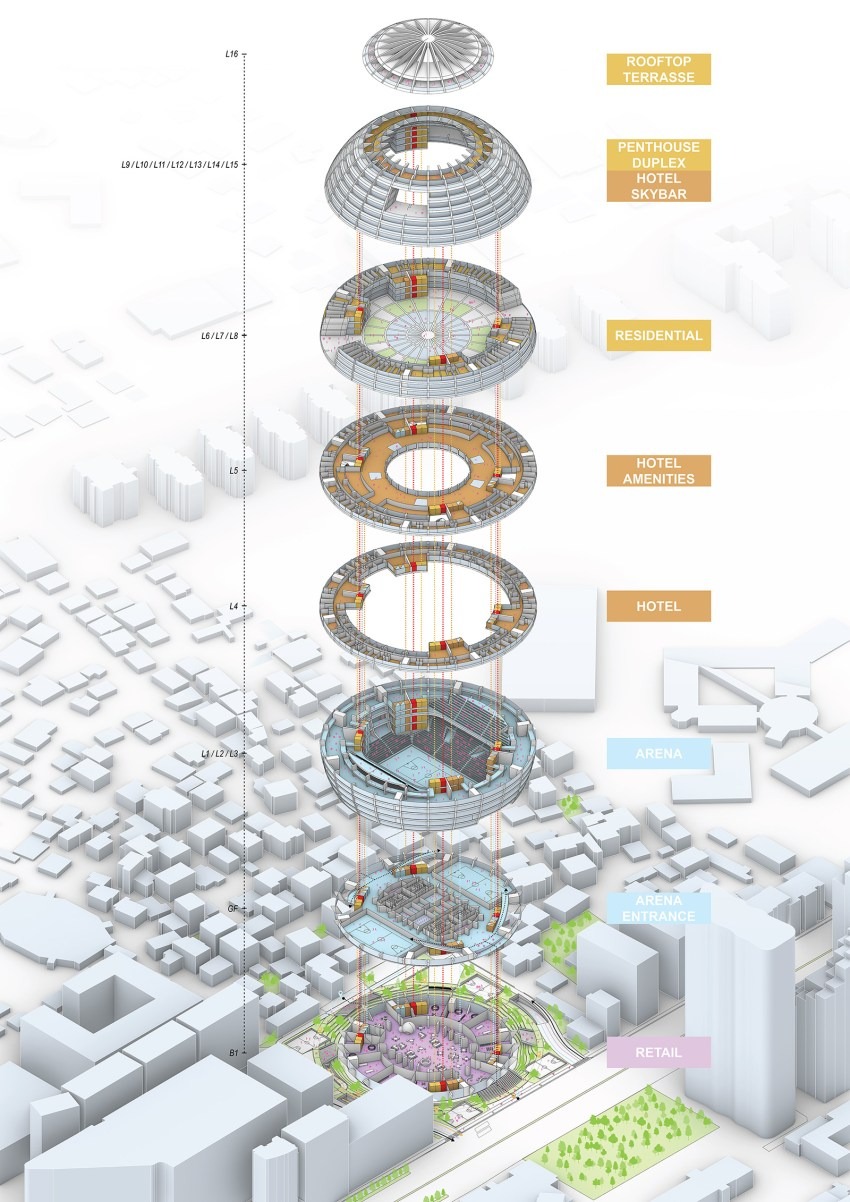
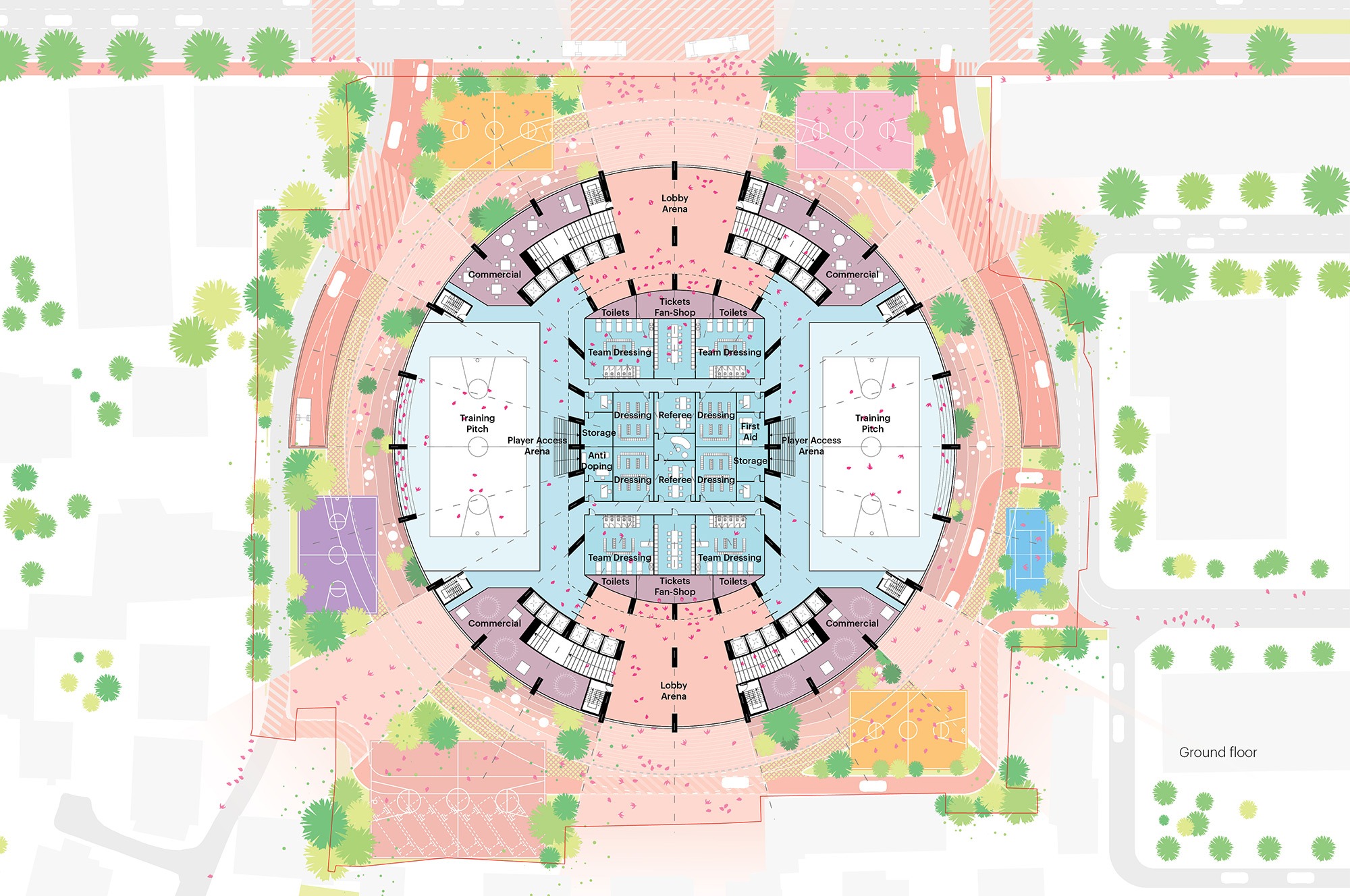
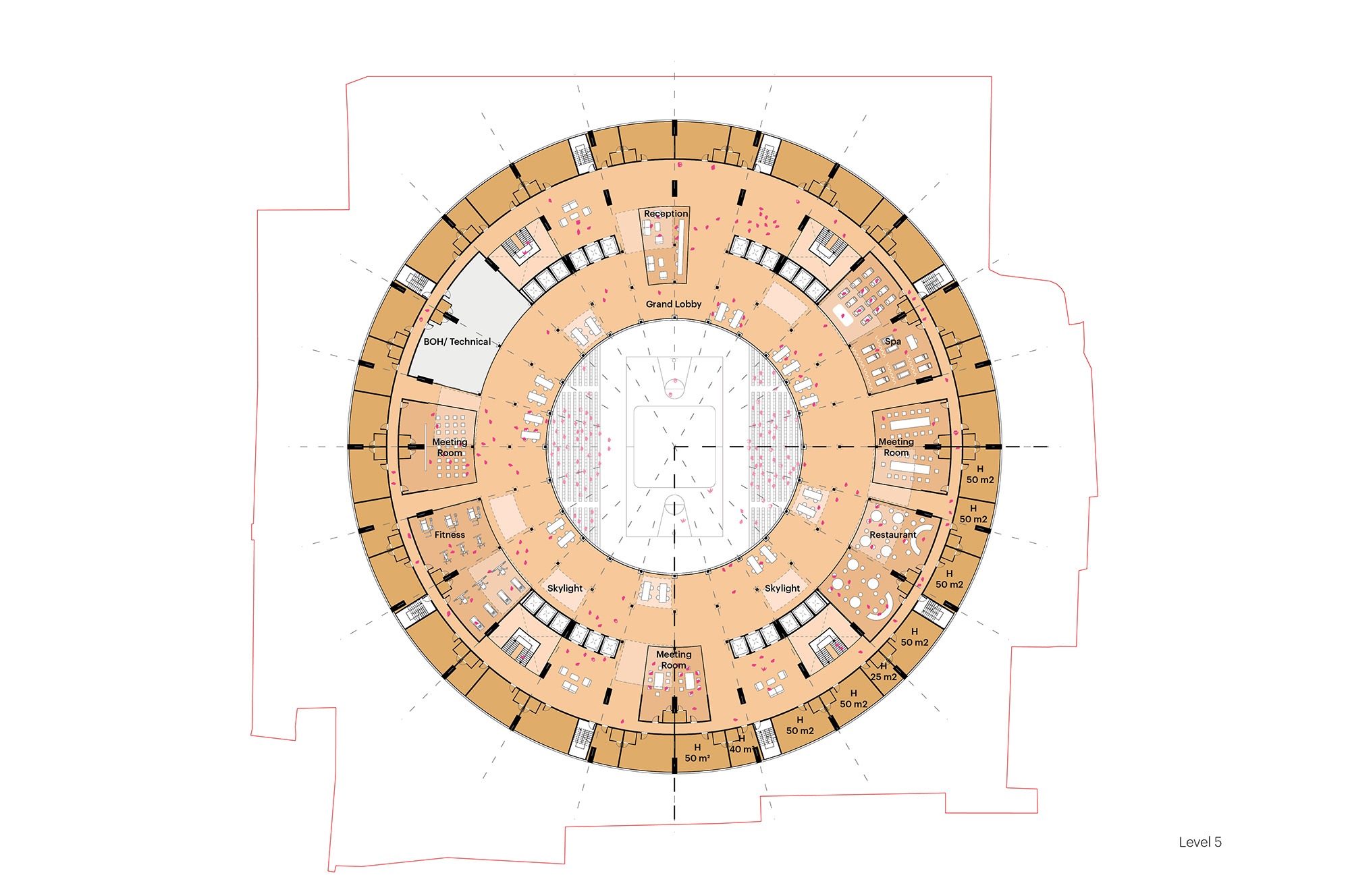
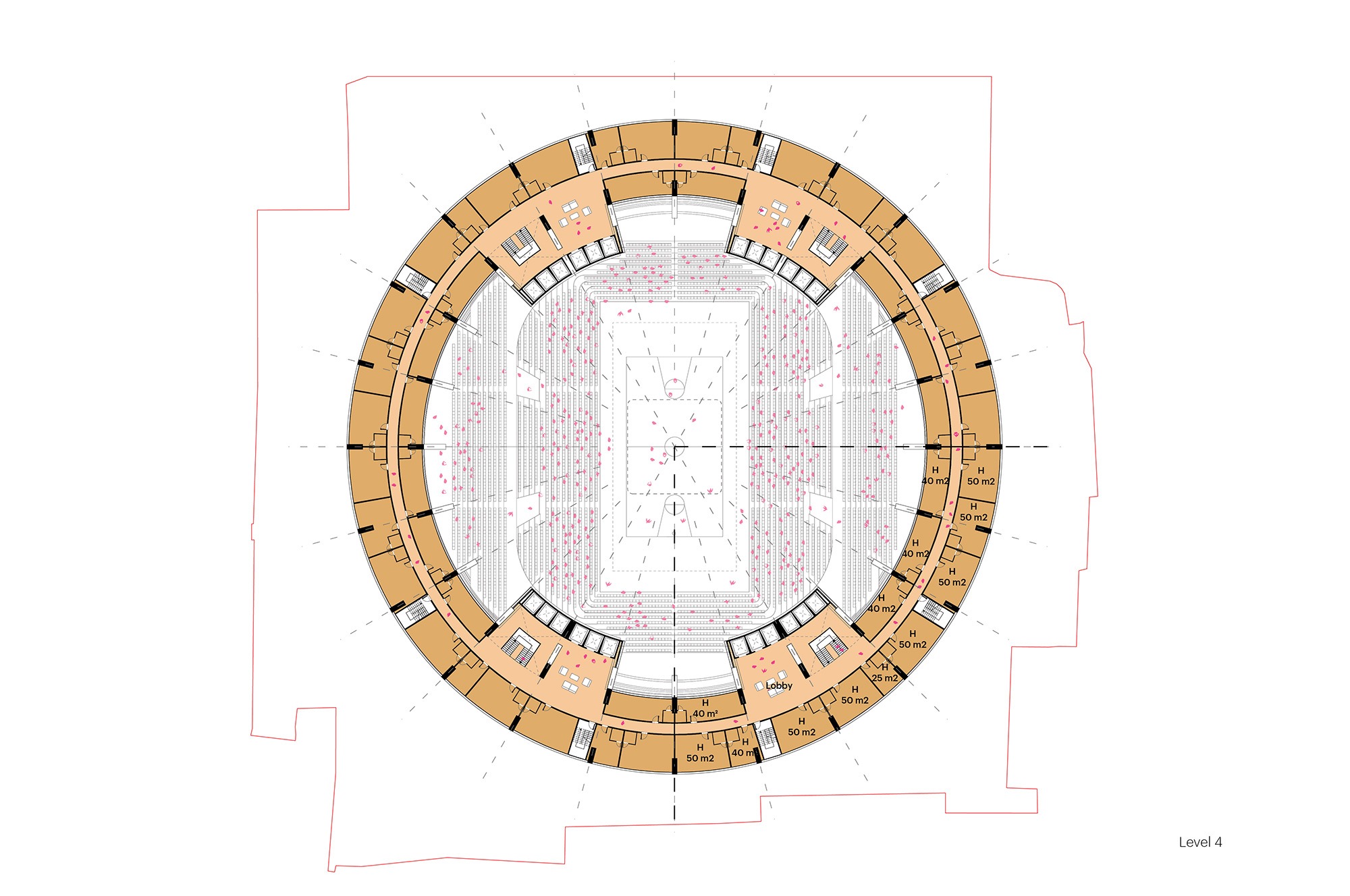
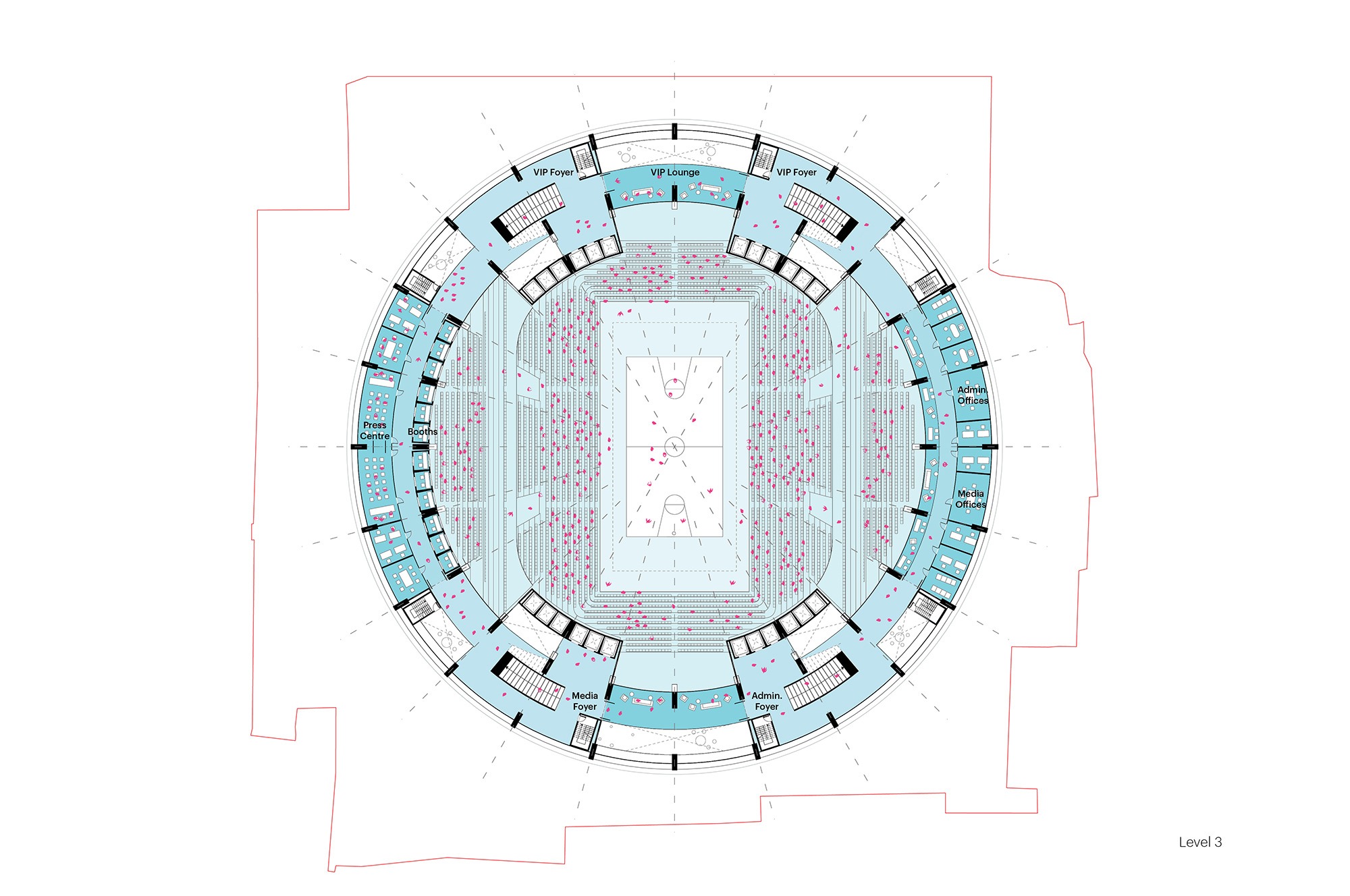
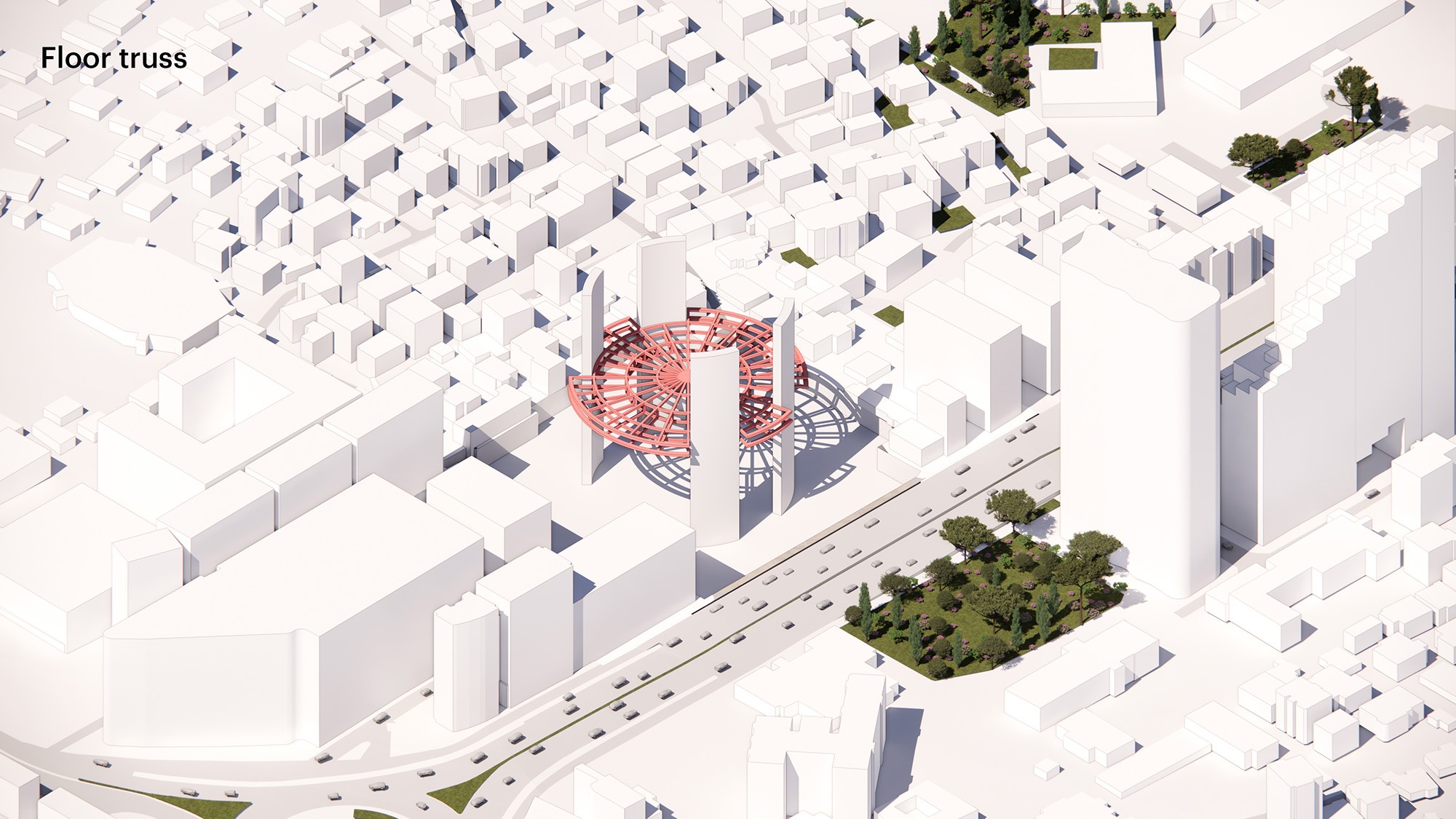
The sequence runs from a sunken retail concourse at grade to an arena, accessed by short bridges spanning the plinth. Two training courts are nested beneath the stands to intensify use of the bowl’s structural depth. Above the main venue, two hotel levels occupy the interstitial zone between sport and housing. Portions of the hotel cantilever over the stands, shaping an oculus that frames the arena from above.
The sequence runs from a sunken retail concourse at grade to an arena, accessed by short bridges spanning the plinth. Two training courts are nested beneath the stands to intensify use of the bowl’s structural depth. Above the main venue, two hotel levels occupy the interstitial zone between sport and housing. Portions of the hotel cantilever over the stands, shaping an oculus that frames the arena from above.
An operable glazed oculus mediates visual connection and acoustic separation between the bowl and the hotel, enabling controlled transparency during events and isolation when required. A second operable oculus at the crown introduces daylight and assists stack-driven ventilation through the residential dome. Apartments combine outward-facing units with dual-aspect layouts that capture both city views and internal garden outlooks. Mediated sightlines through the lower oculus provide limited glimpses toward the arena, raising questions of privacy, glare control, and event-time noise that the envelope detailing and acoustic assemblies must address.
Environmental Logic and Structural Implications
Passive measures are embedded in the massing and section. Recessed facades and deep overhangs reduce direct solar exposure, while the semi-outdoor courtyard dome with planting fosters a moderated microclimate. Perforations in the shell support cross-ventilation, and the paired oculi at bowl and crown can be opened to drive a stack effect. The spherical profile distributes exposure more evenly and mitigates wind-driven pressure differentials, helping stabilize comfort along the terraces and public edges.
Passive measures are embedded in the massing and section. Recessed facades and deep overhangs reduce direct solar exposure, while the semi-outdoor courtyard dome with planting fosters a moderated microclimate. Perforations in the shell support cross-ventilation, and the paired oculi at bowl and crown can be opened to drive a stack effect. The spherical profile distributes exposure more evenly and mitigates wind-driven pressure differentials, helping stabilize comfort along the terraces and public edges.
The large-span bowl and the hotel volumes that cantilever over the stands suggest a hybrid structural system combining tension-ring and compression-ring strategies with radial trusses or diaphragms at the event level. The residential shell likely serves as a stiffening diaphragm and an additional gravity frame, while the punched voids require local reinforcement and careful load redistribution. Acoustic isolation between the arena, hotel, and housing is critical, while visual connections are maintained through double-skin interfaces, floating slabs at sensitive programs, and targeted damping at the oculi. Fire safety, egress, and smoke management within the domed residential void require robust compartmentation and extract systems without compromising the shell’s continuity.
Source: MVRDV
m i l i m e t d e s i g n – w h e r e t h e c o n v e r g e n c e o f u n i q u e c r e a t i v e s
m i l i m e t d e s i g n – w h e r e t h e c o n v e r g e n c e o f u n i q u e c r e a t i v e s











Since 2009. Copyright © 2026 milimetdesign. All rights reserved. Contact: milimetdesign@milimet.com