
Rivus Geometry design by Peny Hsieh Interiors





Project: Rivus Geometry
Interior design: Peny Hsieh Interiors
Location: Taipei, Taiwan
Photo: Peny Hsieh Interiors
Area: 460 m²
Year: 2025
Interior design: Peny Hsieh Interiors
Location: Taipei, Taiwan
Photo: Peny Hsieh Interiors
Area: 460 m²
Year: 2025
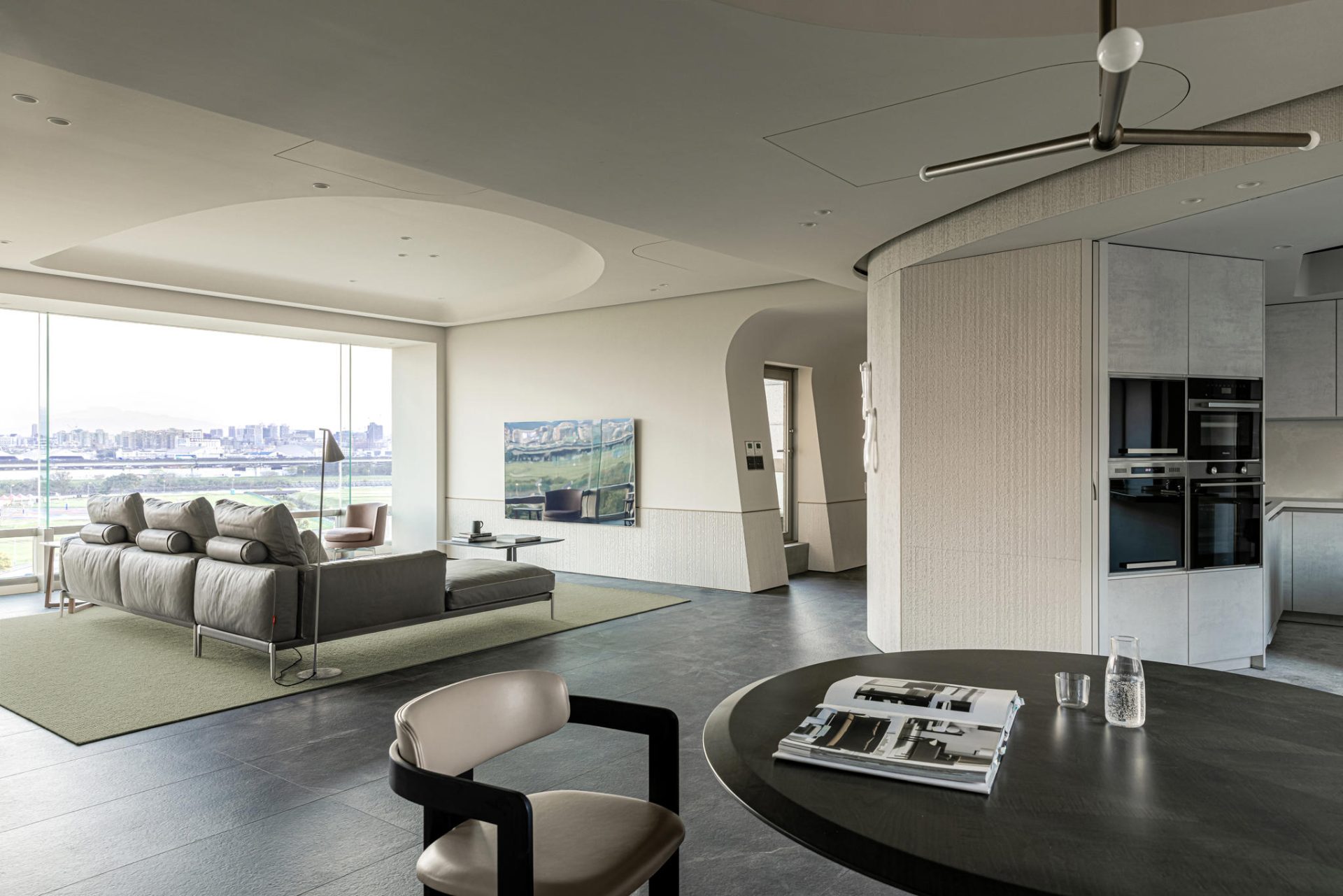
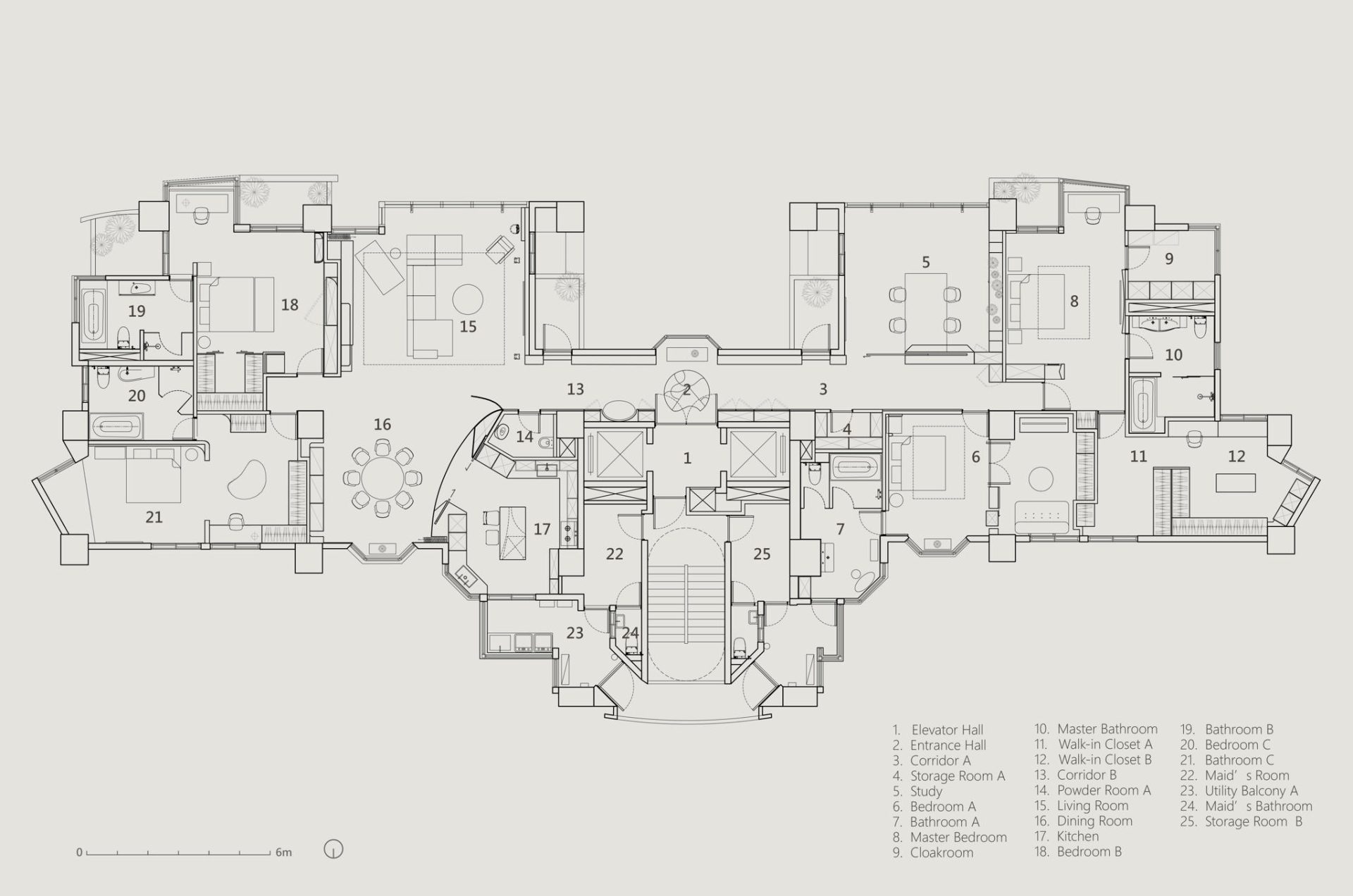
Located along the river, this residence merges two adjacent units into a 460-square-meter family home.
Inspired by Taiwan’s ever-changing rivers and landscapes, the design team translated the winding flow of water and the contours of the terrain into a geometric language, creating a home that moves and breathes like a natural landscape.
Designed for a family of five, the renovation serves as a vehicle of memory and continuity, preserving traces of the past twenty years while opening a new chapter for the future.
The owners envisioned a residence that balances functionality, durability, and rationality with sculptural forms, artistic presence, and atmosphere.
The design harmonizes the scale of family gatherings with the tranquility of a private retreat, giving the home a character that is both practical and poetic.
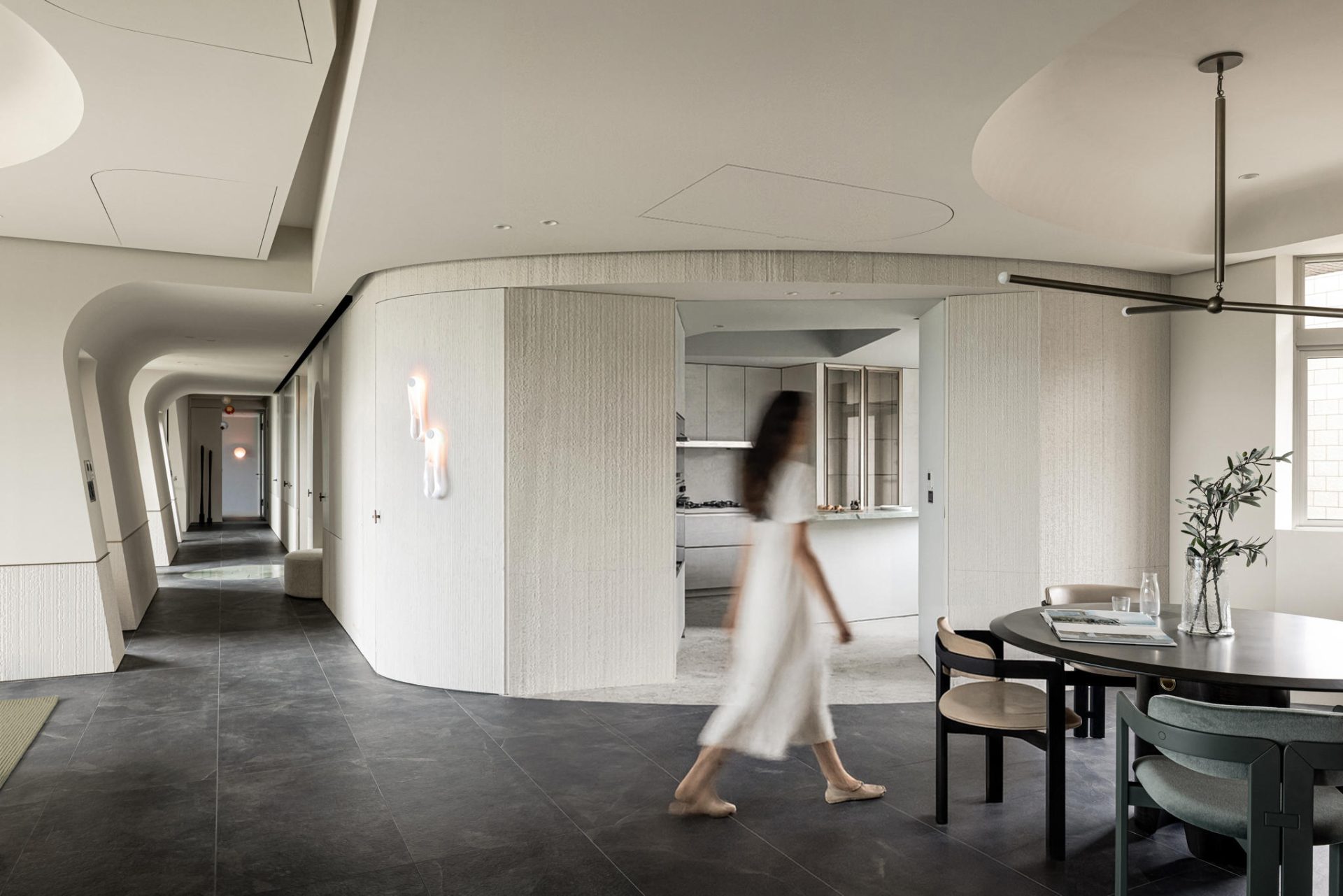
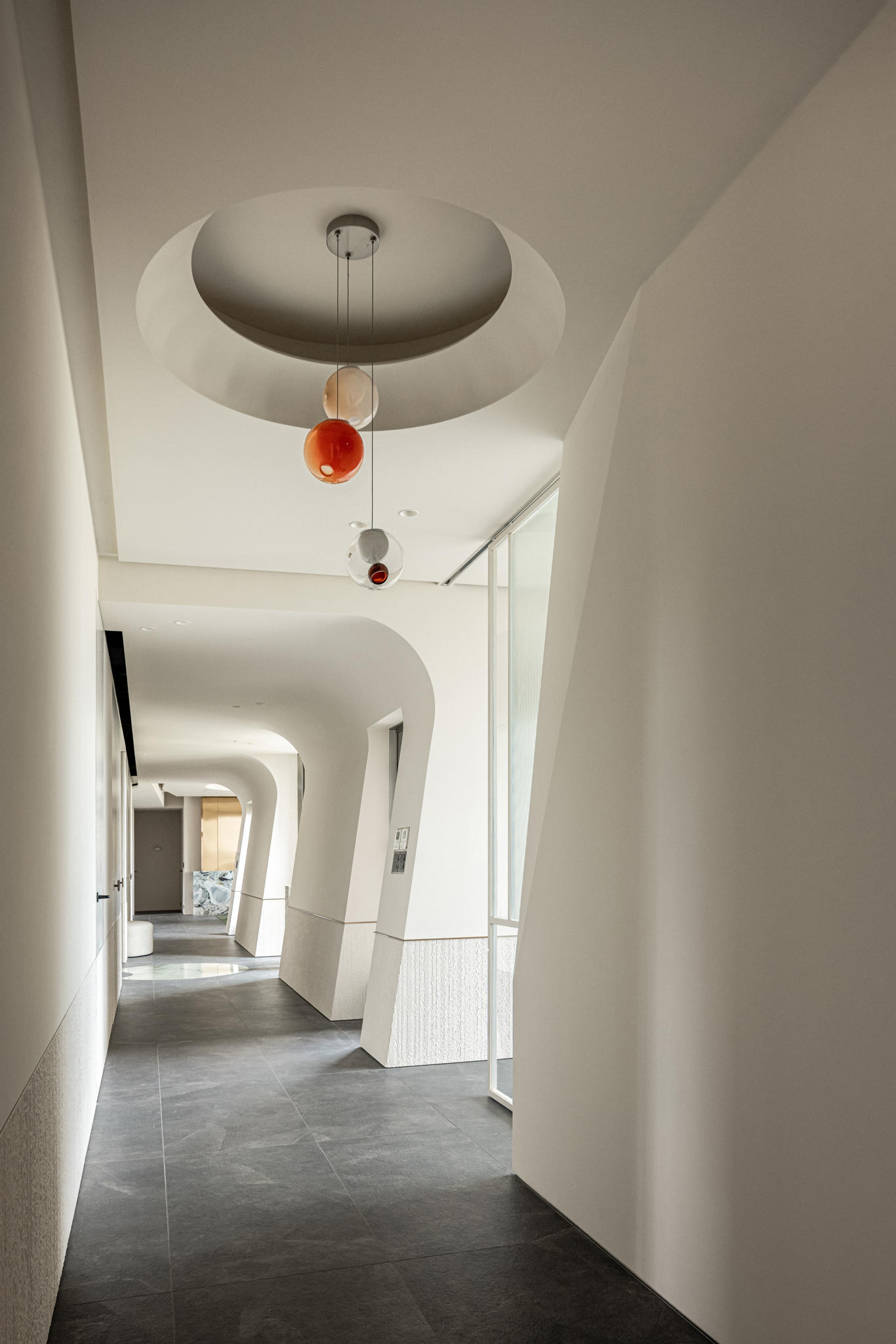
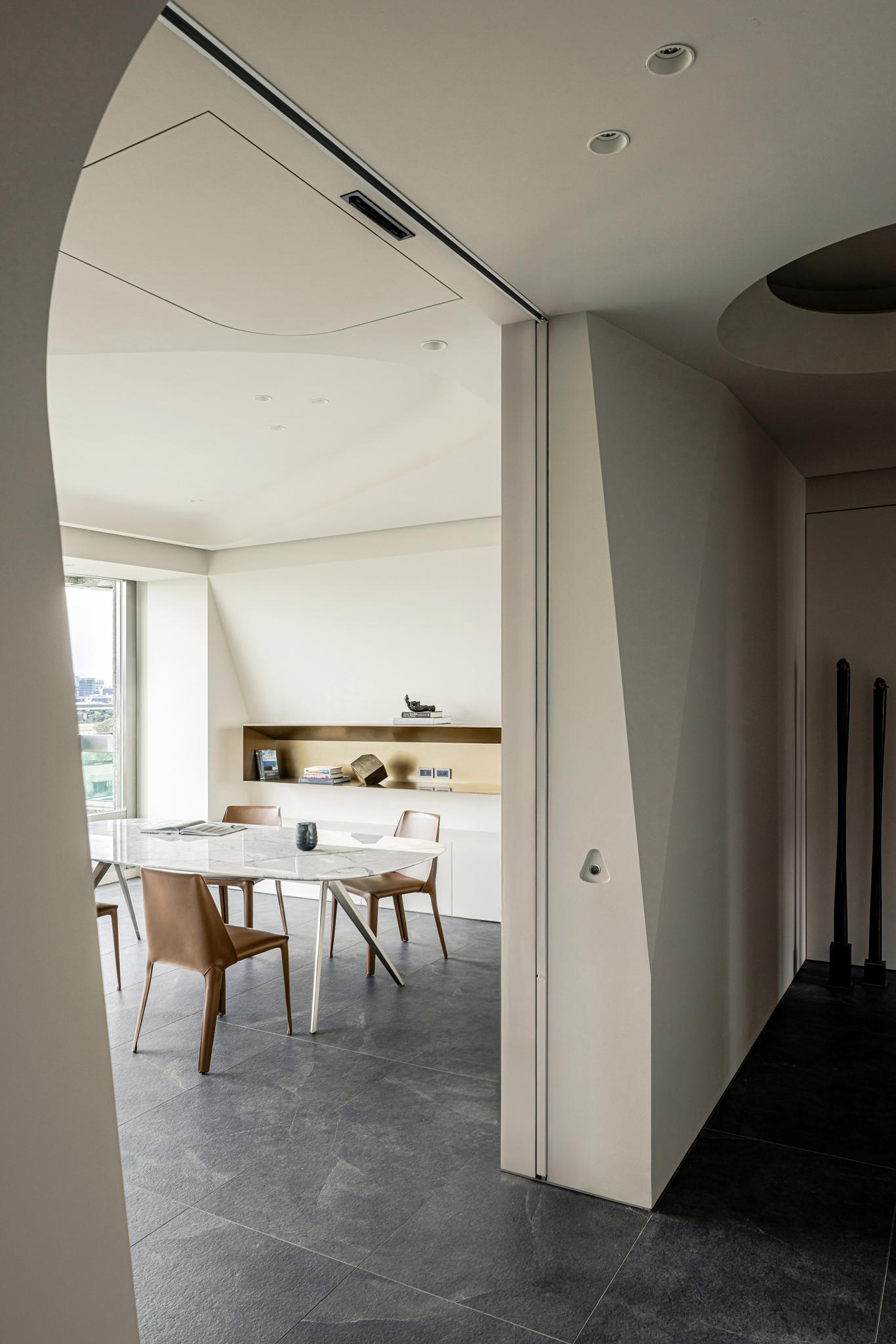
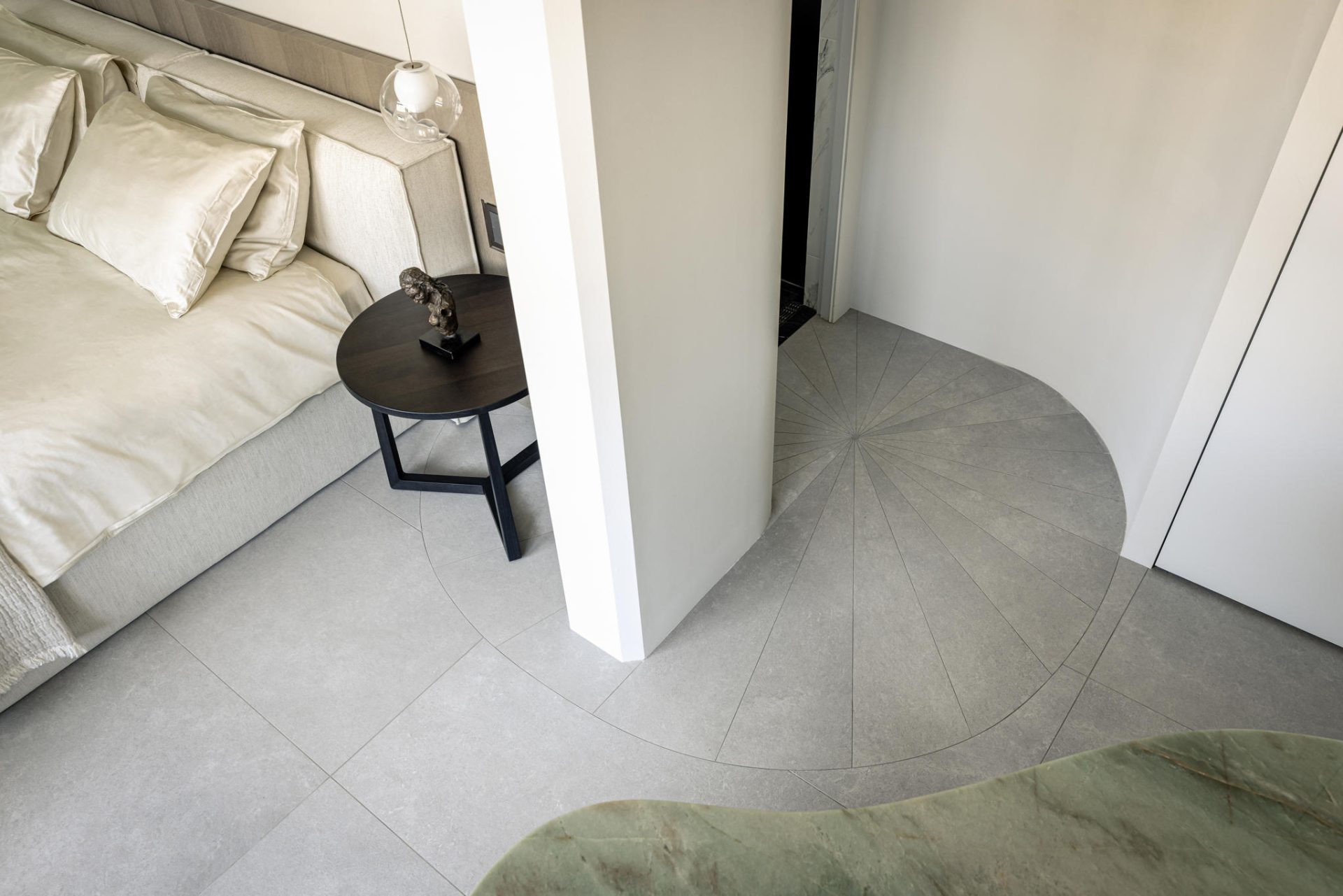
The concept of “fluid geometry” forms the foundation of the project. Long corridors were reimagined as cavernous spaces; the dining and living areas are connected through expansive ceilings and continuous circulation; private rooms unfold gradually through curved transitions.
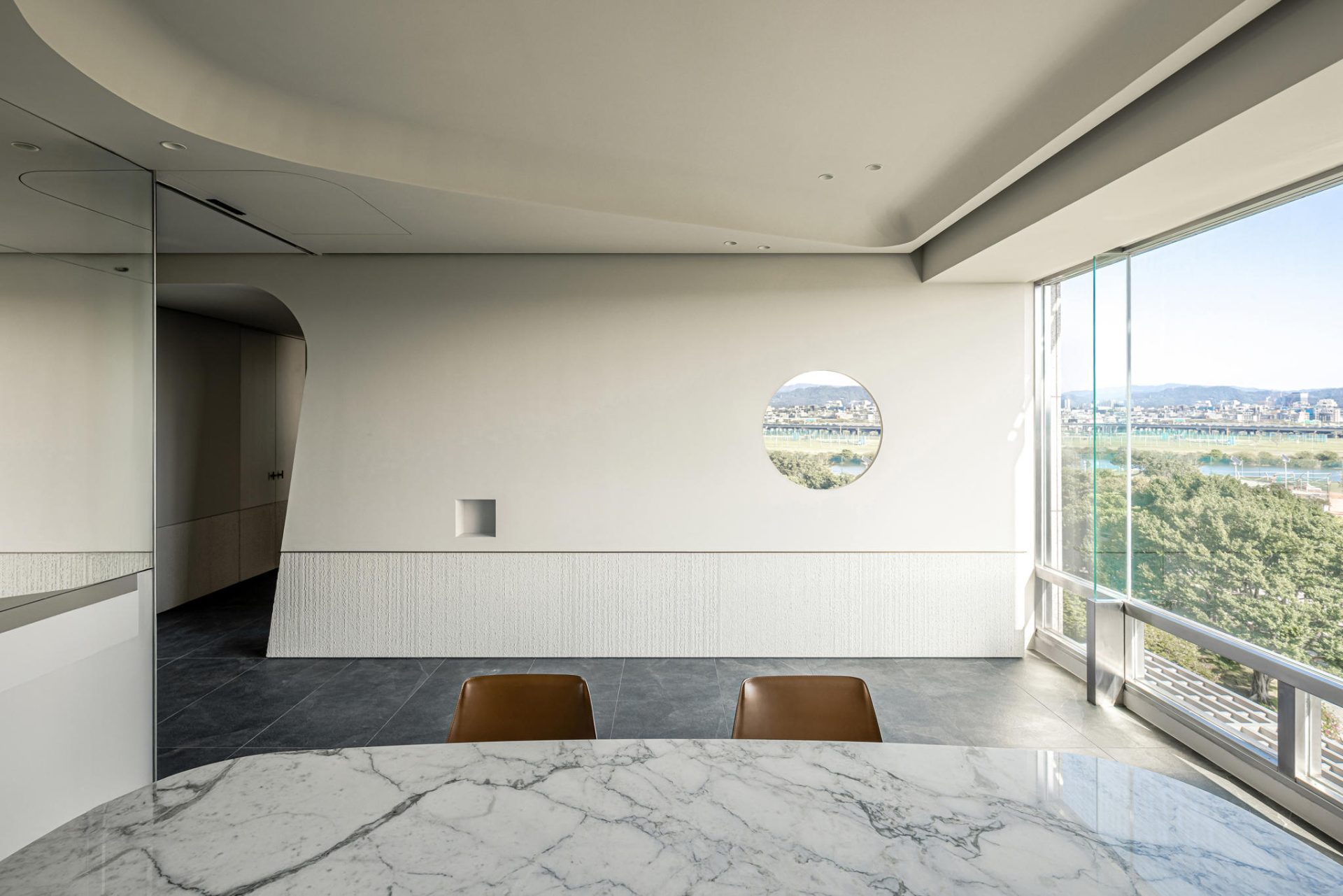
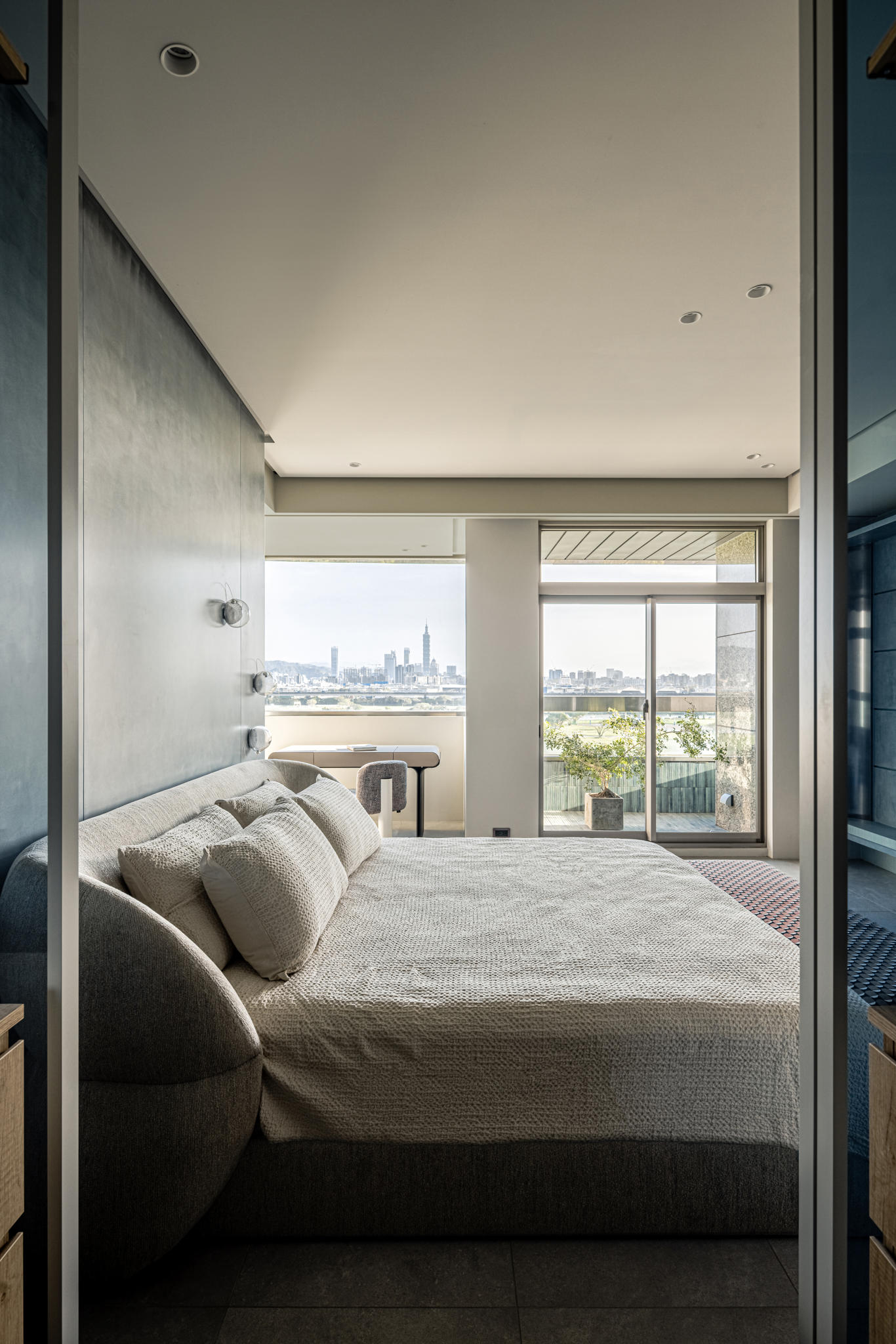
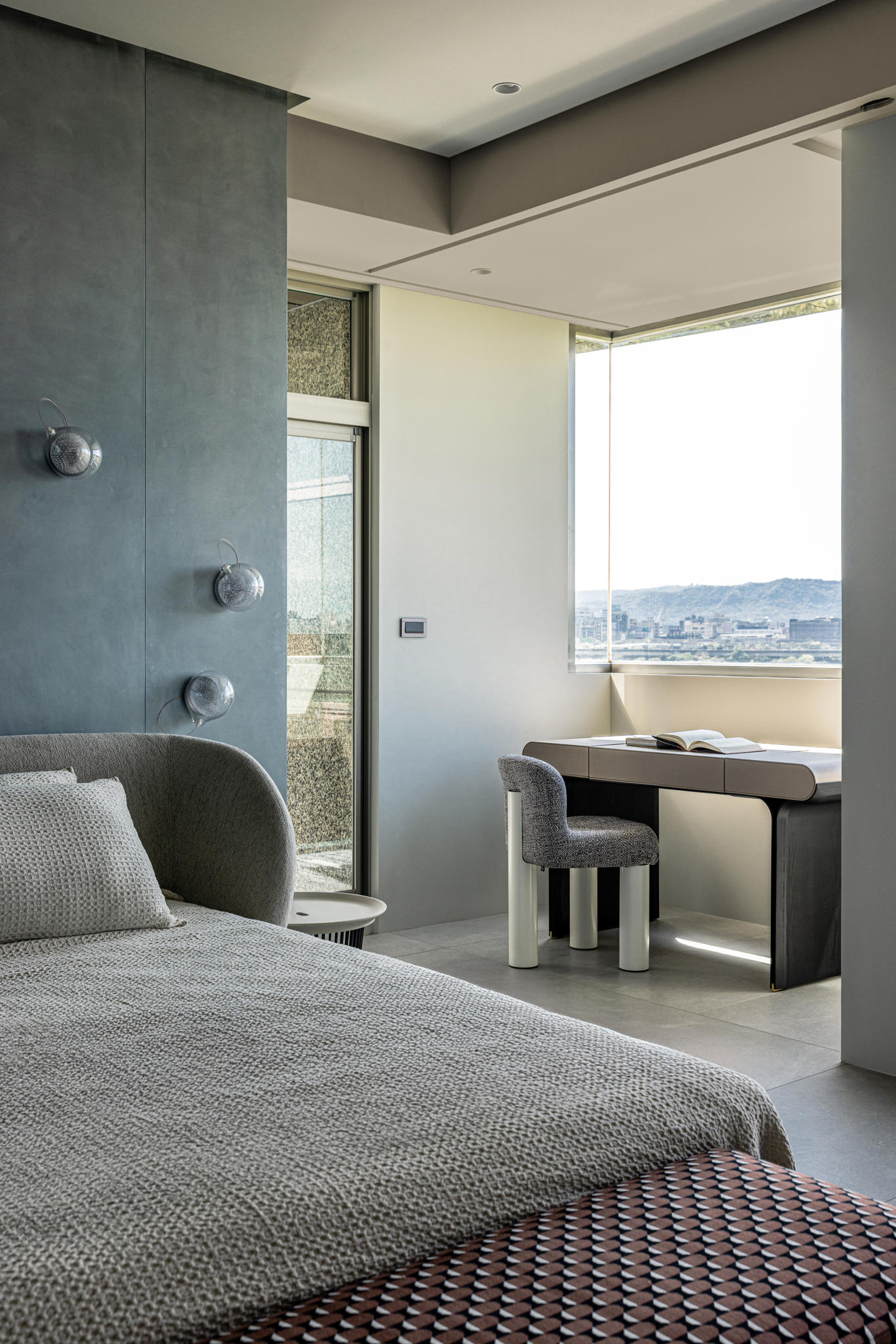
Rhythm, light, and materials intertwine, making everyday life feel like moving through a natural terrain. Natural light enters through carefully positioned openings, while windows act as frames, capturing the city’s greenery and the seasonal changes.
Light and geometry take center stage in the interiors, creating a poetic atmosphere, reducing reliance on artificial lighting, and reflecting a commitment to energy efficiency and environmental responsibility.
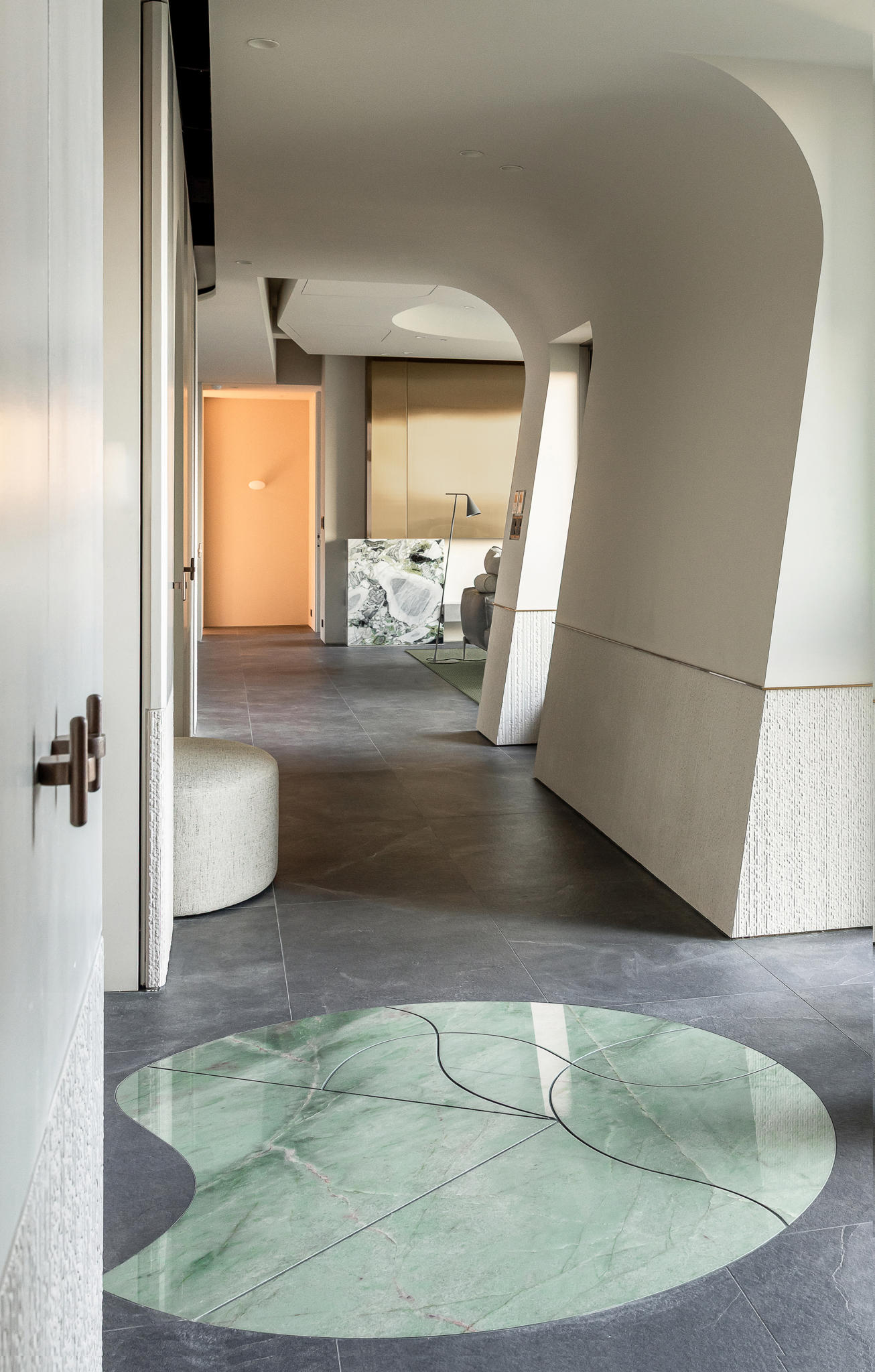
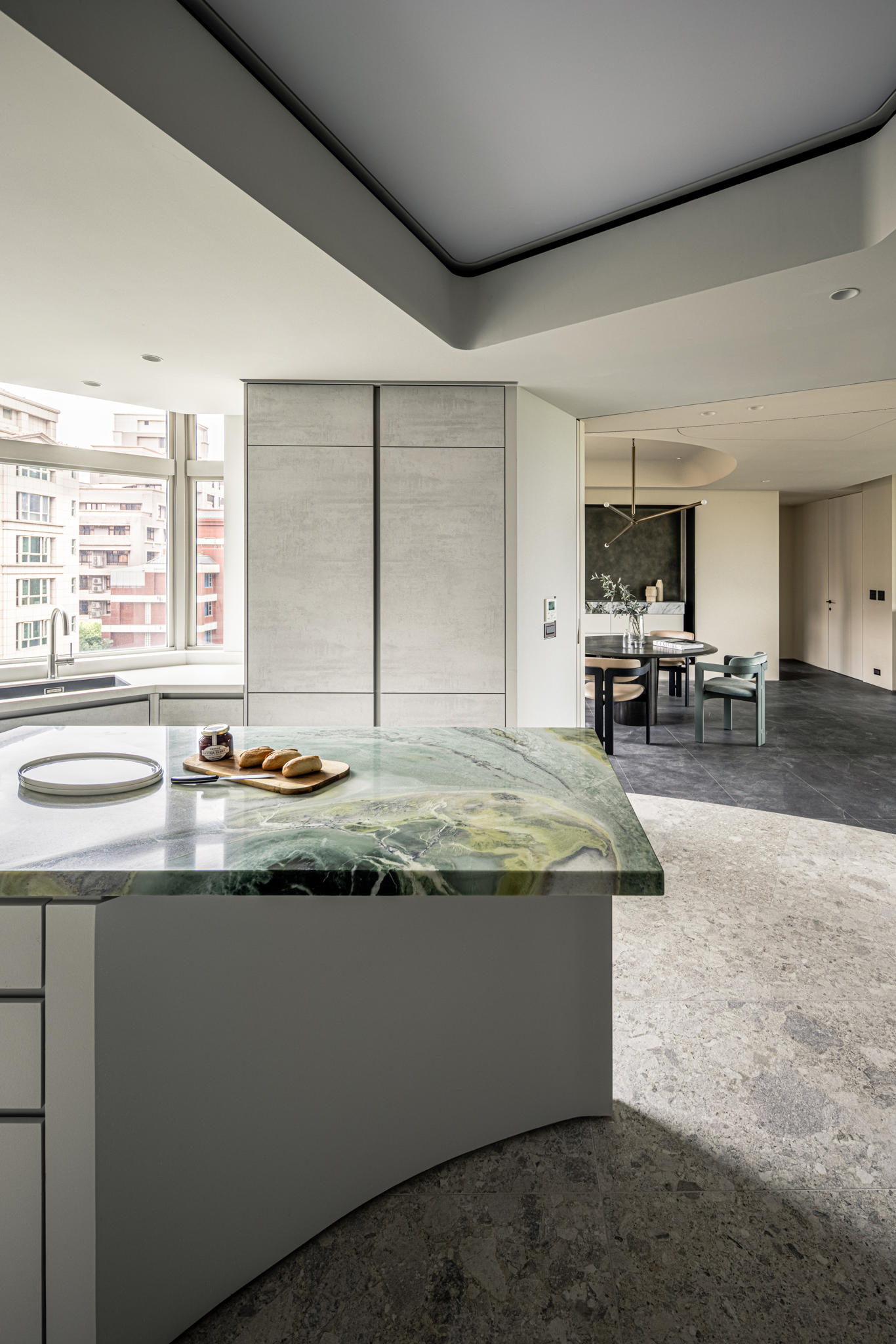
Every detail is imbued with meaning. The entrance, clad in green marble, becomes a symbolic reference point for the home. The dining and living areas are defined by arches, their character shaped by light and material transitions.
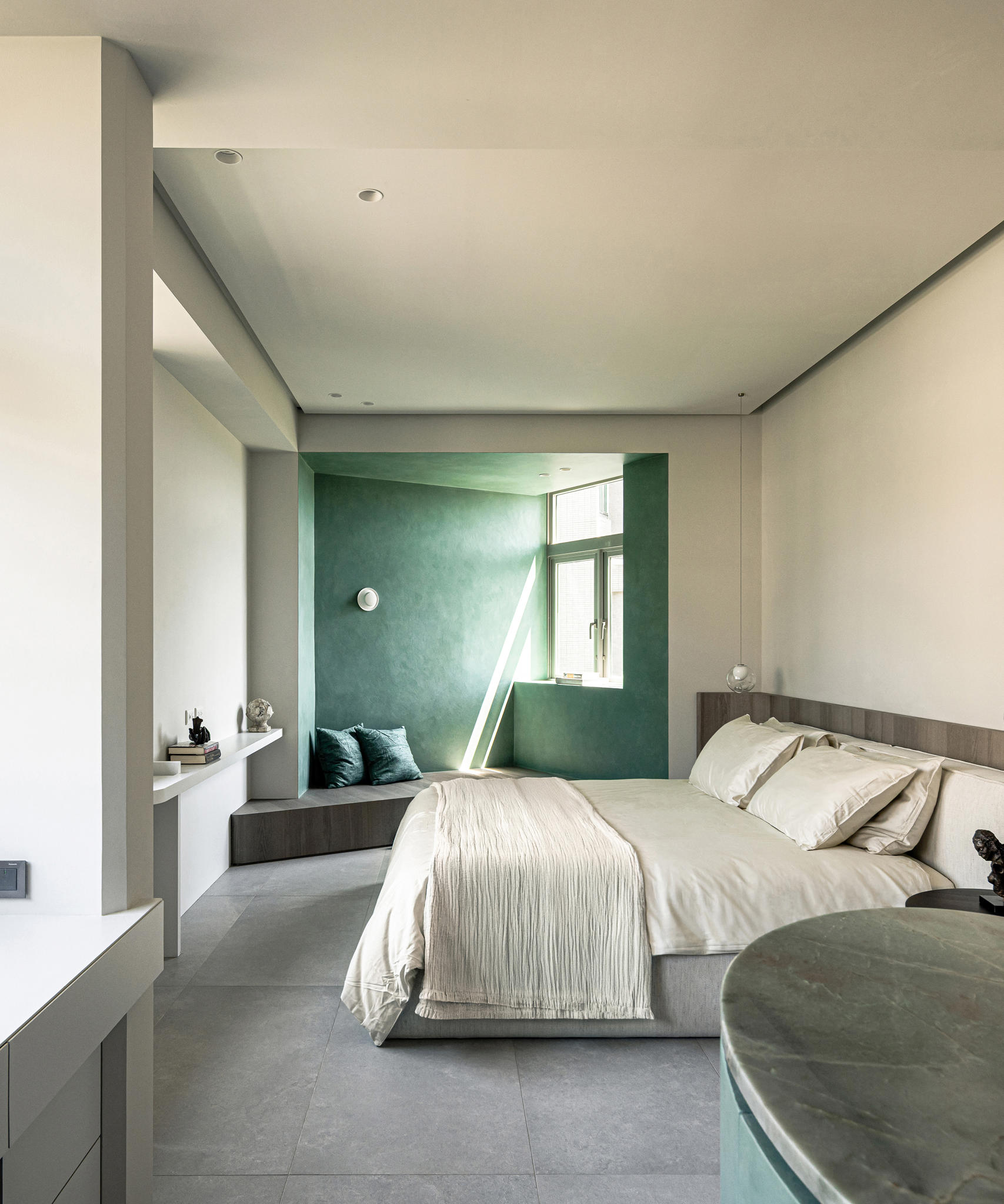
The daughter’s bedroom was conceived as an “indoor aquarium”: a serene, restorative space inspired by her childhood fascination with fish tanks.
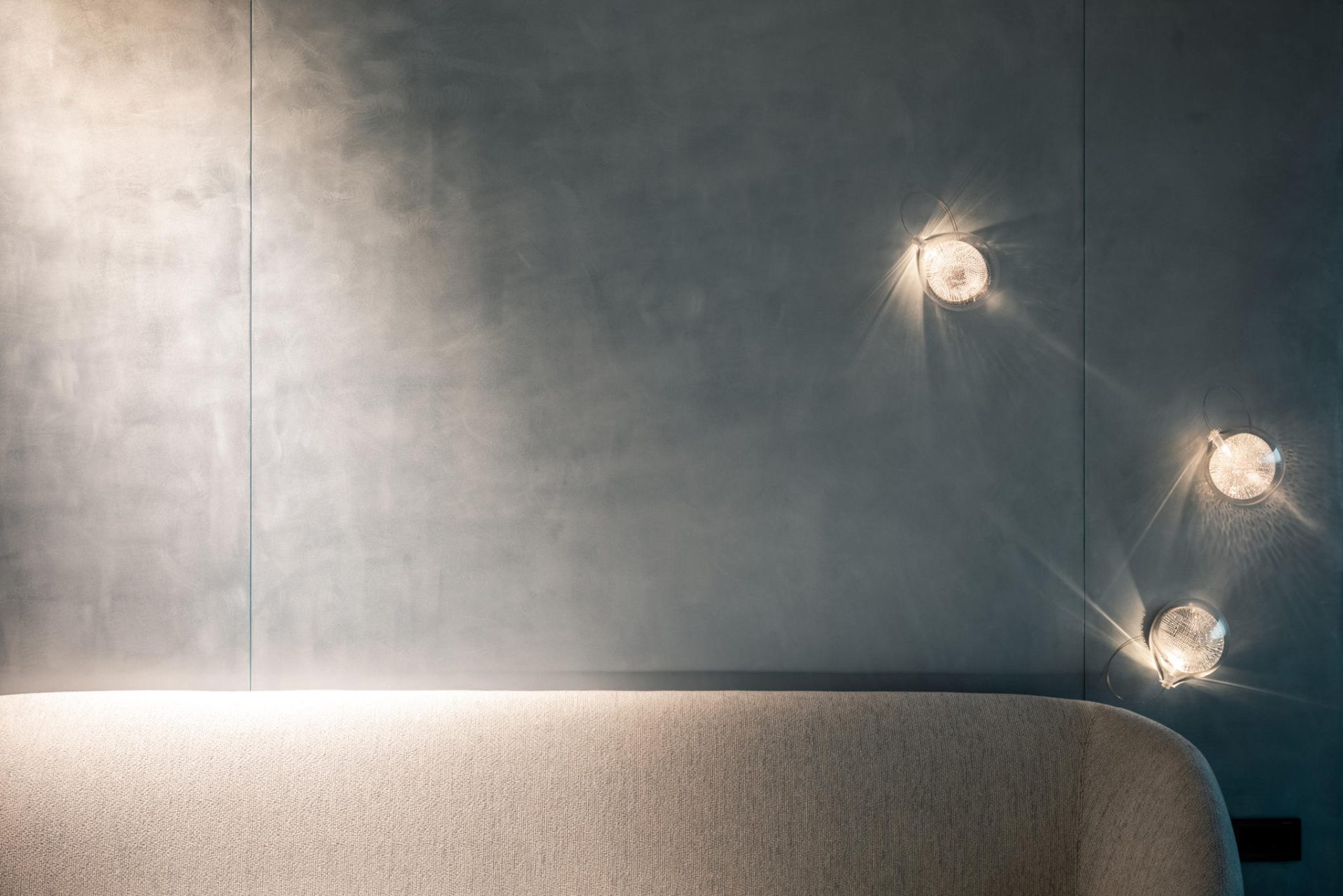
Here, a handcrafted aluminum headboard by Taiwanese metal artisans glimmers like rippling water, intertwining memory and craftsmanship.
The material palette combines practical function with poetic expression, revealing authentic textures. Imported cream-colored stone was hand-carved using traditional techniques by local artisans.
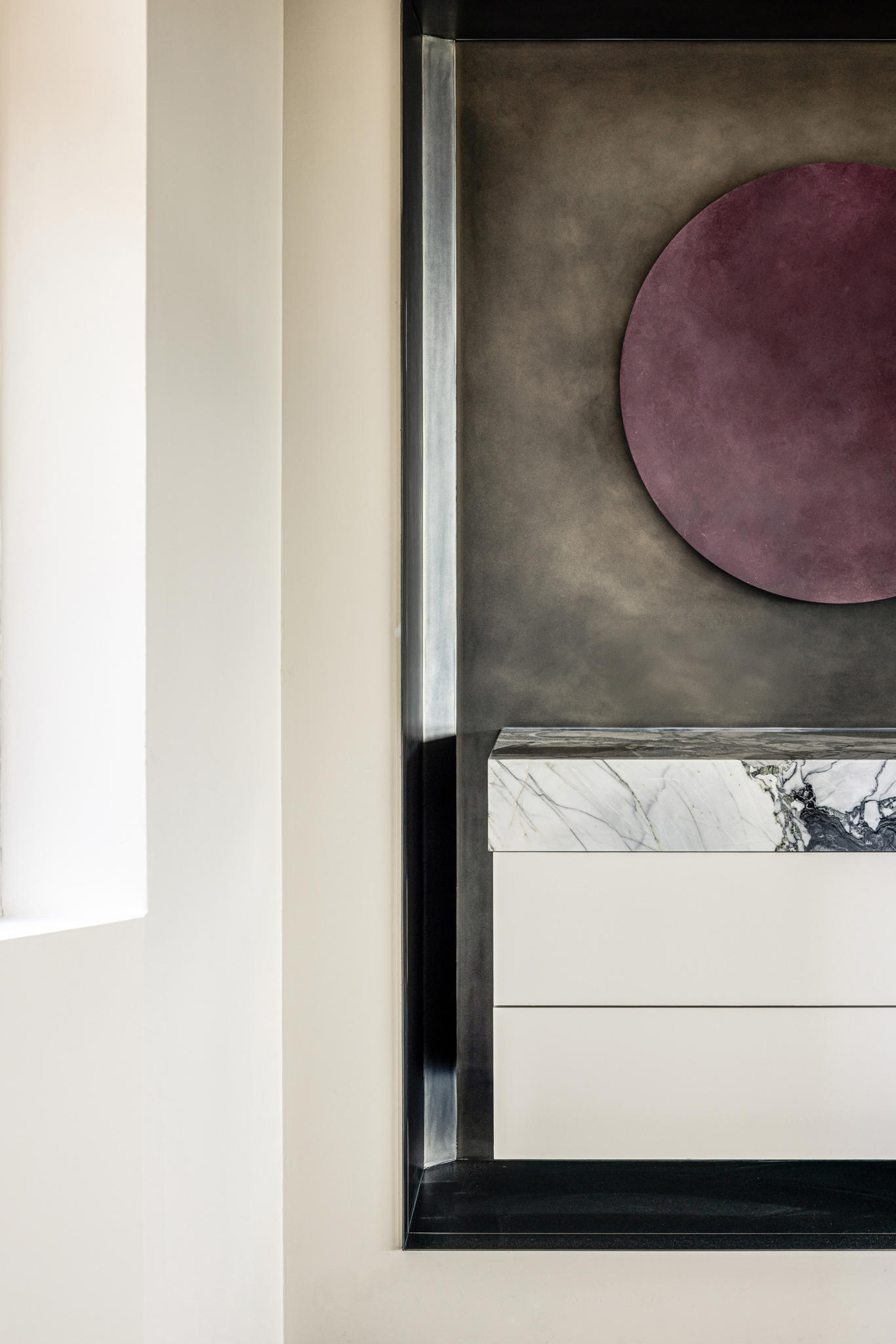
A dining furniture piece features an exceptional bronze-patinated lacquer finish, crafted by a Taiwanese master.
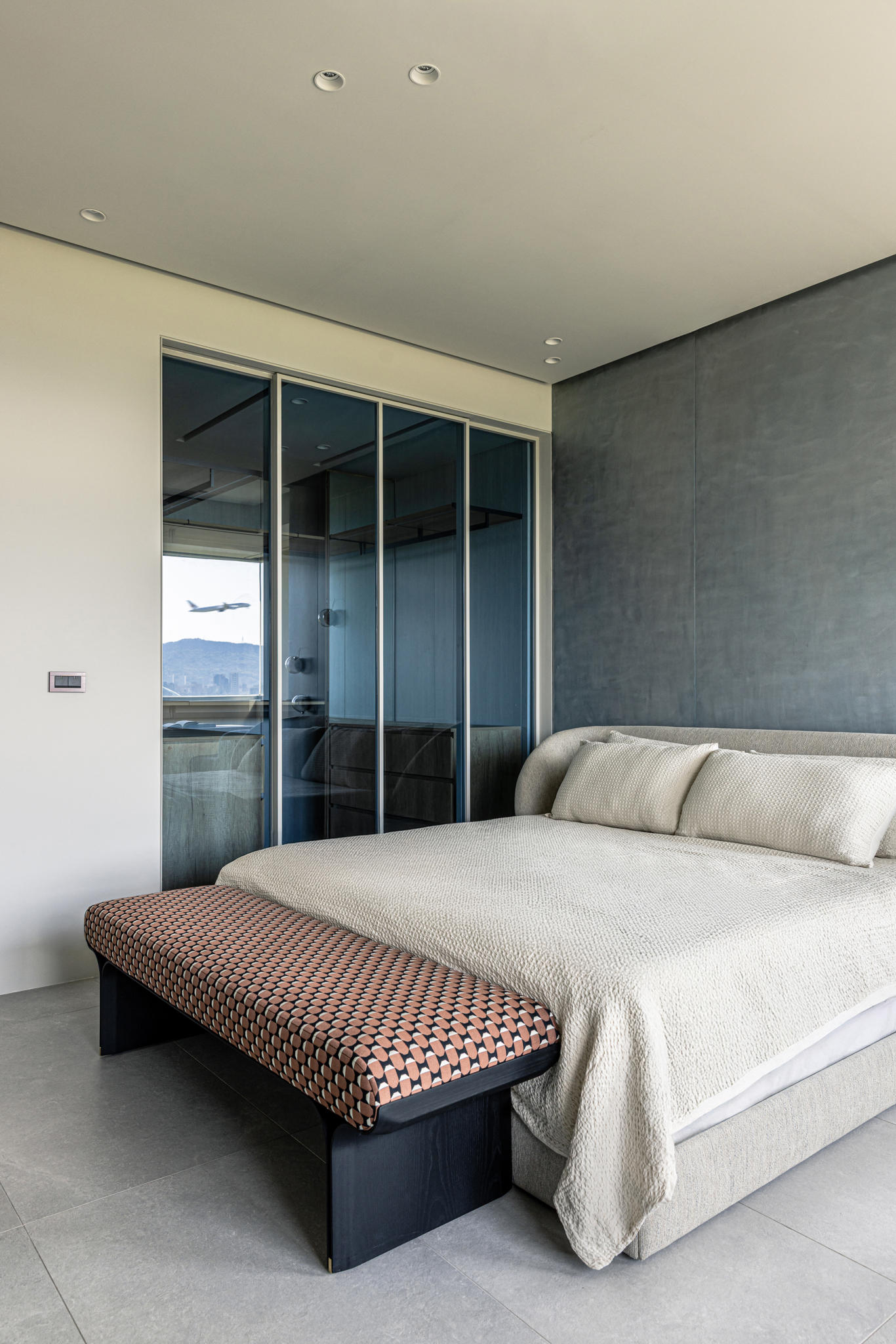
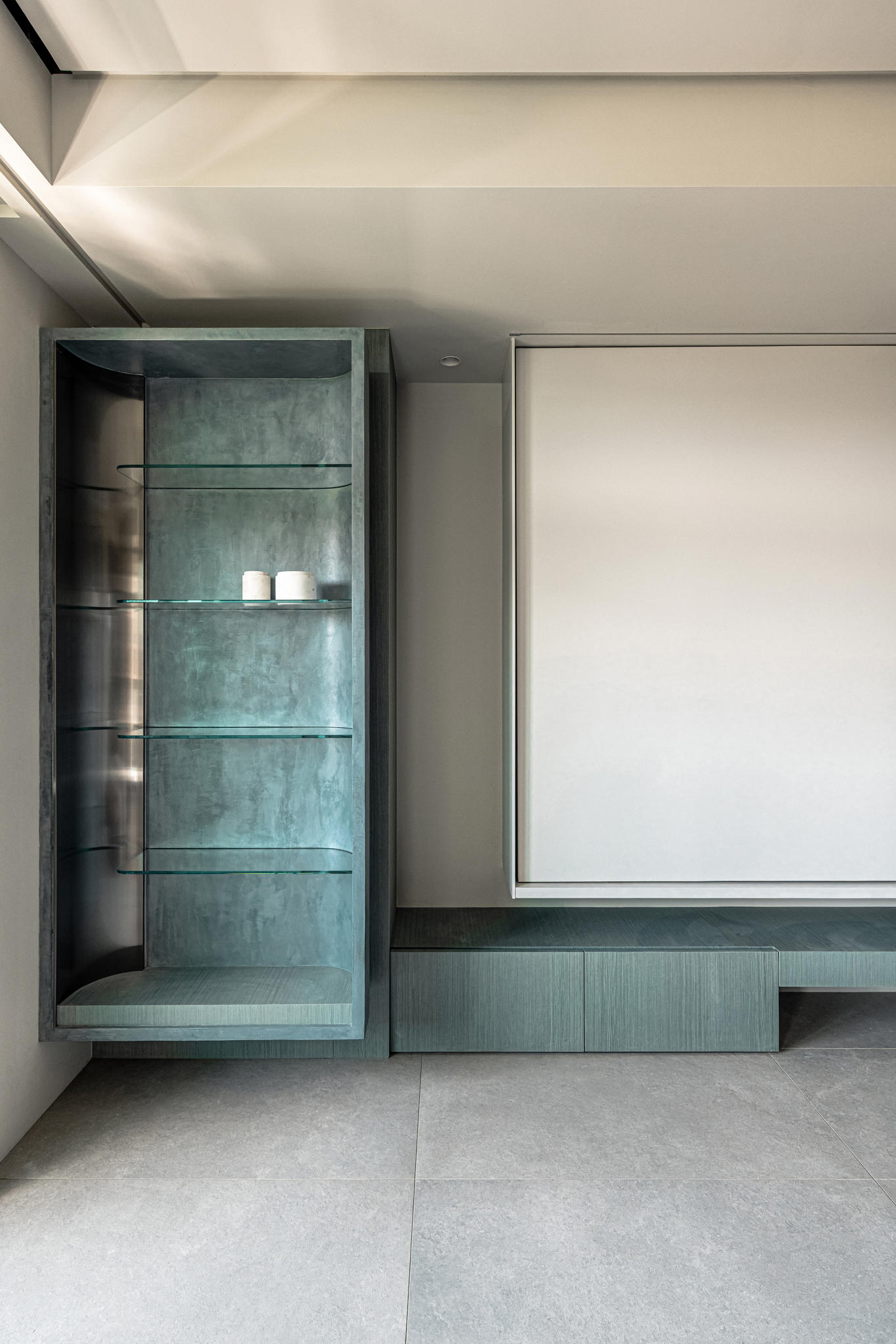
Sky-blue wood veneers, mineral claddings, and matte golden titanium bathrooms enrich the color palette.
Beyond celebrating traditional craftsmanship, the design emphasizes durability and longevity, reducing replacements and maintenance while minimizing environmental impact over the building’s lifecycle.
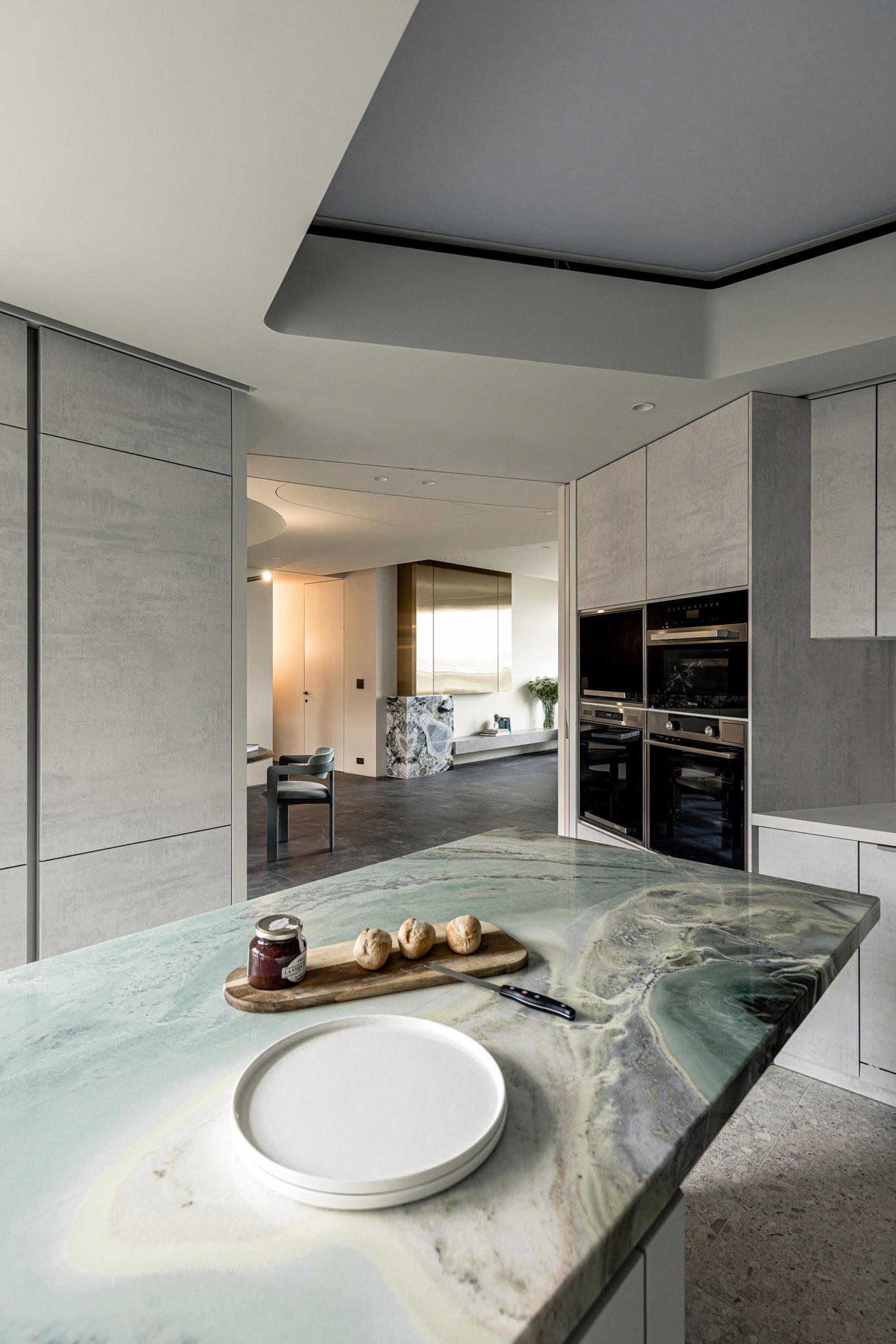
The combination of hard stone and soft curves throughout the space creates a dynamic balance between strength and delicacy, resilience and mastery.
The house preserves the memory of its former structure while opening a new chapter in family life.
It functions both as a setting for togetherness and a sanctuary within the city. In the post-pandemic era, Rivus Geometry achieves a balance between ambiance and functionality, proposing a resilient model for urban living, transforming a private residence from a symbol of luxury into a prototype of sustainable, culturally rooted life.
The project emerged from a continuous dialogue between designers and owners—a process of constant exchange and refinement. From observing nature to integrating daily rituals, the collaboration resulted in a home that fuses art, nature, human needs, and environmental responsibility, offering a vision of the future of domestic life.
Inspired by Taiwan’s ever-changing rivers and landscapes, the design team translated the winding flow of water and the contours of the terrain into a geometric language, creating a home that moves and breathes like a natural landscape.
Designed for a family of five, the renovation serves as a vehicle of memory and continuity, preserving traces of the past twenty years while opening a new chapter for the future.
The owners envisioned a residence that balances functionality, durability, and rationality with sculptural forms, artistic presence, and atmosphere.
The design harmonizes the scale of family gatherings with the tranquility of a private retreat, giving the home a character that is both practical and poetic.
The concept of “fluid geometry” forms the foundation of the project. Long corridors were reimagined as cavernous spaces; the dining and living areas are connected through expansive ceilings and continuous circulation; private rooms unfold gradually through curved transitions.
Rhythm, light, and materials intertwine, making everyday life feel like moving through a natural terrain. Natural light enters through carefully positioned openings, while windows act as frames, capturing the city’s greenery and the seasonal changes.
Light and geometry take center stage in the interiors, creating a poetic atmosphere, reducing reliance on artificial lighting, and reflecting a commitment to energy efficiency and environmental responsibility.
Every detail is imbued with meaning. The entrance, clad in green marble, becomes a symbolic reference point for the home. The dining and living areas are defined by arches, their character shaped by light and material transitions.
The daughter’s bedroom was conceived as an “indoor aquarium”: a serene, restorative space inspired by her childhood fascination with fish tanks.
Here, a handcrafted aluminum headboard by Taiwanese metal artisans glimmers like rippling water, intertwining memory and craftsmanship.
The material palette combines practical function with poetic expression, revealing authentic textures. Imported cream-colored stone was hand-carved using traditional techniques by local artisans.
A dining furniture piece features an exceptional bronze-patinated lacquer finish, crafted by a Taiwanese master.
Sky-blue wood veneers, mineral claddings, and matte golden titanium bathrooms enrich the color palette.
Beyond celebrating traditional craftsmanship, the design emphasizes durability and longevity, reducing replacements and maintenance while minimizing environmental impact over the building’s lifecycle.
The combination of hard stone and soft curves throughout the space creates a dynamic balance between strength and delicacy, resilience and mastery.
The house preserves the memory of its former structure while opening a new chapter in family life.
It functions both as a setting for togetherness and a sanctuary within the city. In the post-pandemic era, Rivus Geometry achieves a balance between ambiance and functionality, proposing a resilient model for urban living, transforming a private residence from a symbol of luxury into a prototype of sustainable, culturally rooted life.
The project emerged from a continuous dialogue between designers and owners—a process of constant exchange and refinement. From observing nature to integrating daily rituals, the collaboration resulted in a home that fuses art, nature, human needs, and environmental responsibility, offering a vision of the future of domestic life.
Materials
1.Dark and light gray tiles – Matte finish, natural stone texture, gray cement style
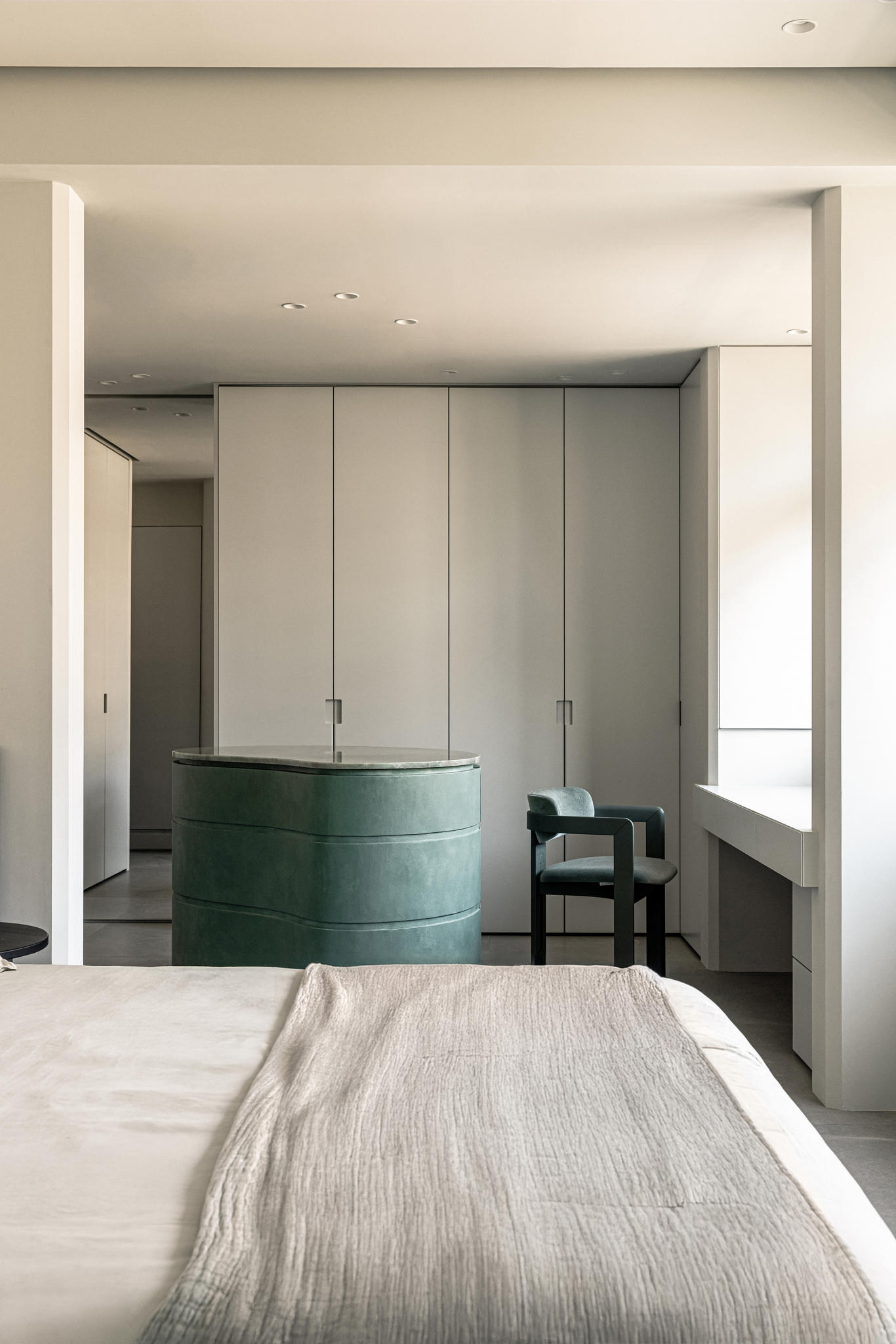
2.Green natural stone – Green agate with circular or flowing water patterns
3.Gray tiles or natural stone – Uniform finish, subtle texture
4.Artistic paint in blue and green – Mineral paint or metallic-effect finish
5.Relief wall panels – Vertical relief with “claw-like” texture
6.Hand-dyed blue-green wood veneer – Natural texture, hand-dyed
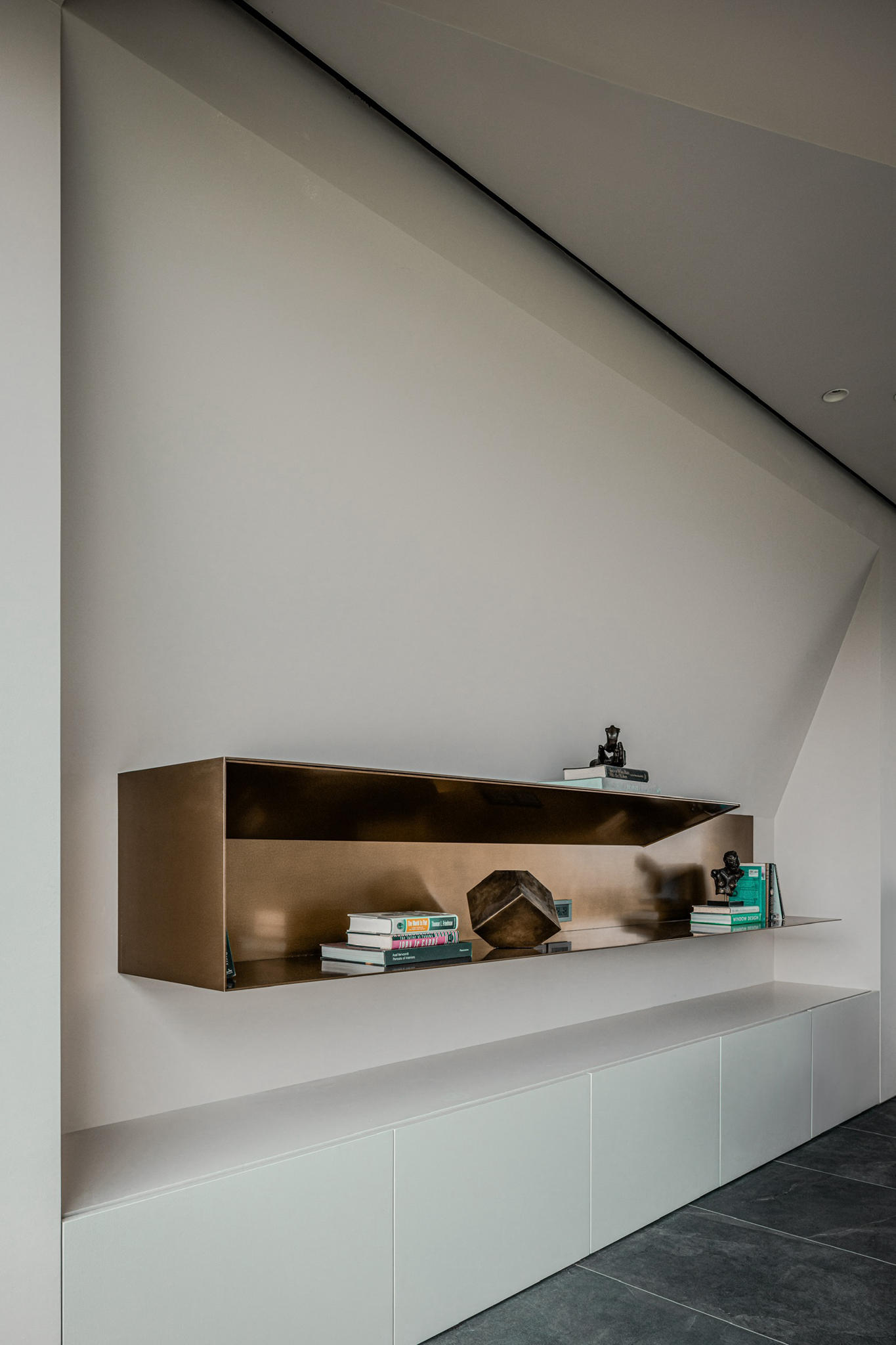
7.Bronze-finished titanium-coated metal – Warm metallic finish
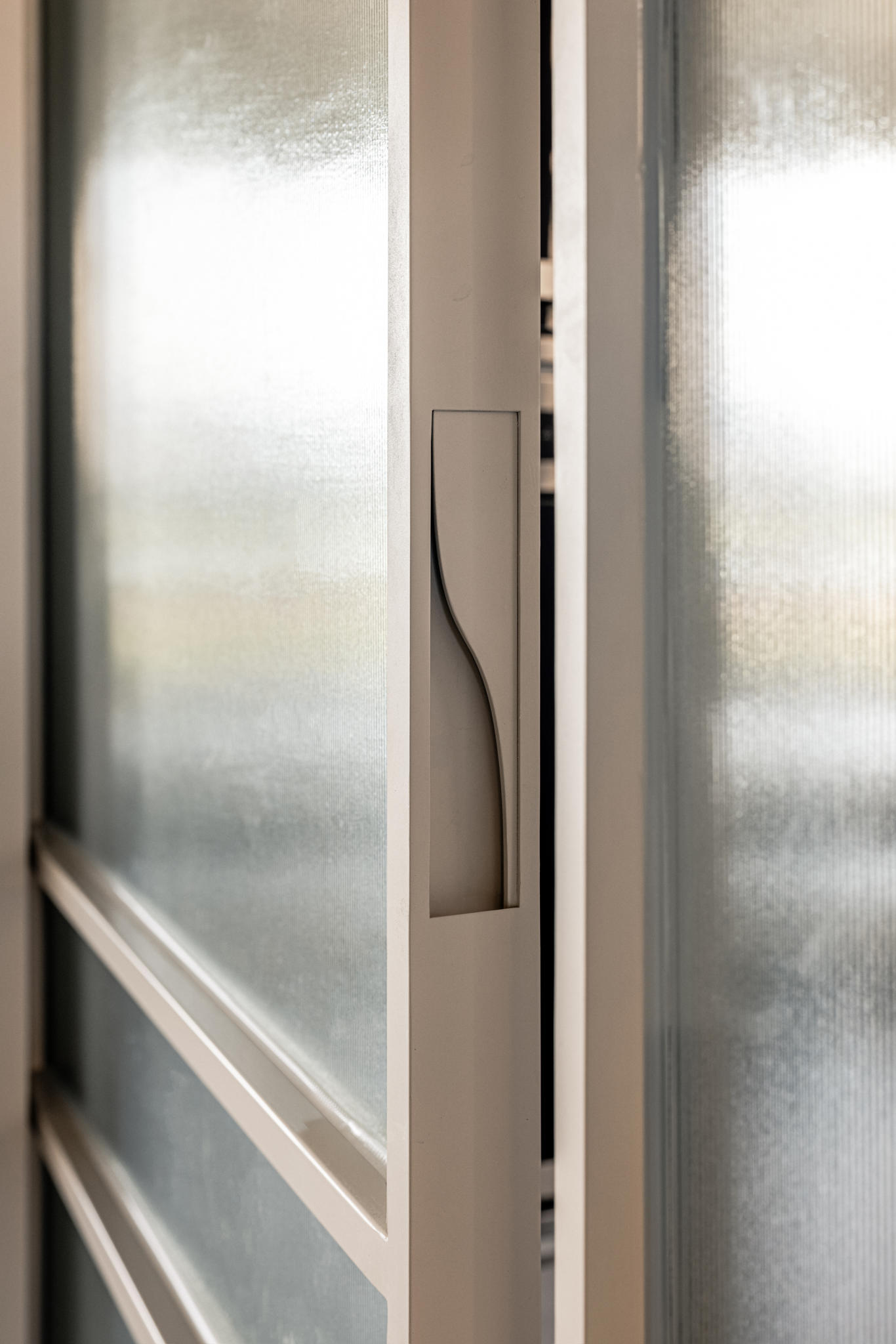
8.Hand-polished aluminum panels, cloud effect – Handmade finish with soft cloud-like effect
1.Dark and light gray tiles – Matte finish, natural stone texture, gray cement style
2.Green natural stone – Green agate with circular or flowing water patterns
3.Gray tiles or natural stone – Uniform finish, subtle texture
4.Artistic paint in blue and green – Mineral paint or metallic-effect finish
5.Relief wall panels – Vertical relief with “claw-like” texture
6.Hand-dyed blue-green wood veneer – Natural texture, hand-dyed
7.Bronze-finished titanium-coated metal – Warm metallic finish
8.Hand-polished aluminum panels, cloud effect – Handmade finish with soft cloud-like effect
Source: Peny Hsieh Interiors
m i l i m e t d e s i g n – w h e r e t h e c o n v e r g e n c e o f u n i q u e c r e a t i v e s
m i l i m e t d e s i g n – w h e r e t h e c o n v e r g e n c e o f u n i q u e c r e a t i v e s










Since 2009. Copyright © 2026 milimetdesign. All rights reserved. Contact: milimetdesign@milimet.com