
Bunker House design by Nha Dan Architects
Project: Bunker House
Location: Hồ Chí Minh,Vietnam
Architects: Nha Dan Architects
Lead Architects: Nguyen Dinh Gioi
Area: 877 m²
Year: 2019
Photographs: Hiroyuki Oki
Location: Hồ Chí Minh,Vietnam
Architects: Nha Dan Architects
Lead Architects: Nguyen Dinh Gioi
Area: 877 m²
Year: 2019
Photographs: Hiroyuki Oki
Manufacturers: AutoDesk, Sika, Cara, Daikin, Ixina, Kohler, Molution, Nha Le Company, Sika Hardener, Trimble, Vietceramics
Lead Architects: Nguyen Dinh Gioi
Lighting Consultant: Cara
Landscape: Tropical Garden Company Limited
Lead Architects: Nguyen Dinh Gioi
Lighting Consultant: Cara
Landscape: Tropical Garden Company Limited
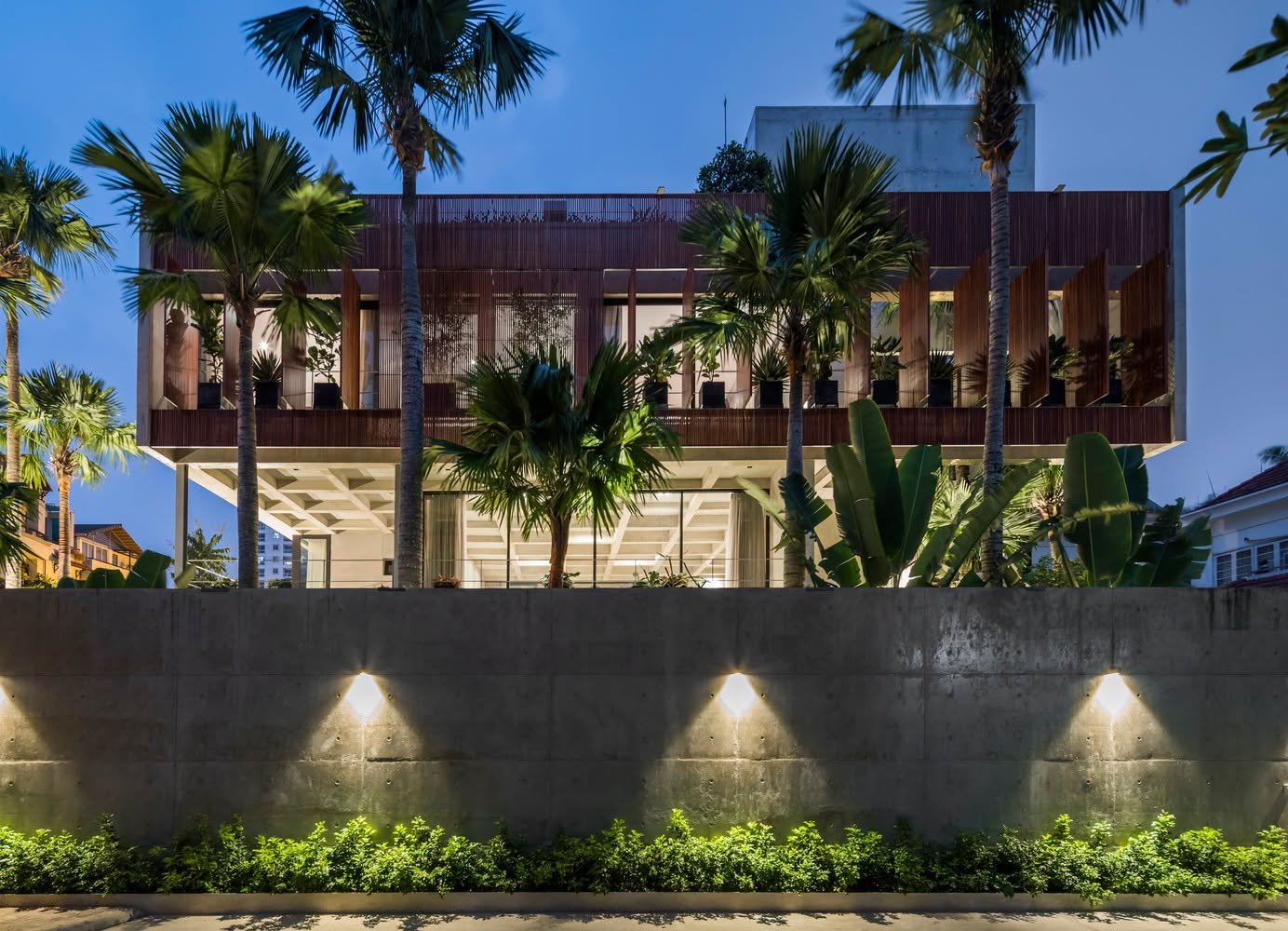
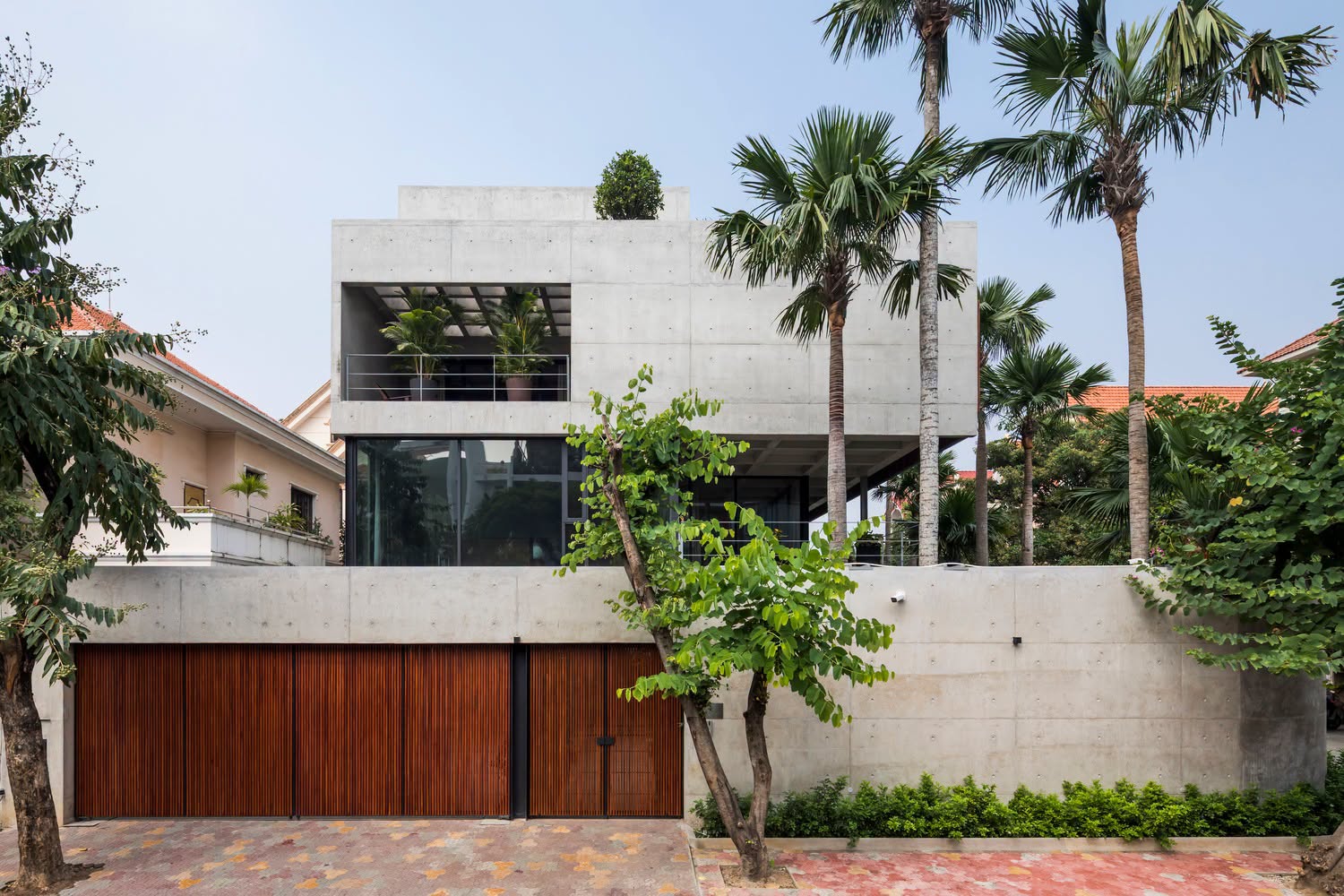
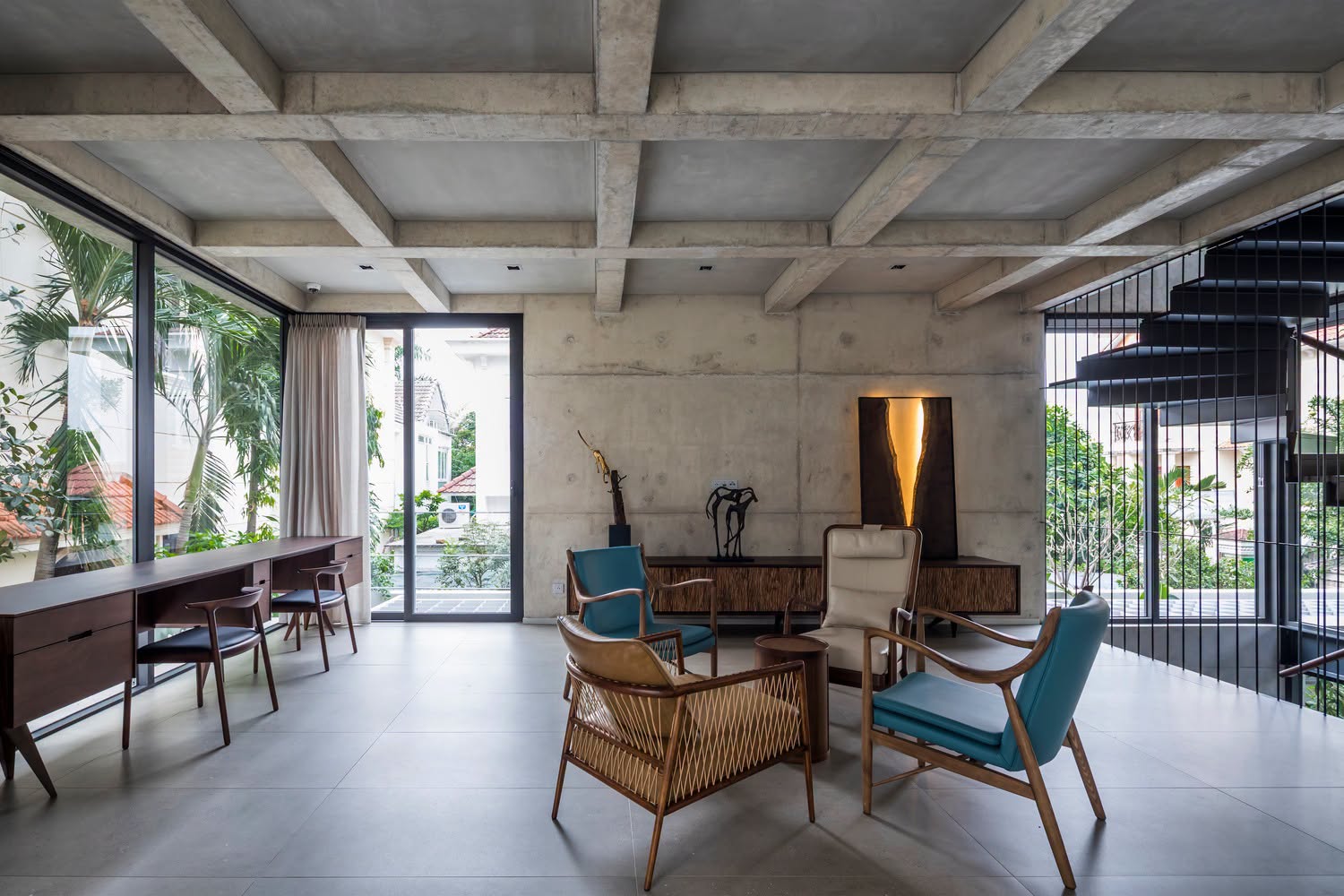
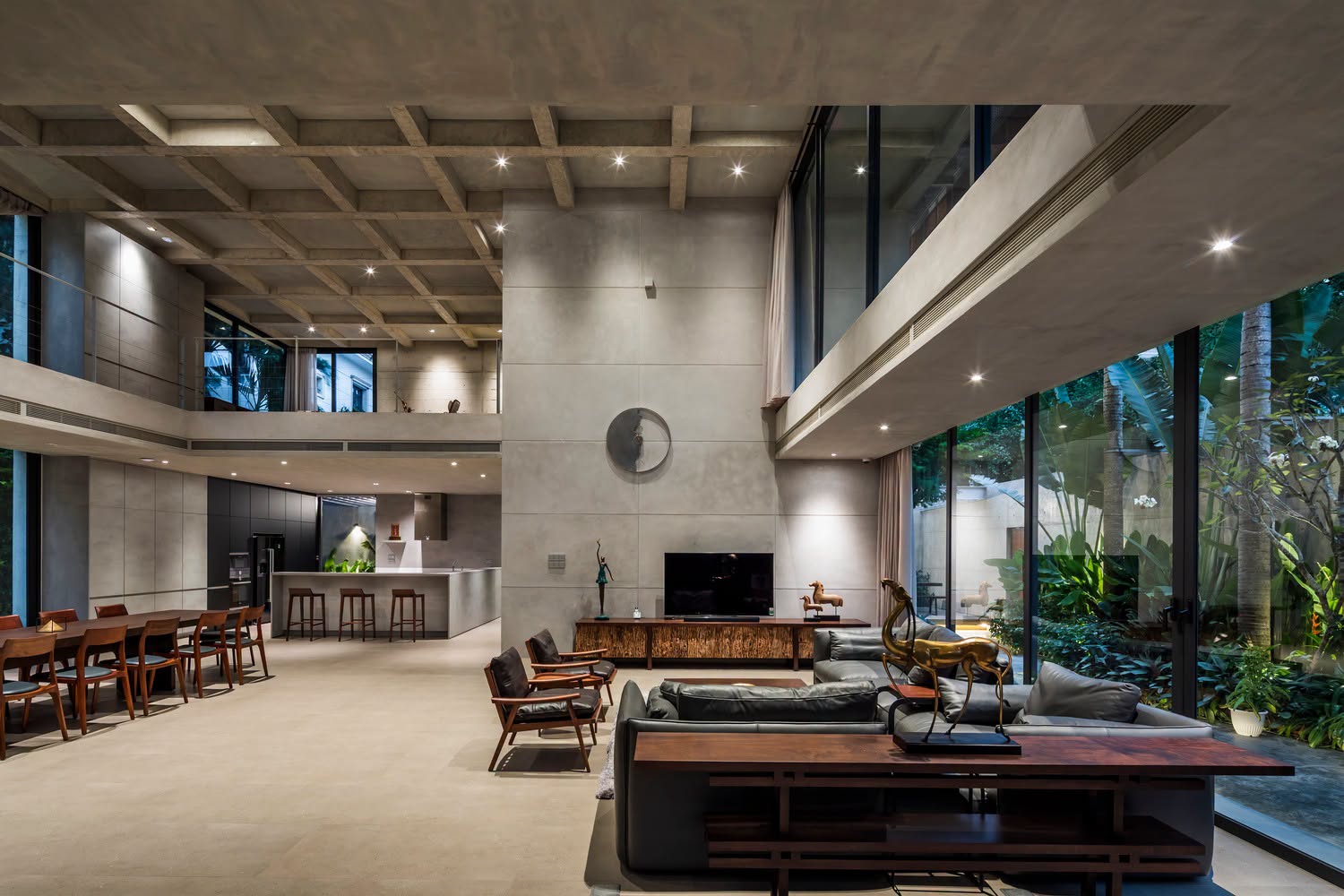
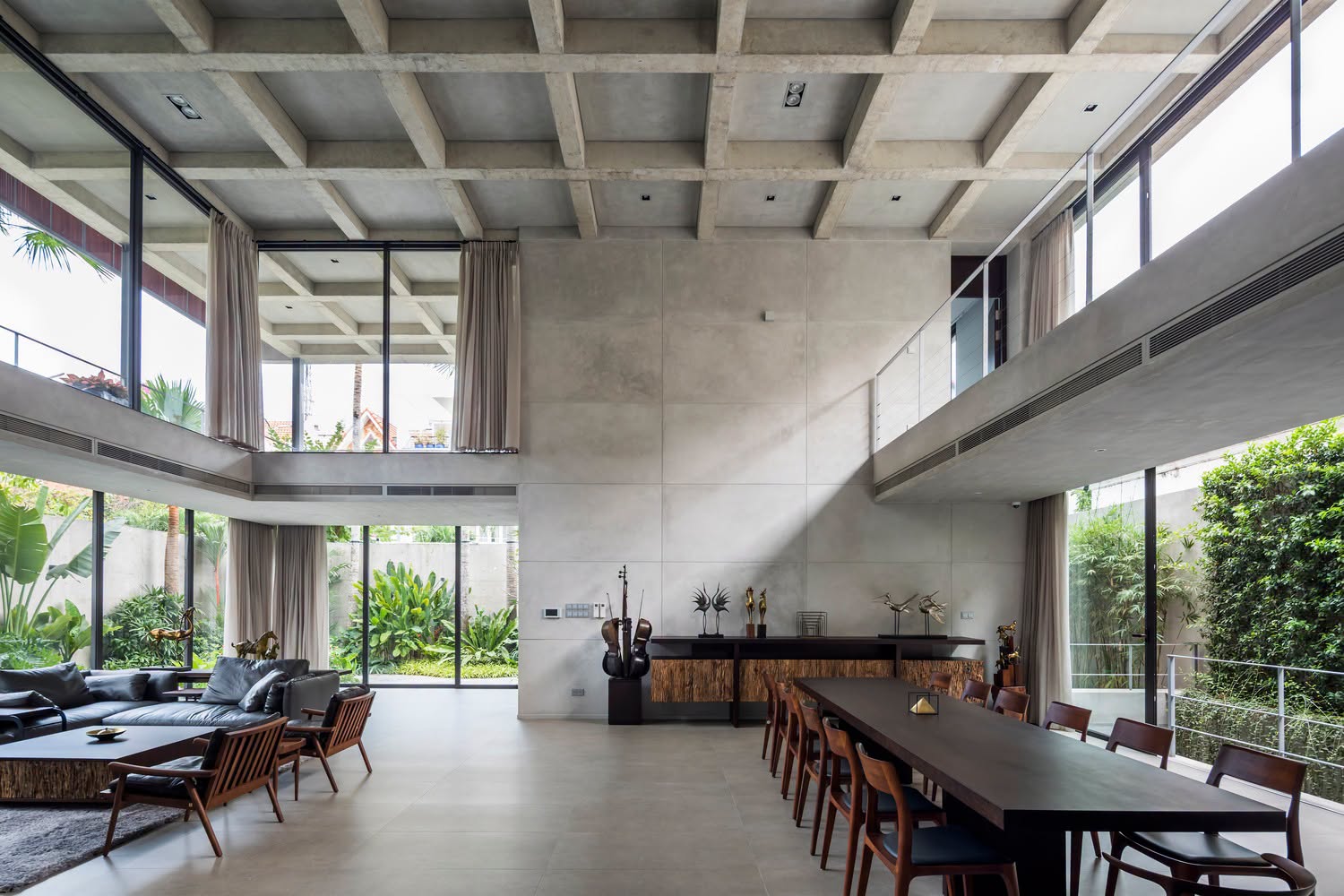
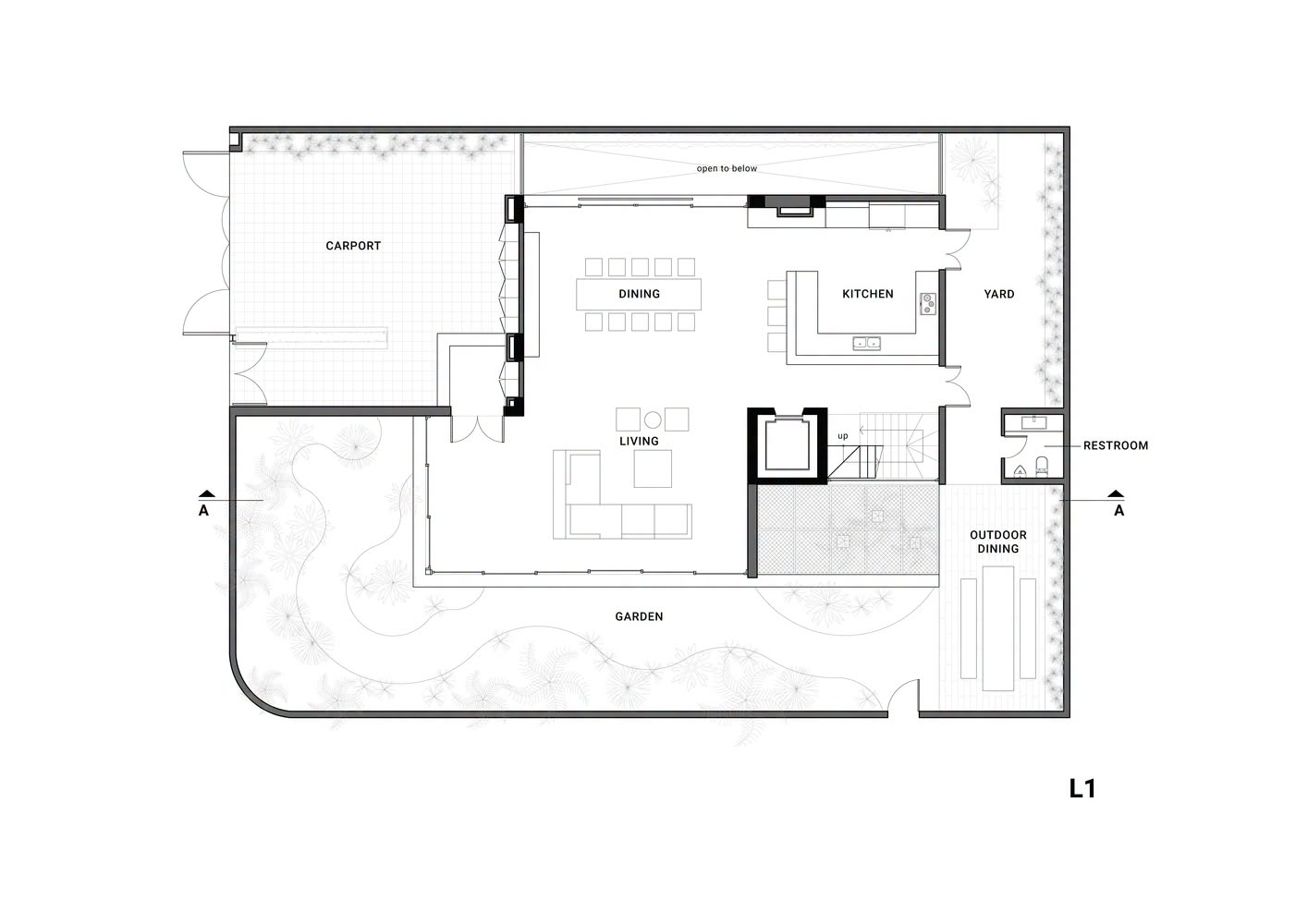
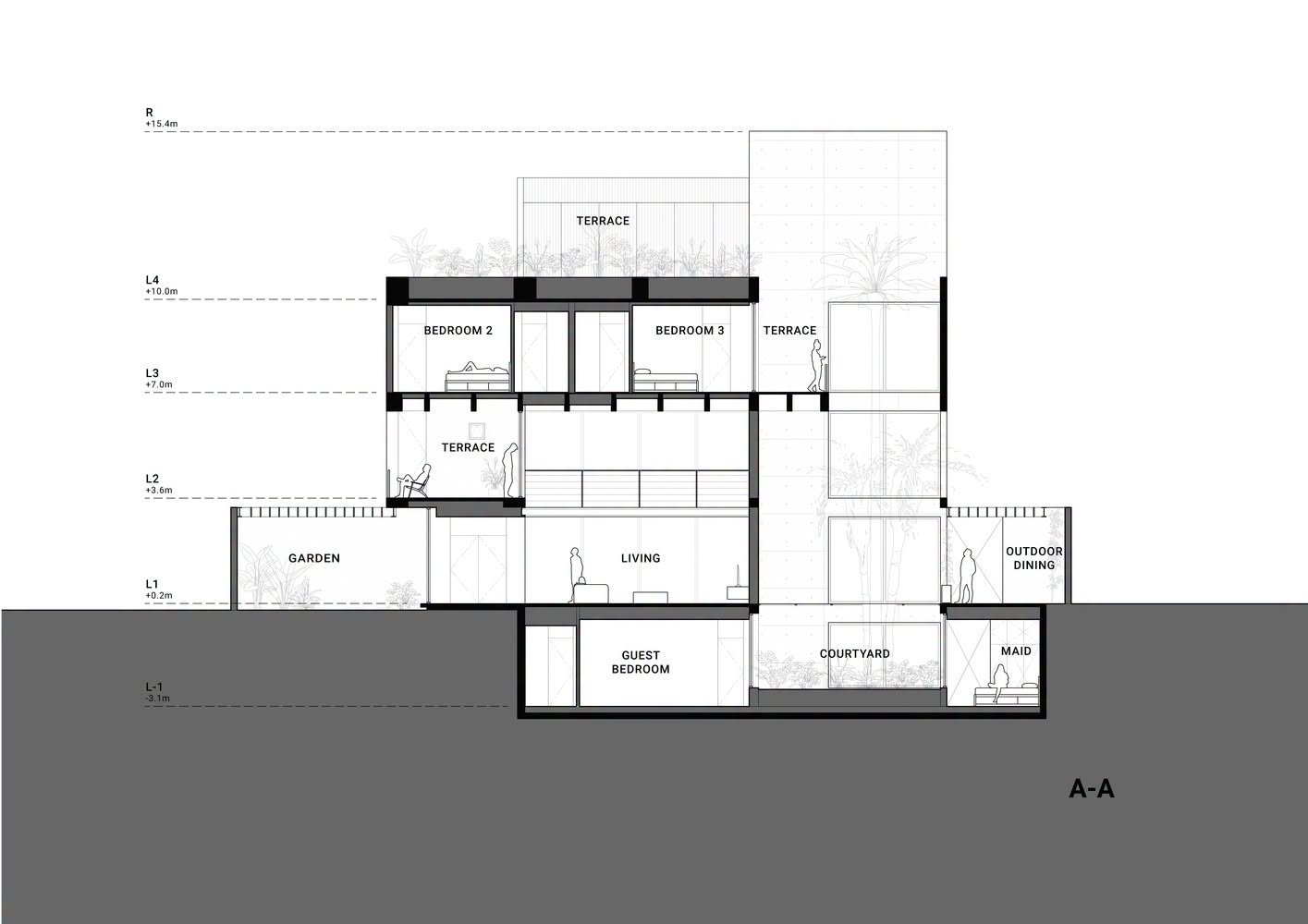
In the Bunker House project, a unique and innovative approach was taken to utilize a concrete beam and column system not only as a structural element but also as spatial partitions and a key aesthetic feature. This system allowed for the elimination of traditional columns from the floor plans, enhancing connectivity between spaces and providing increased access to the outdoors.
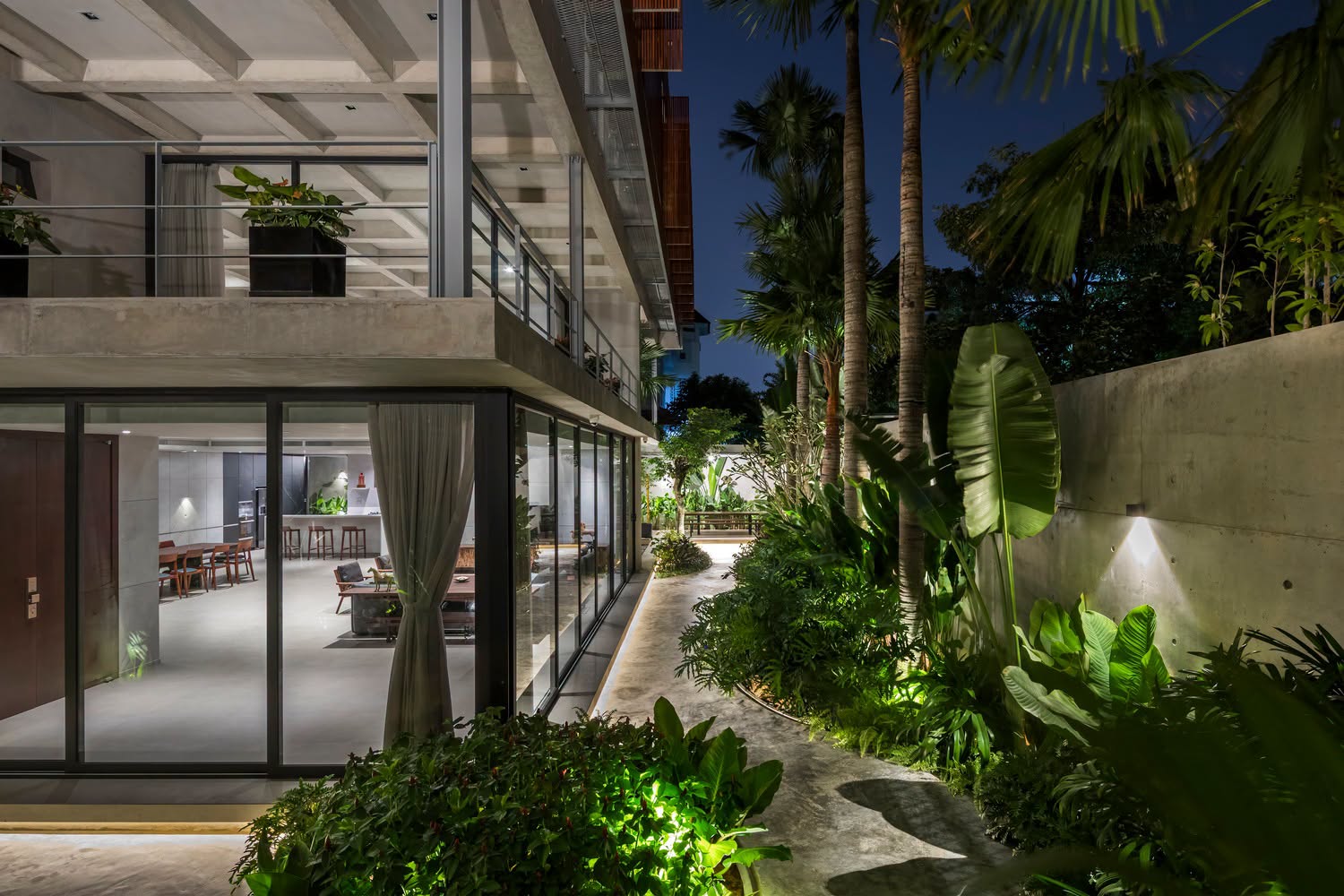
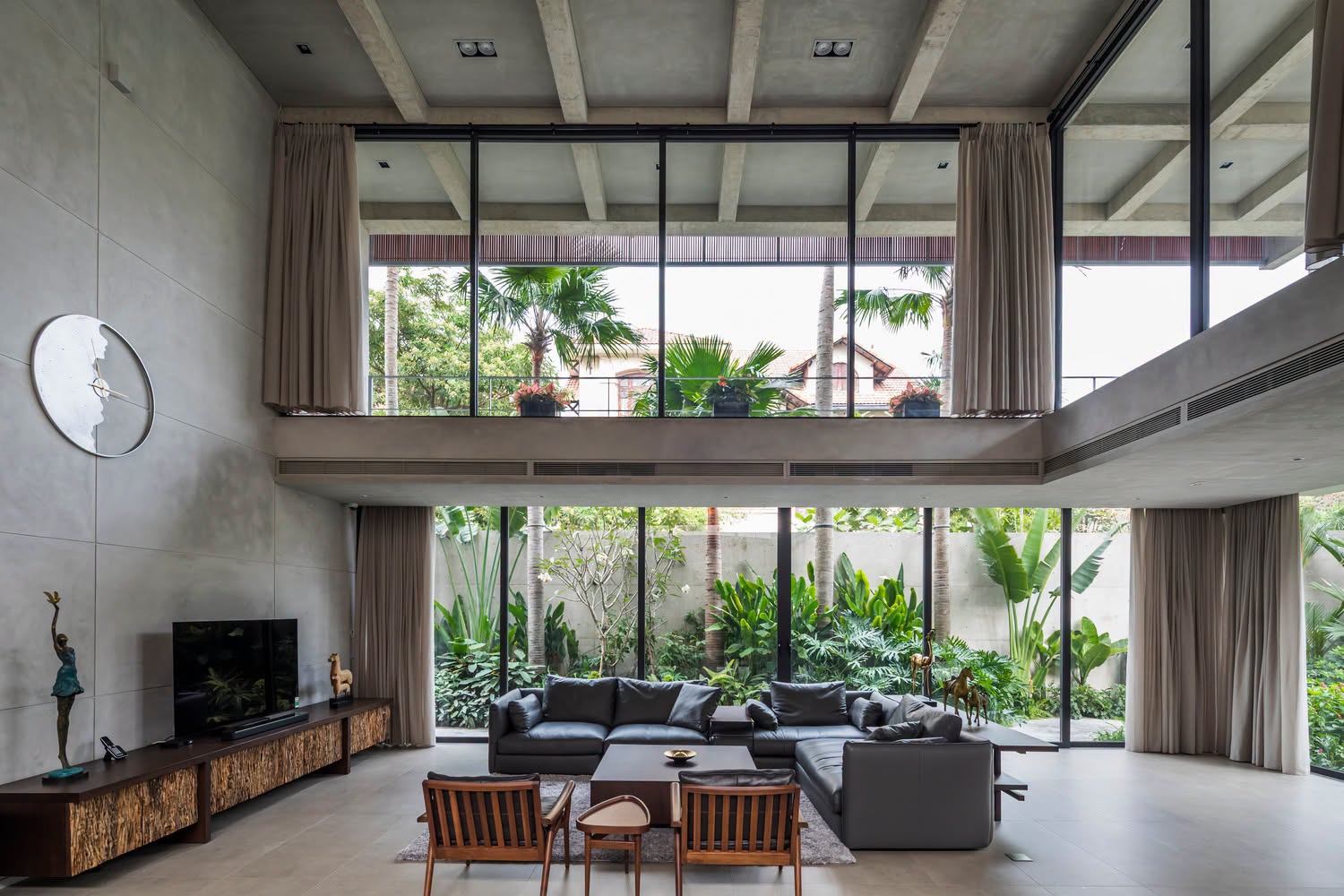
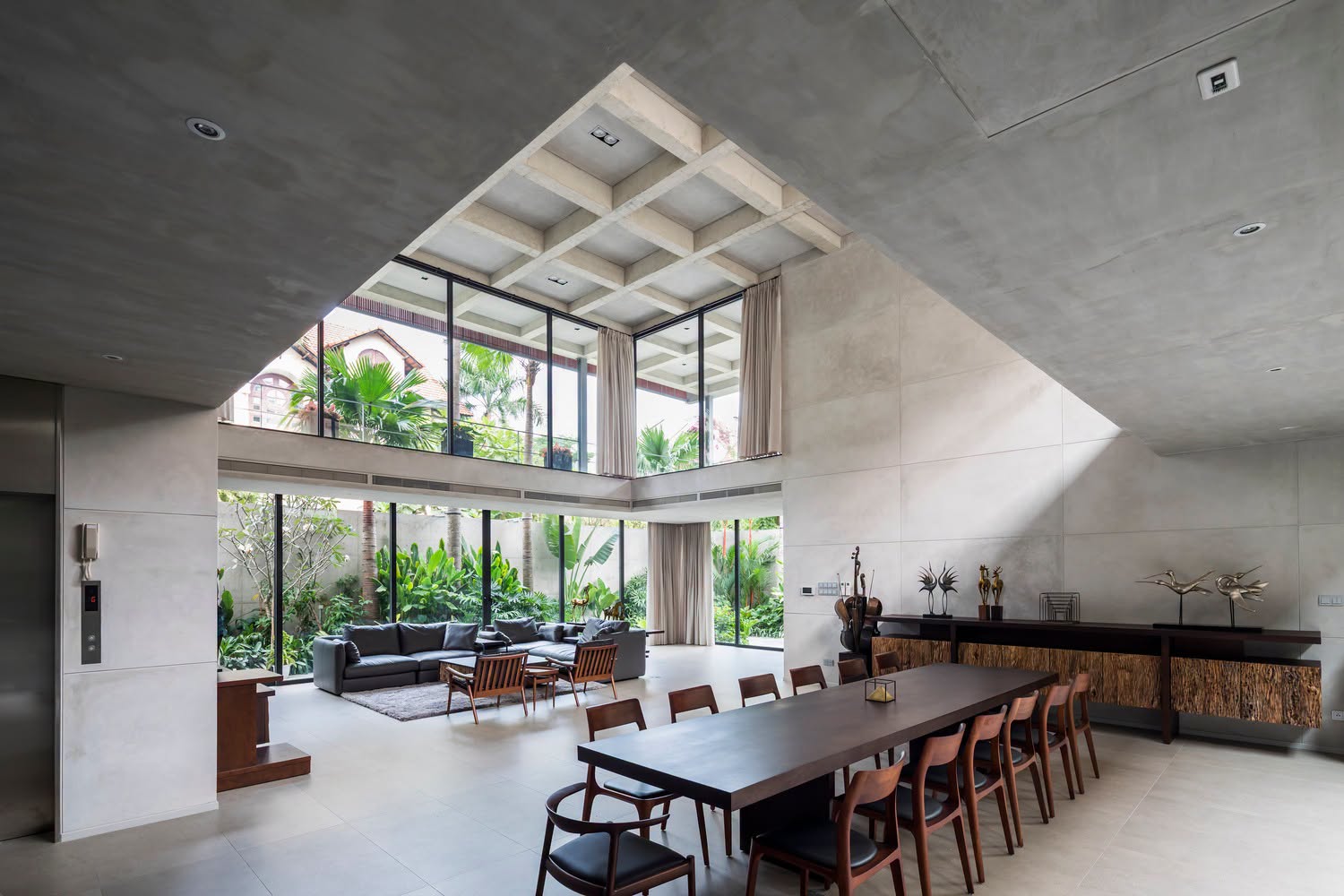
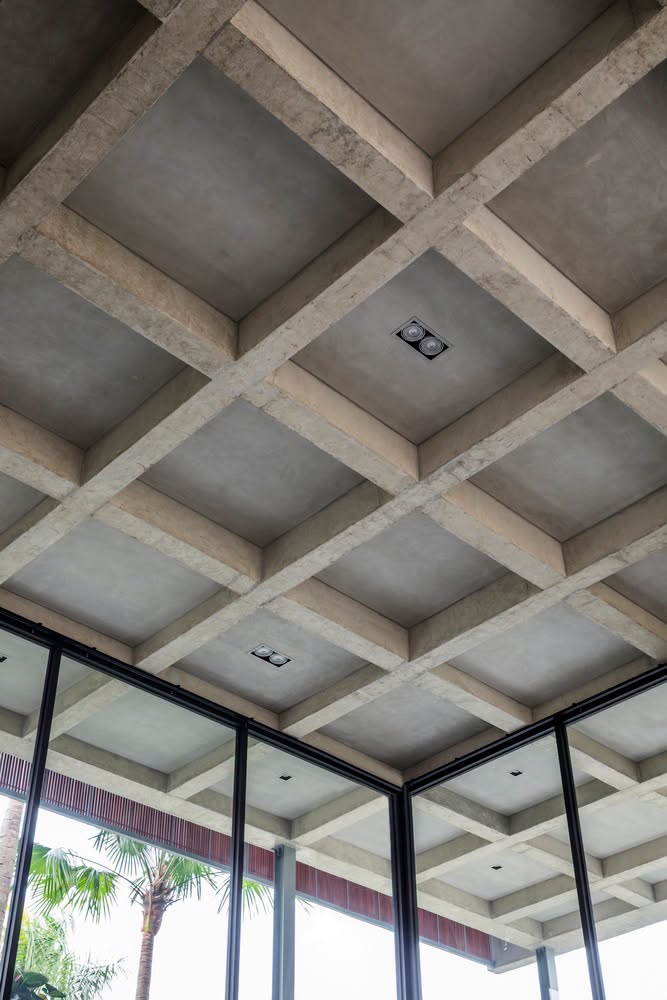
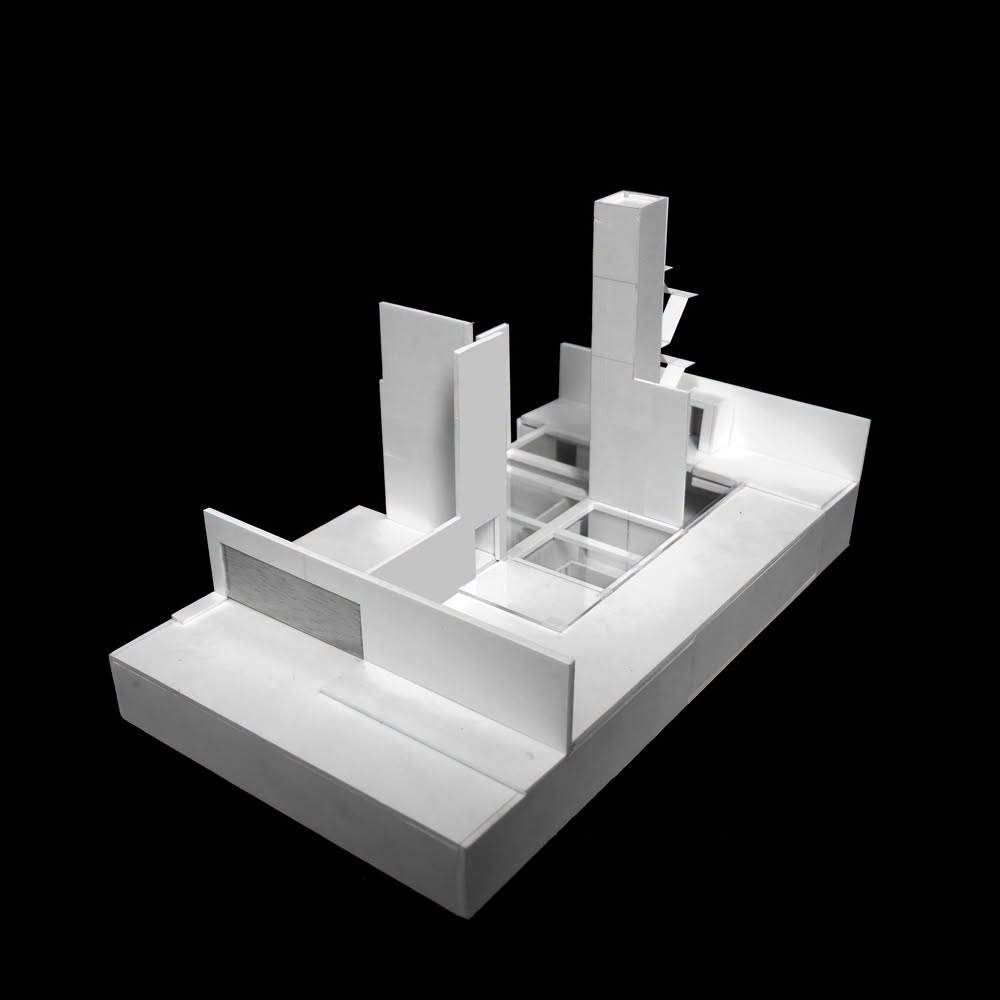
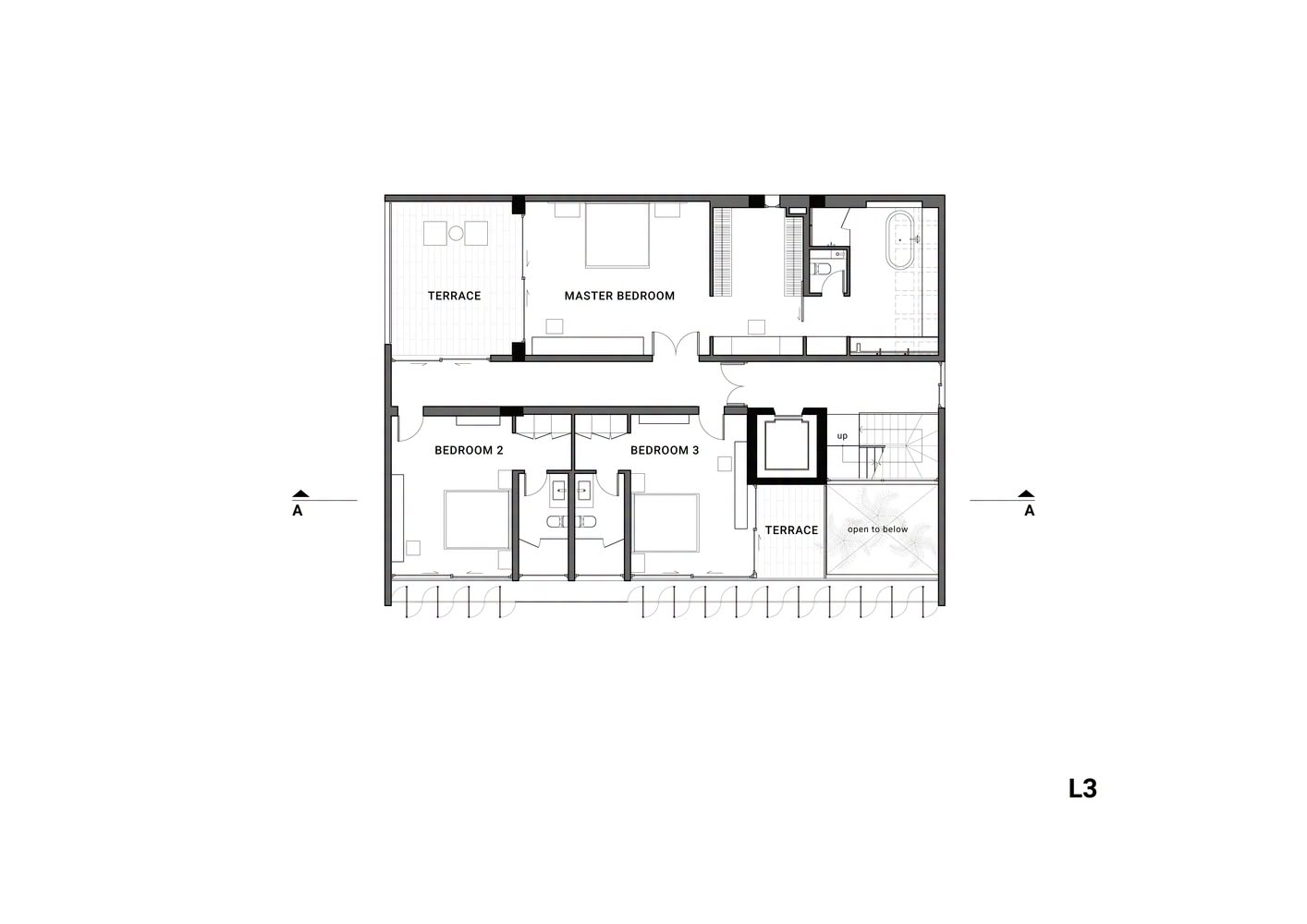
The design of the Bunker House revolves around a series of concrete columns arranged into three legs, serving as anchor points for cantilevered waffle slabs. These legs play a crucial role in defining the spatial experiences throughout the house. The first leg on the first floor acts as a protective barrier for the living areas, creating a sense of separation from the external environment.
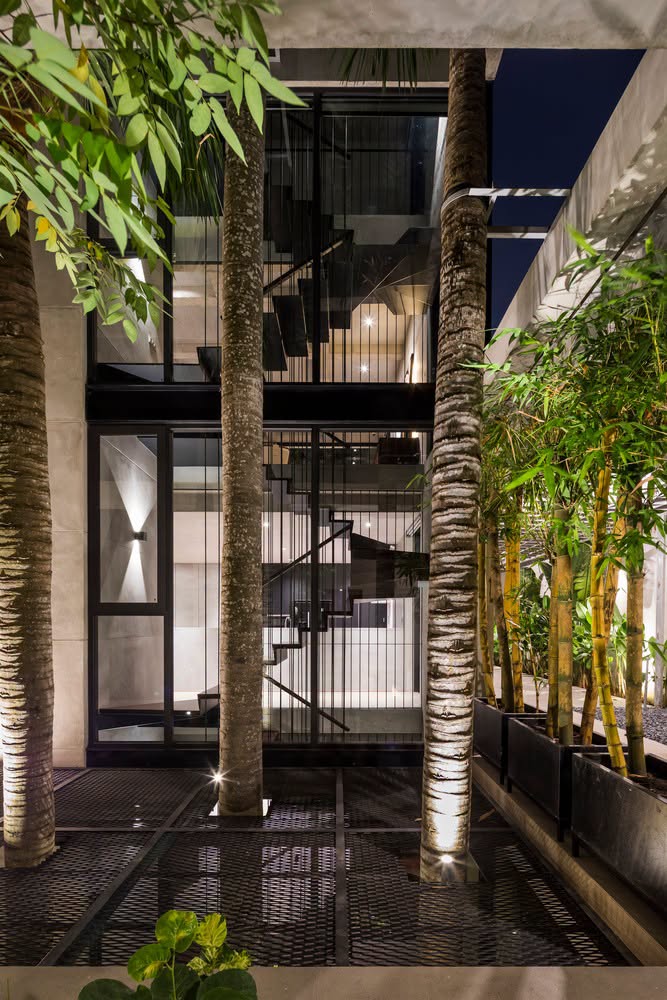
The second leg functions as an elevator core, contributing to the vertical circulation of the house. The third leg, working in tandem with the second, establishes a subtle boundary between served and service spaces within the residence. Together, these legs contribute to the overall structural integrity while also shaping the spatial qualities of different areas.
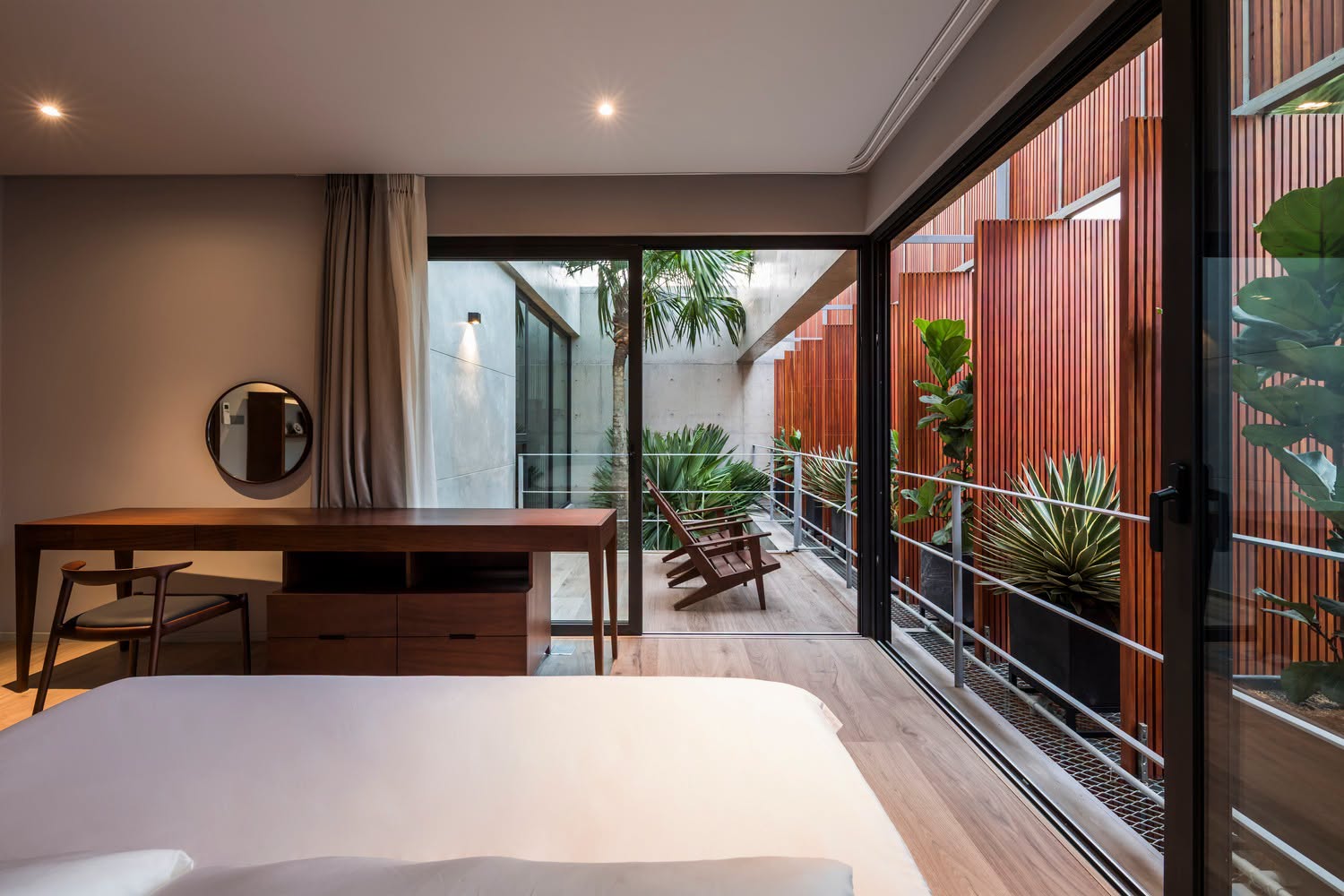
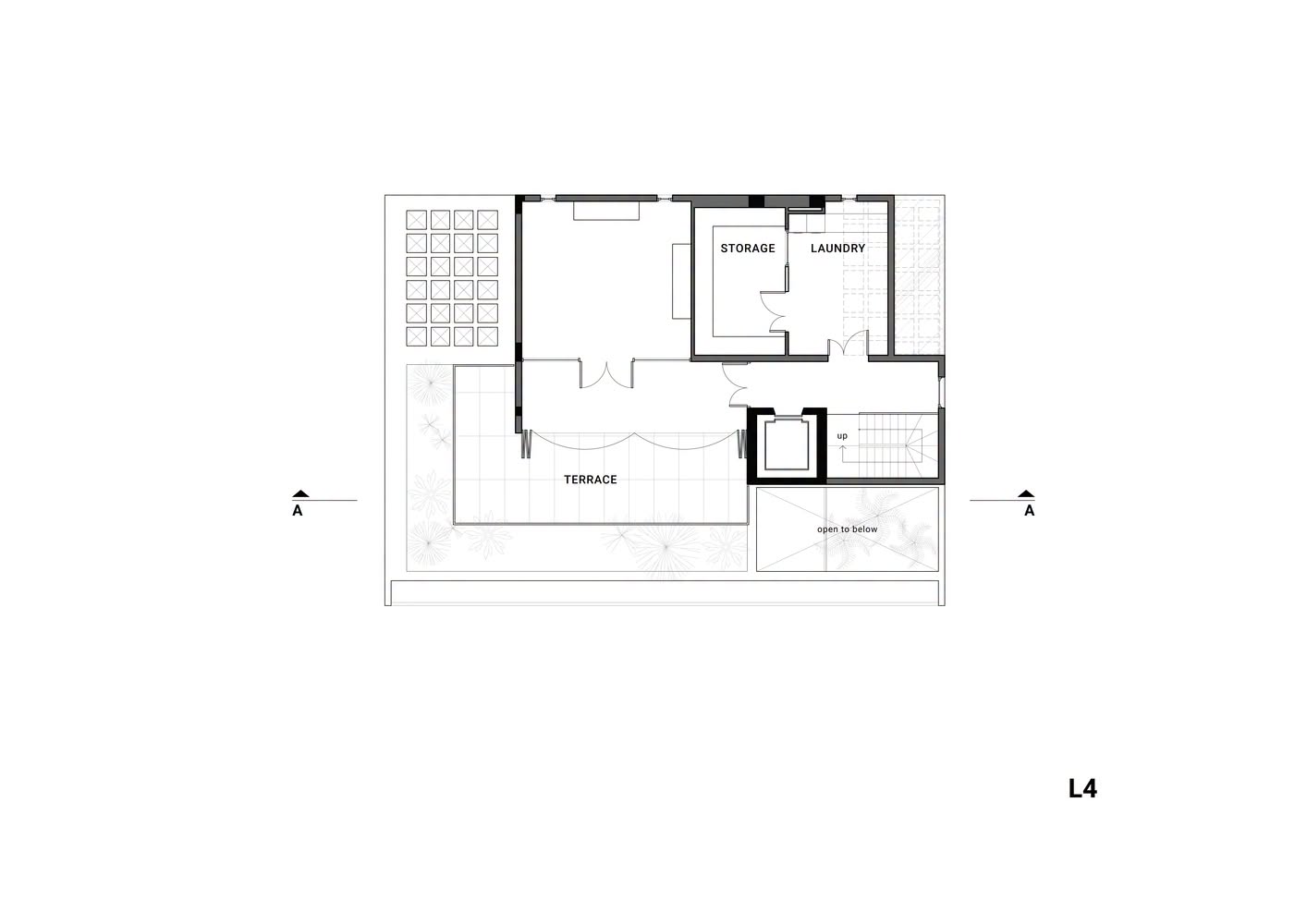
The first and second legs extend vertically, adding height to the living and dining rooms on the lower levels. As these legs rise, they merge with non-structural walls on the upper levels, creating divisions between the interior and the outdoor spaces. This design strategy allows for the segmentation of the upper level into smaller rooms.
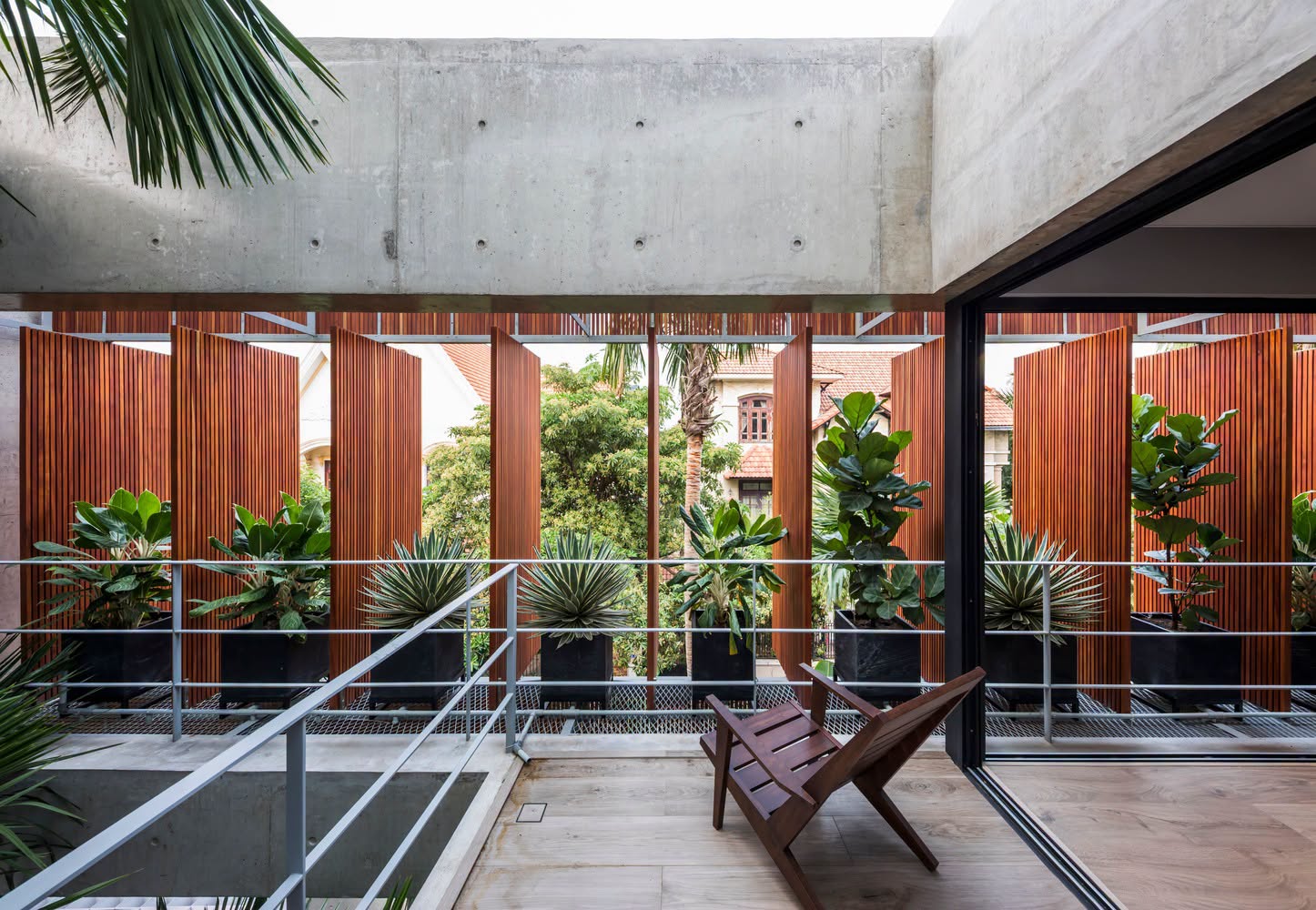
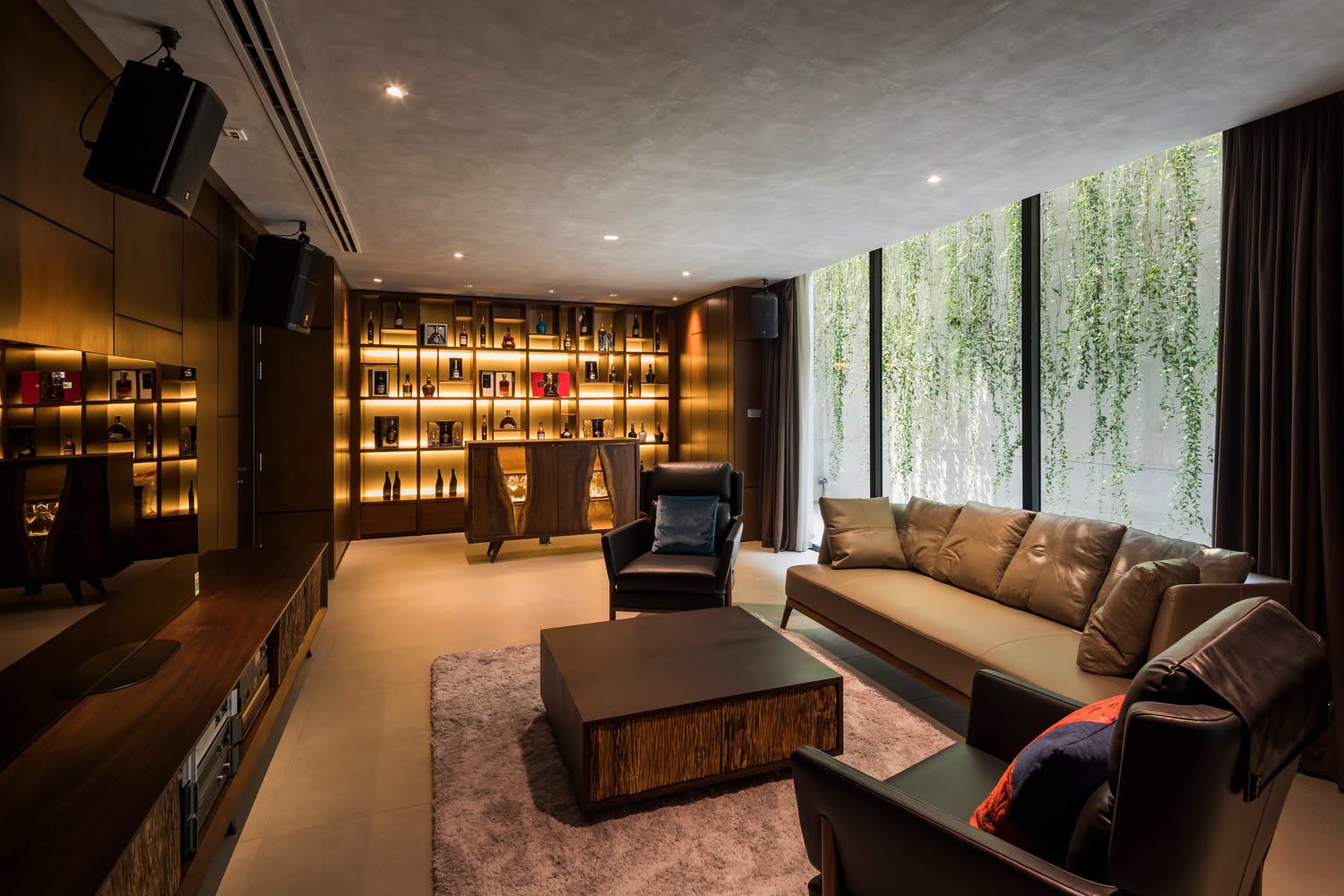
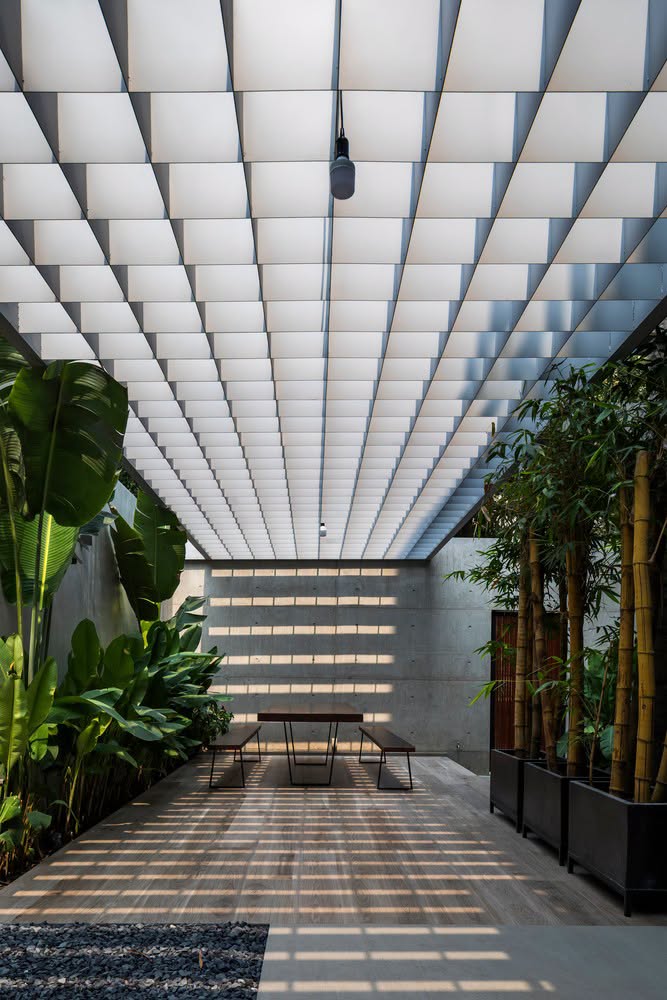
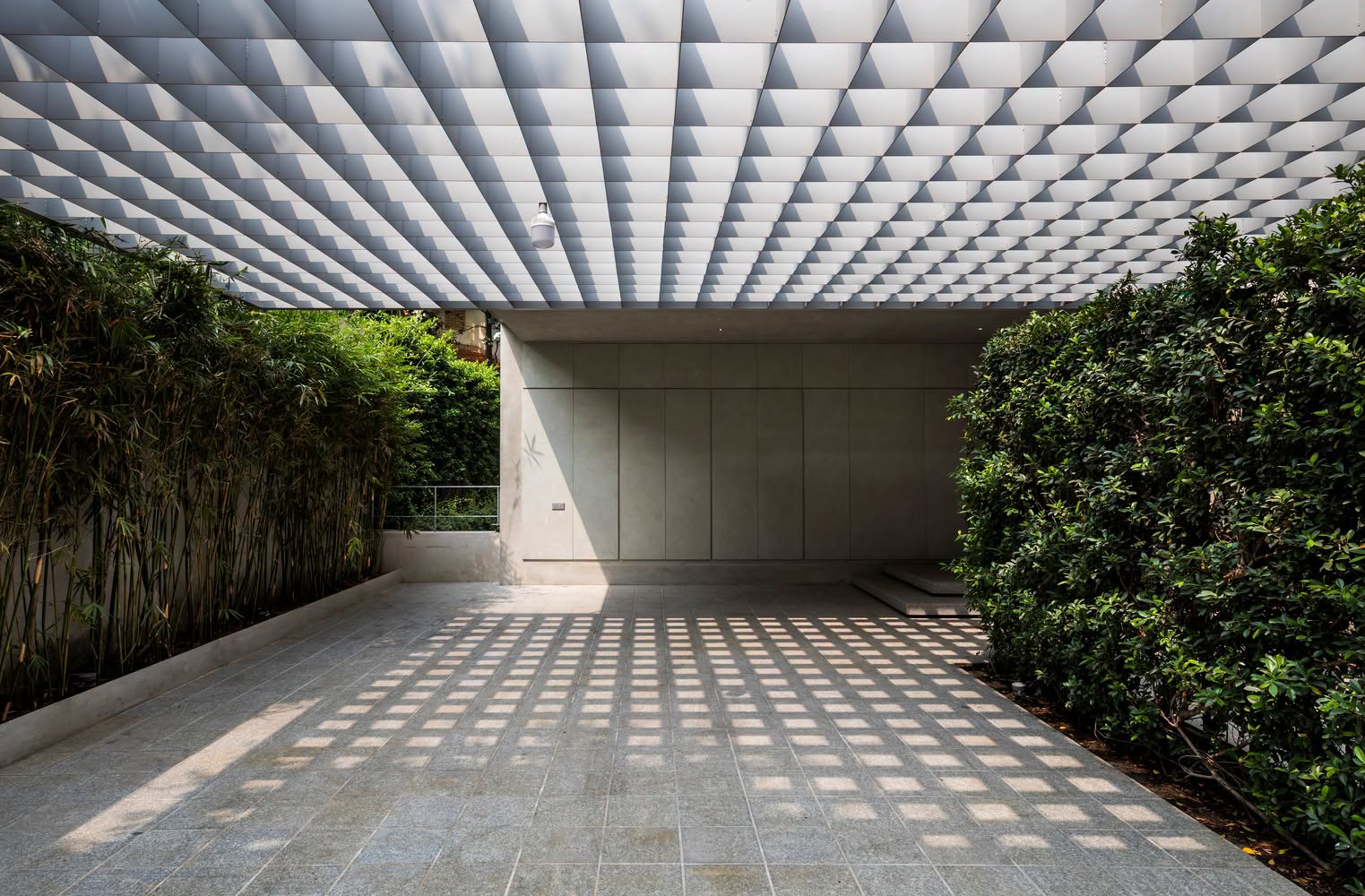
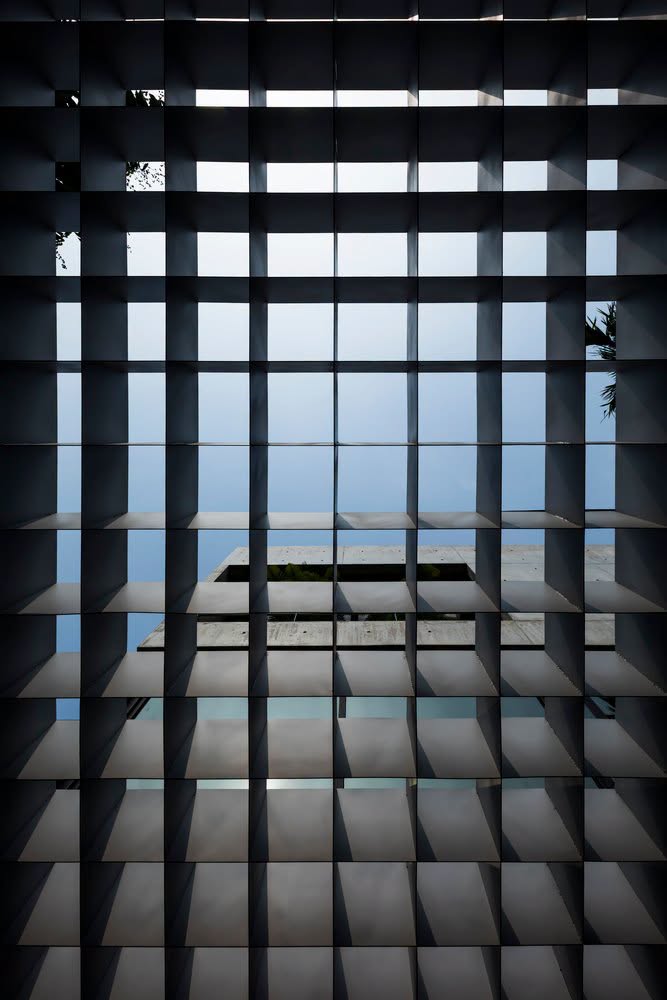
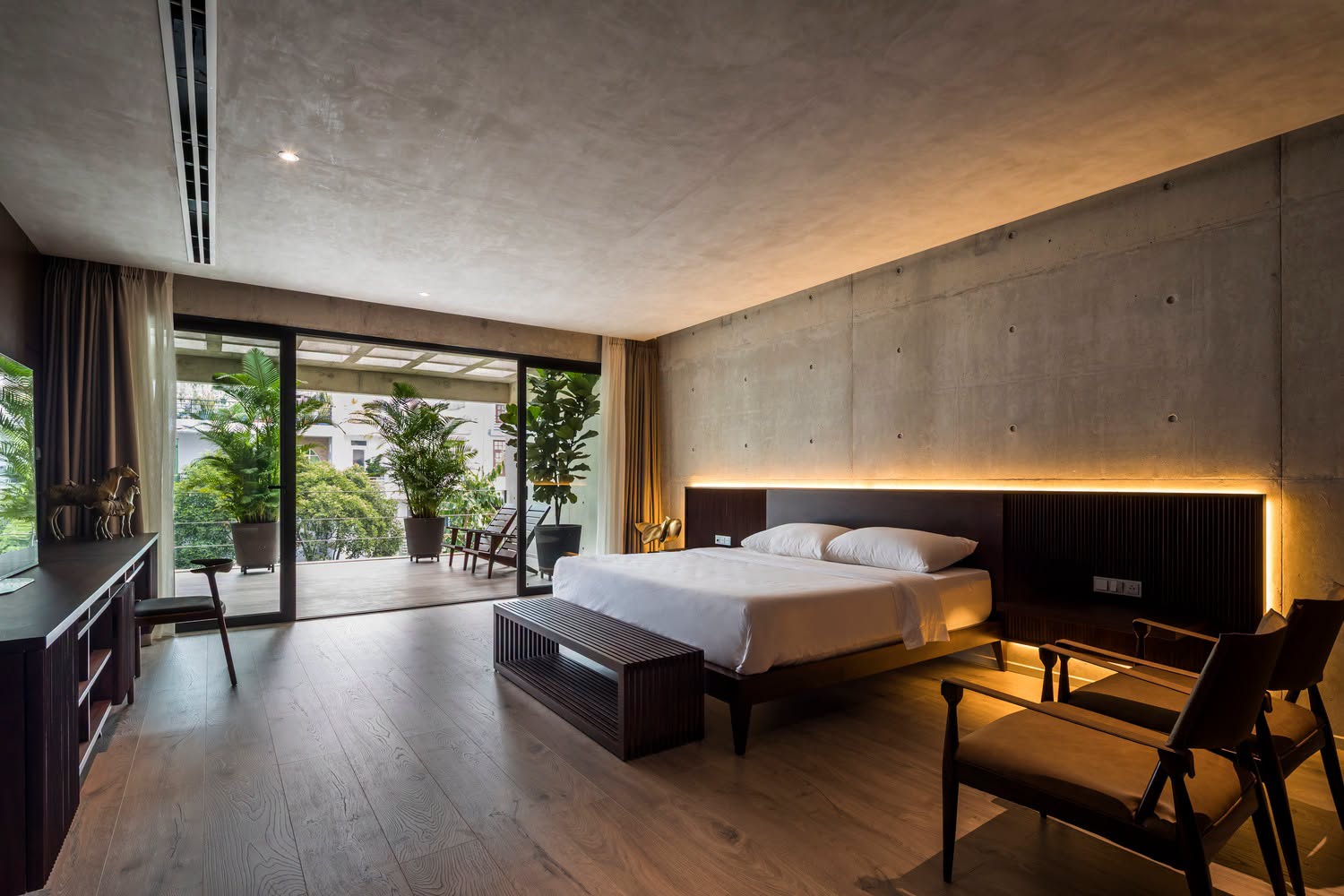
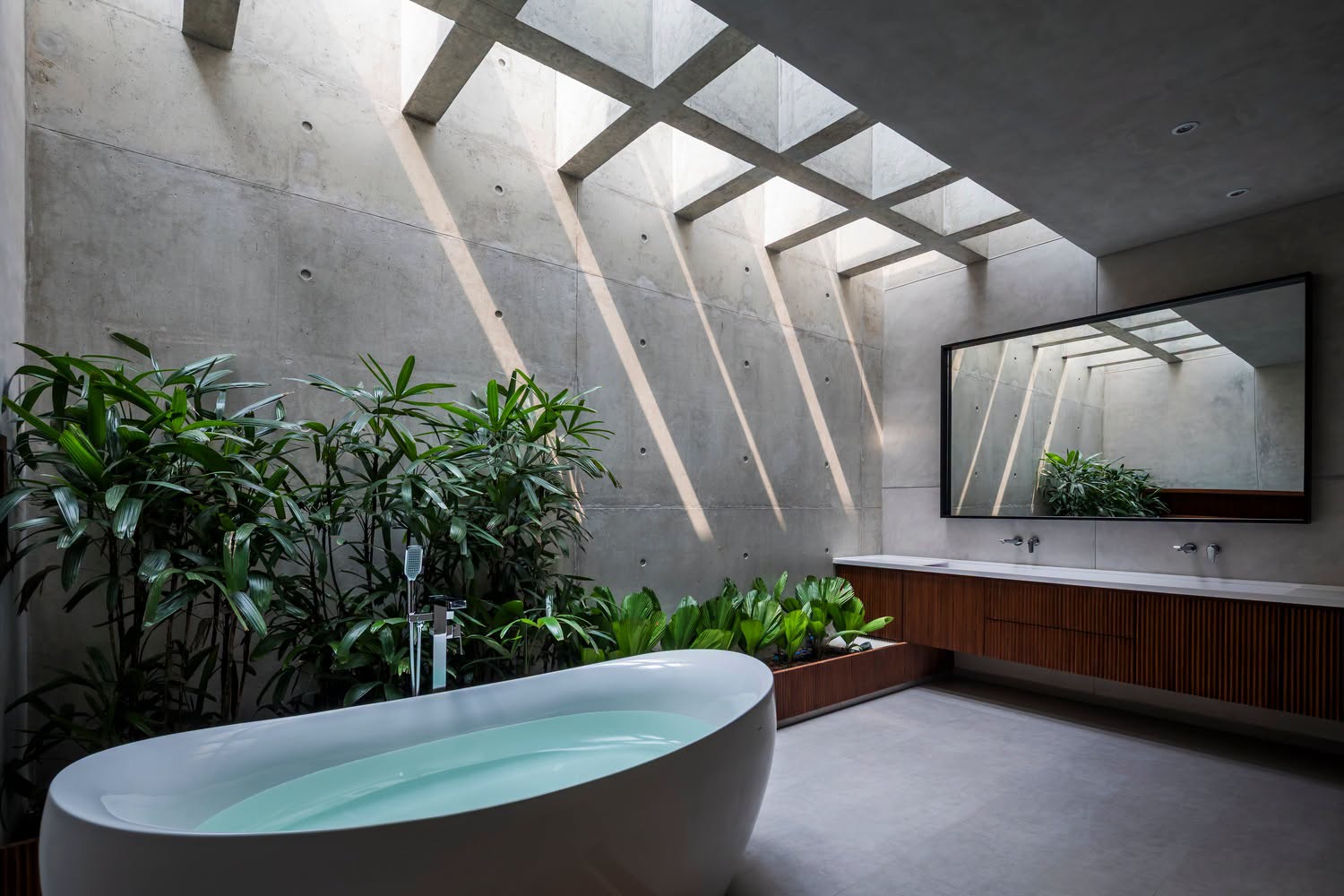
A distinctive feature of the Bunker House is the rugged aesthetic and texture of the waffle slabs' ribs, which is not confined to the structural elements alone. This texture extends onto the concrete and metal pergolas outside, as well as onto the ceilings and walls within the house. The result is an interior space that exudes a sense of security and robustness reminiscent of a bunker, while still maintaining an open, airy ambiance with abundant natural light. This integration of structure, aesthetics, and spatial functionality showcases a harmonious and innovative design approach in the Bunker House project.
Source: Nha Dan Architects
m i l i m e t d e s i g n – w h e r e t h e c o n v e r g e n c e o f u n i q u e c r e a t i v e s
m i l i m e t d e s i g n – w h e r e t h e c o n v e r g e n c e o f u n i q u e c r e a t i v e s















Since 2009. Copyright © 2026 milimetdesign. All rights reserved. Contact: milimetdesign@milimet.com