
Academic Bookstore in Helsinki design by Alvar Aalto with Elissa Aalto
Project: Academic Bookstore in Helsinki
Location: Keskuskatu 1 / Pohjoisesplanadi 39, 00100 Helsinki, Finland
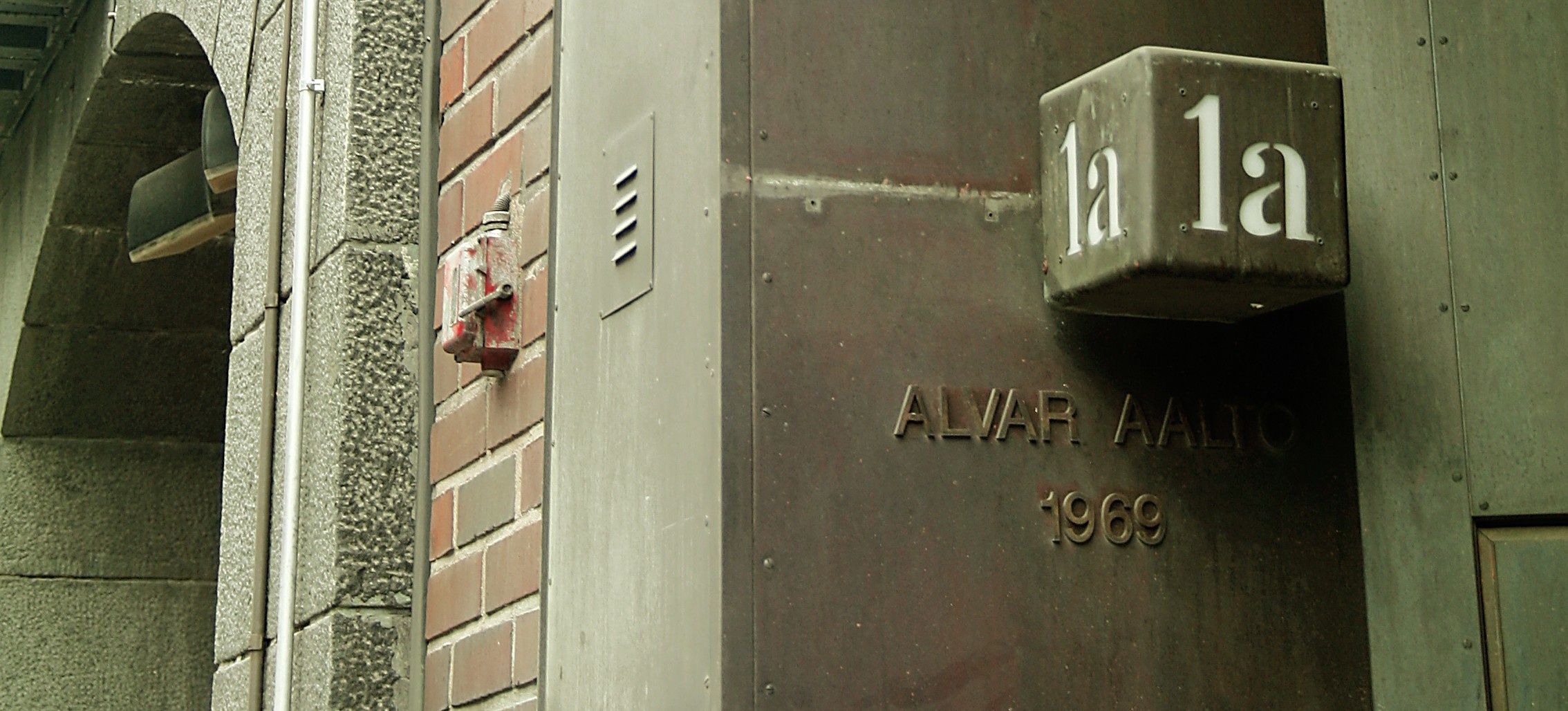
Architects: Alvar Aalto with Elissa Aalto
Client: Stockmann
Gross Area: 8,861 m2 | 95,380 Sq. Ft.
Project Years: 1961 – 1969
Photographer: Trevor Patt
Location: Keskuskatu 1 / Pohjoisesplanadi 39, 00100 Helsinki, Finland
Architects: Alvar Aalto with Elissa Aalto
Client: Stockmann
Gross Area: 8,861 m2 | 95,380 Sq. Ft.
Project Years: 1961 – 1969
Photographer: Trevor Patt
Urban Setting and the Bookstore as a Civic Interior
The Academic Bookstore occupies a prominent corner in central Helsinki, where Keskuskatu meets Pohjoisesplanadi near the city’s principal commercial and cultural routes. Its urban position is not incidental. Across the street stands a major department store, while within the same block, Aalto’s earlier Rautatalo established a related model of the inward-facing commercial building. Together, the two works form a concentrated study in how modern architecture can operate within a dense historic center without abandoning the continuity of the street.
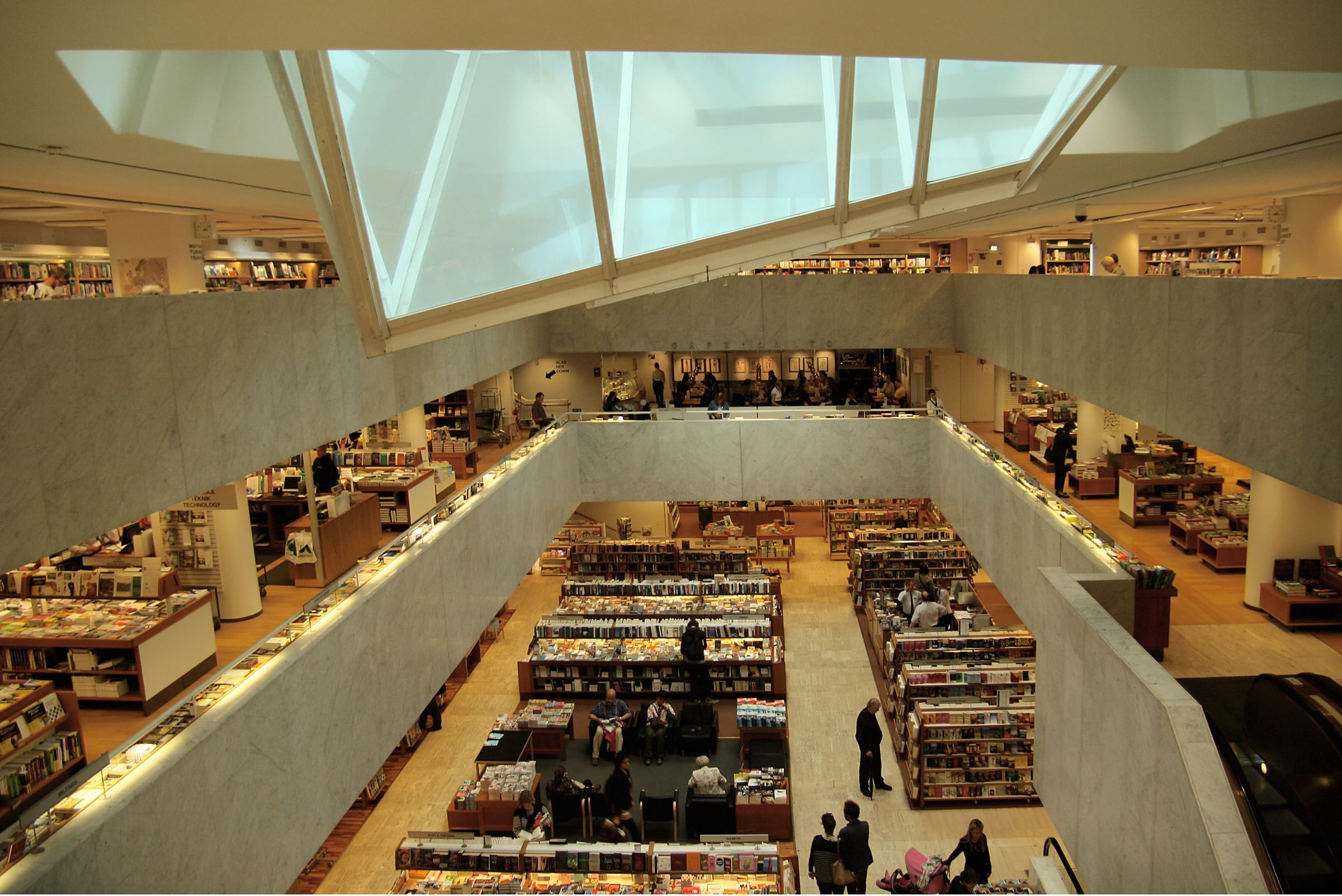
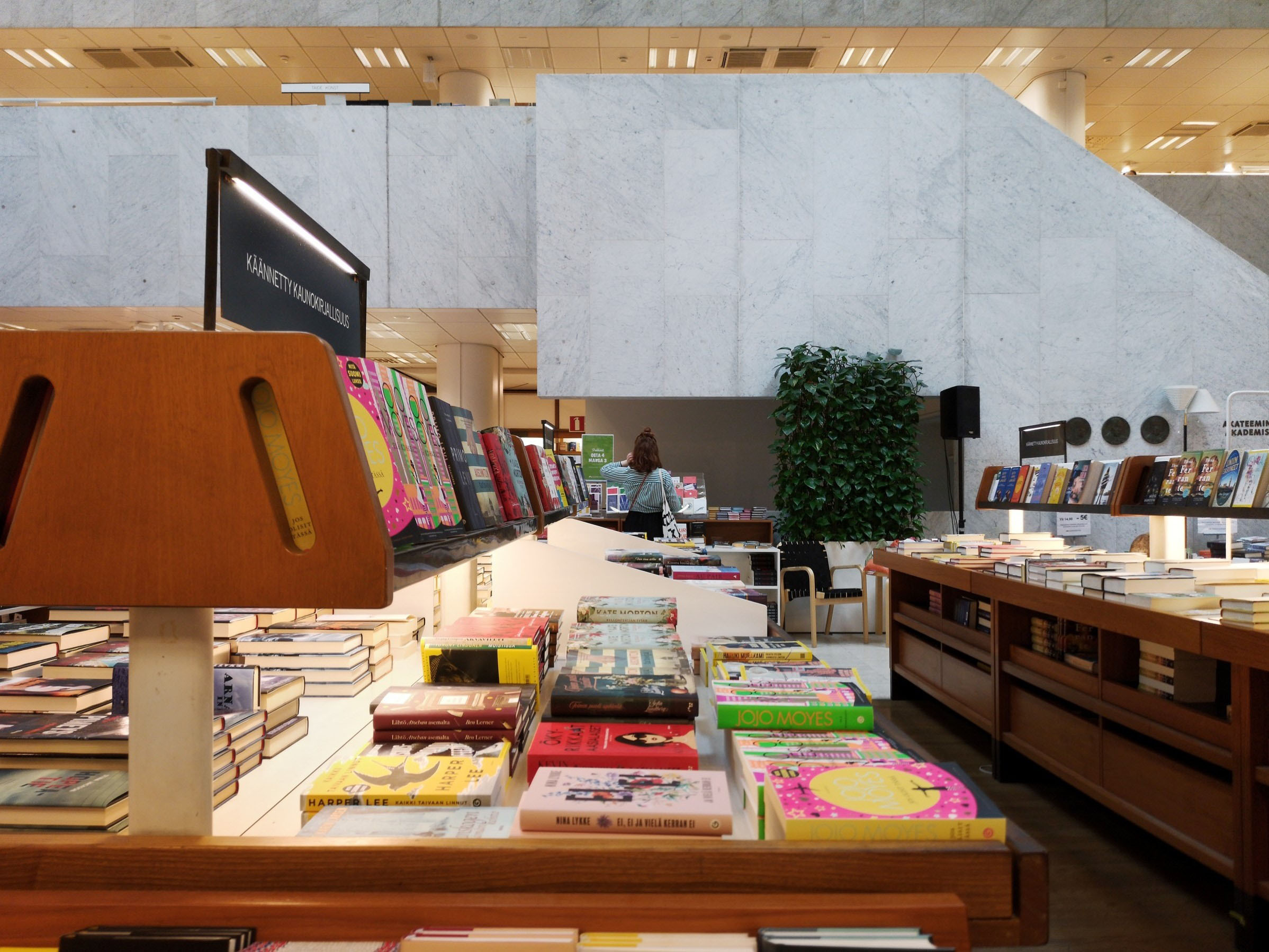
Aalto and Elissa Aalto approached the commission less as a retail container than as an interior institution for the culture of the book. The building accommodates commercial functions, offices, and, later, a cafe, yet its spatial hierarchy resists the usual stacking of rentable floors above a shopfront. The architectural center is the void of the hall, where books, readers, stairs, balconies, and daylight are brought into a shared field of visibility.
This interiorized civic condition responds directly to the Nordic climate. Helsinki’s long winters limit the use of outdoor public space, especially for lingering, informal gathering, and slow pedestrian occupation. Aalto’s answer was neither a sealed mall nor a neutral atrium, but a covered urban room whose scale, materials, and light make public life possible inside the block.
Sectional Organization and the Three-Story Hall
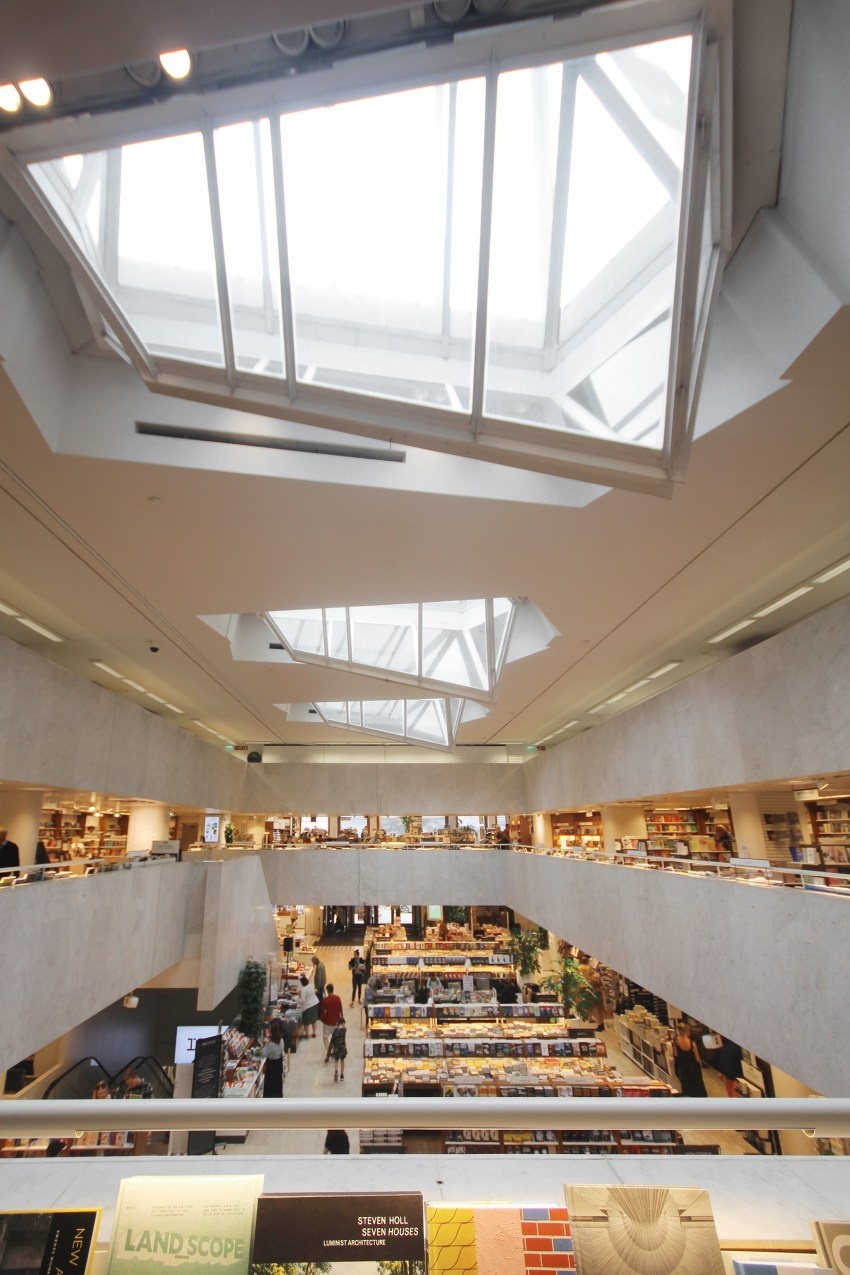
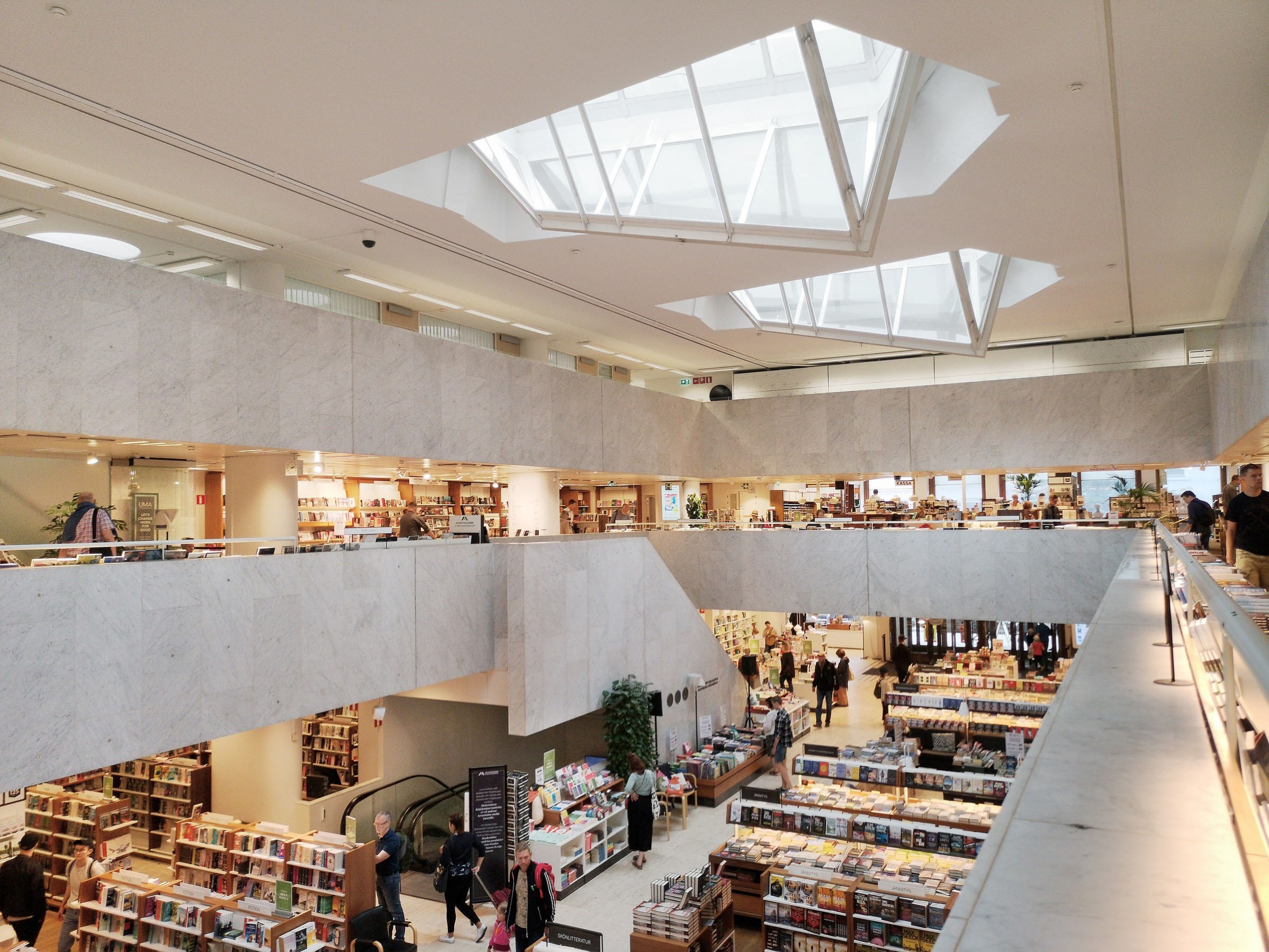
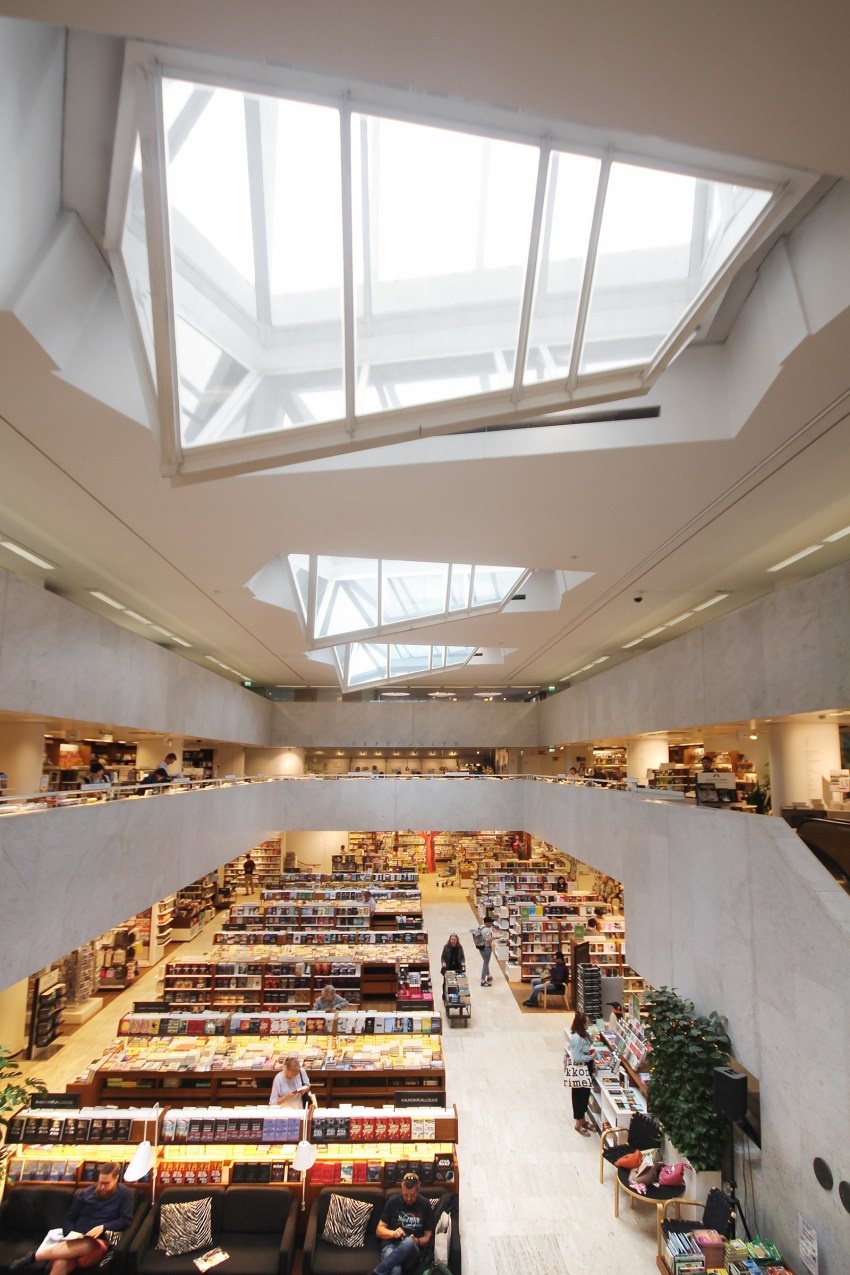
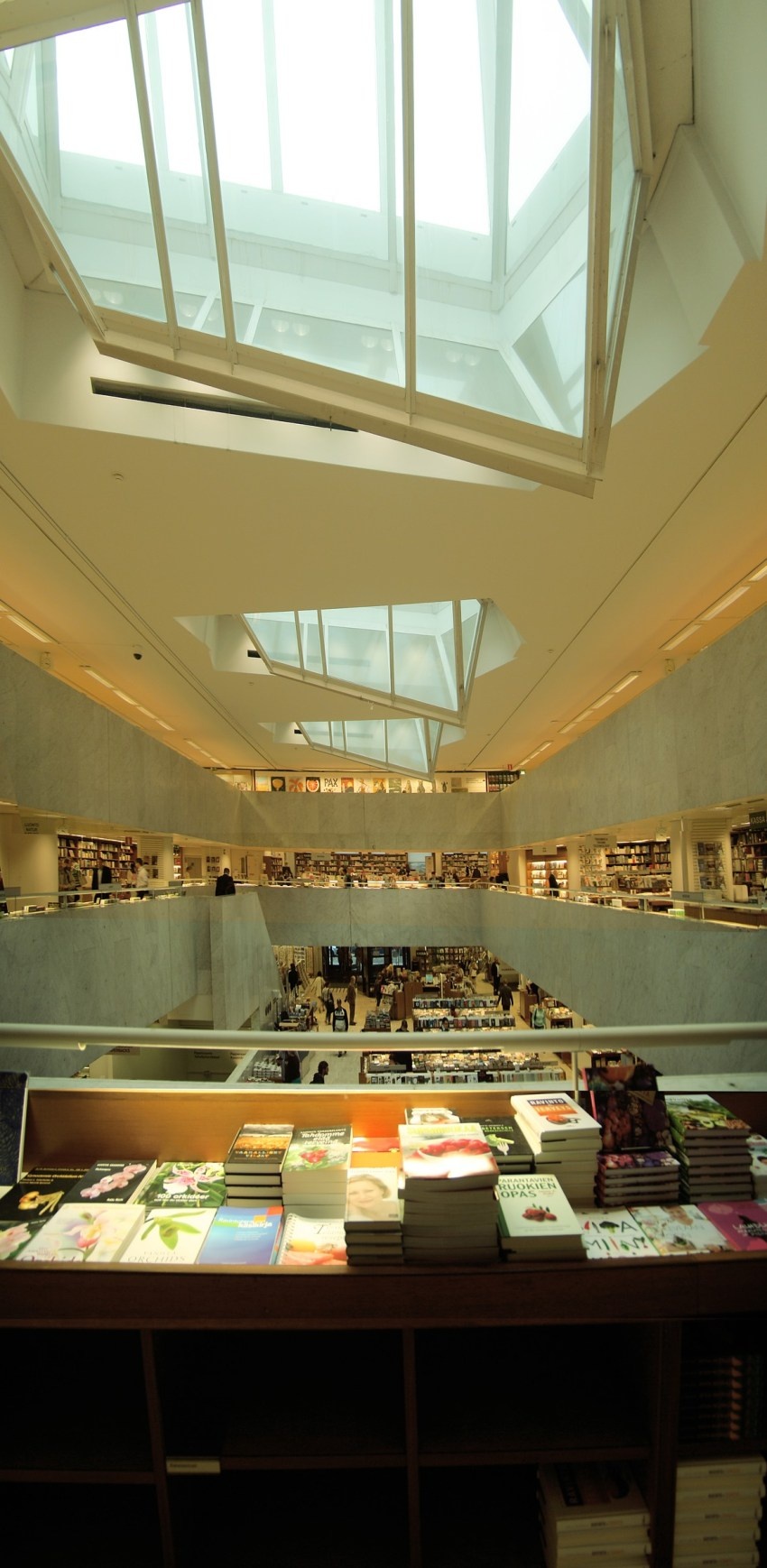
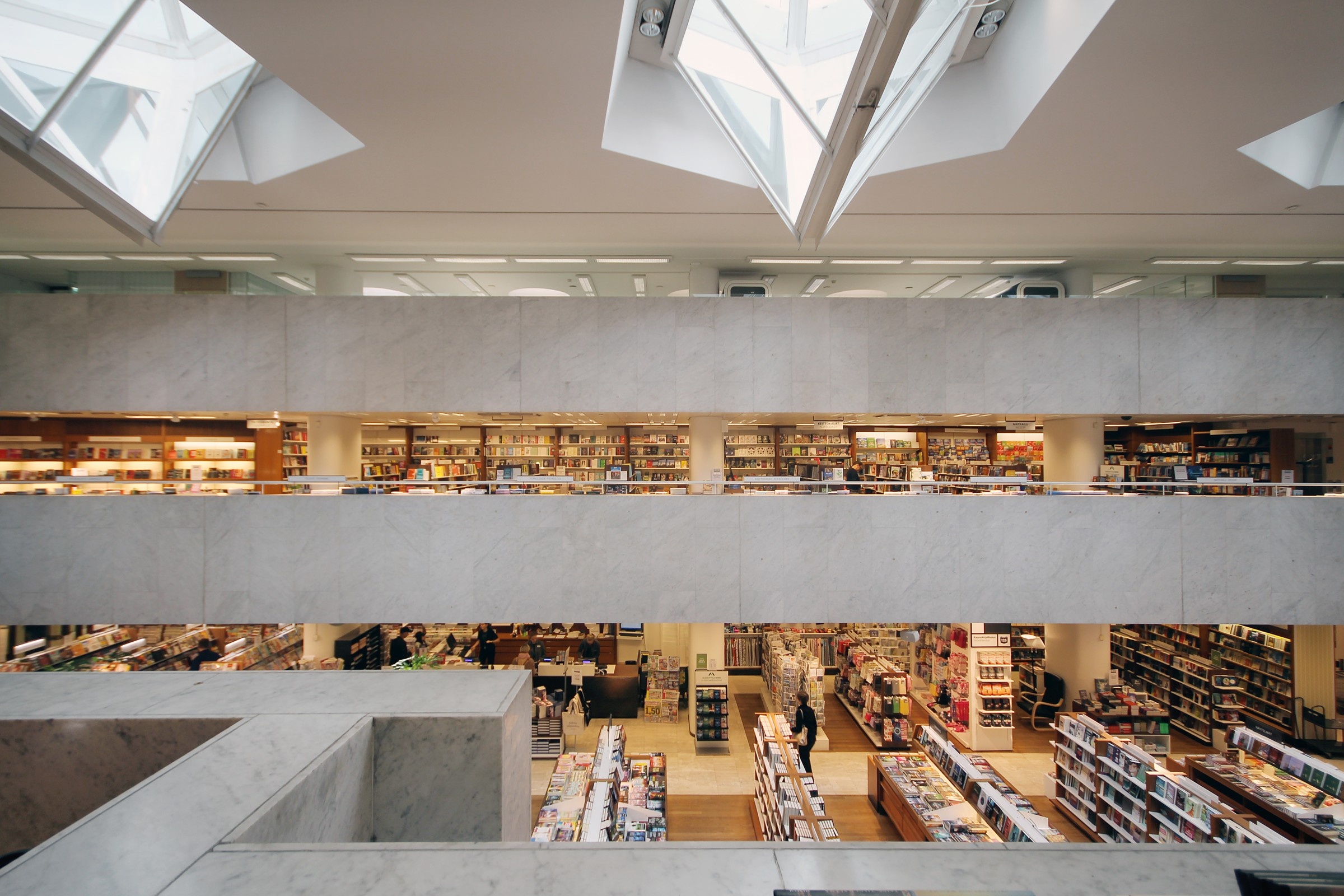
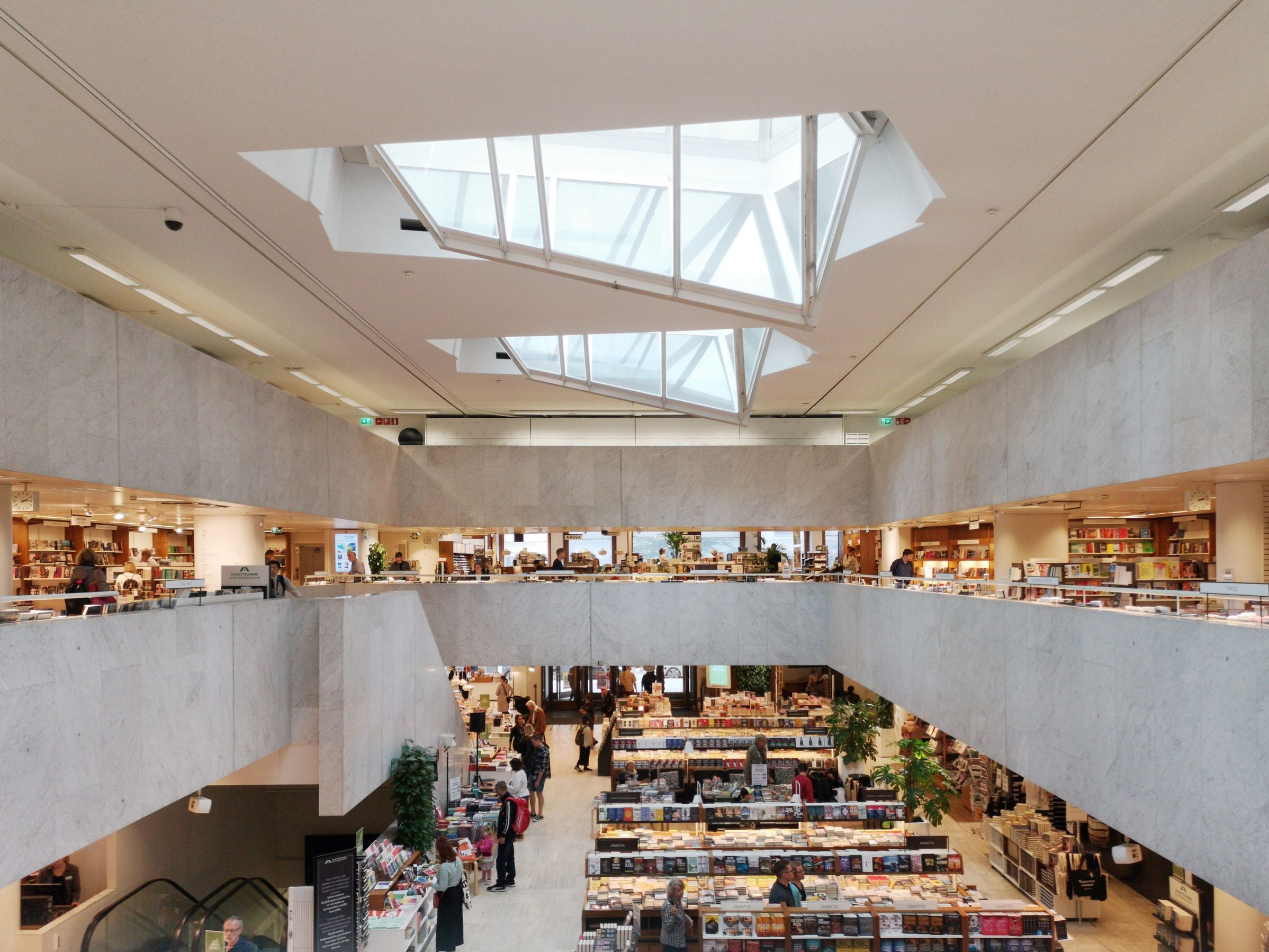
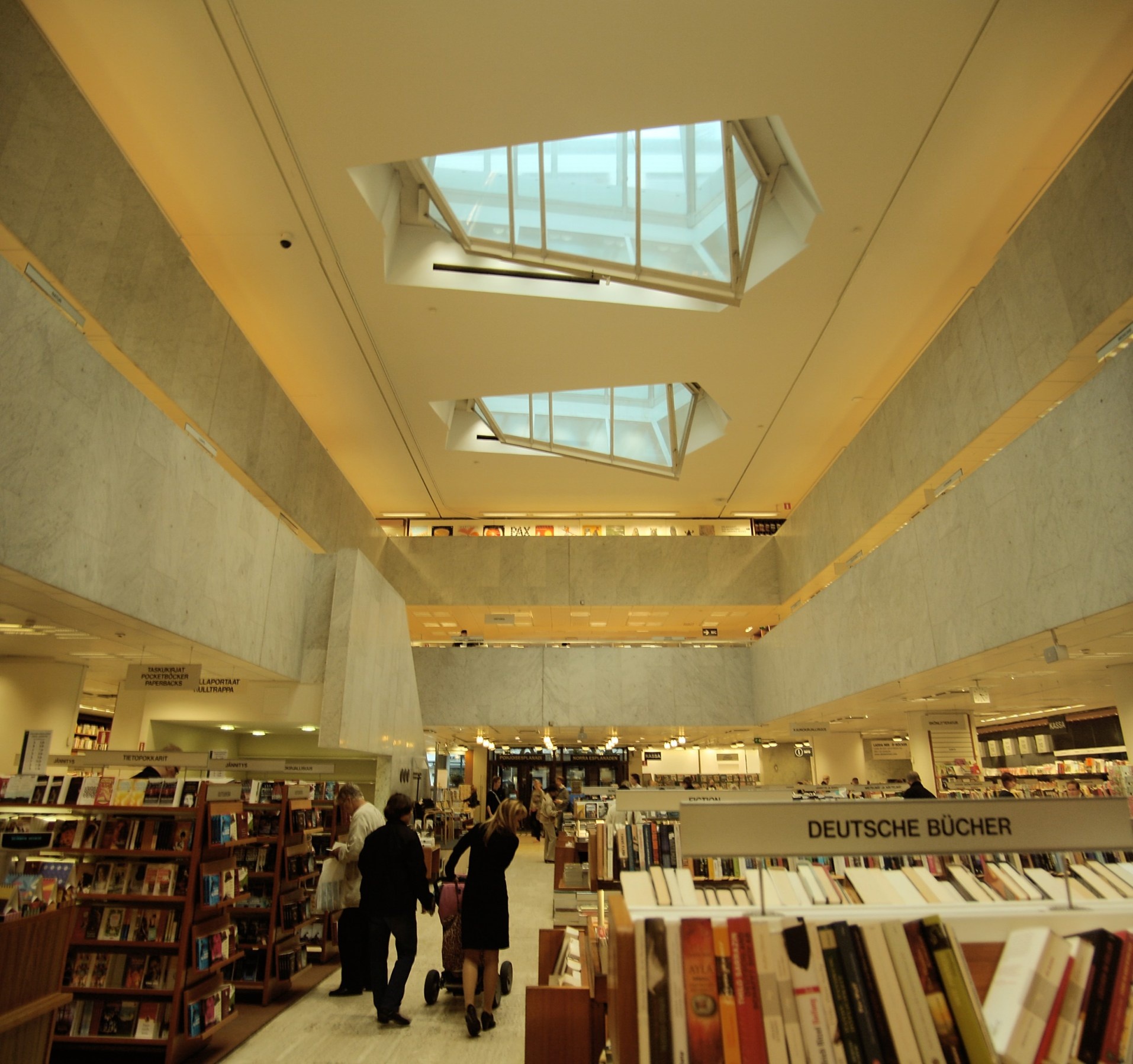
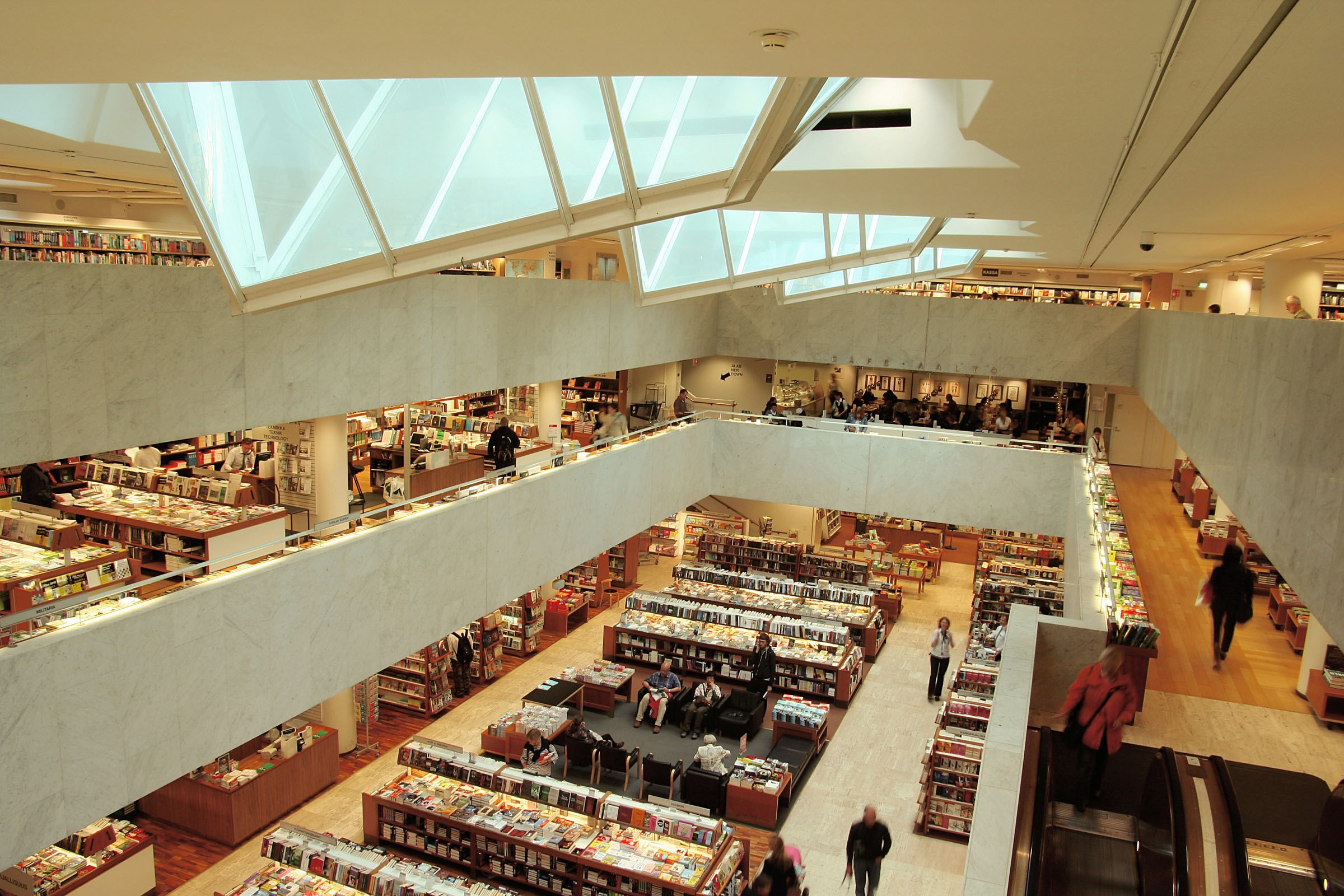
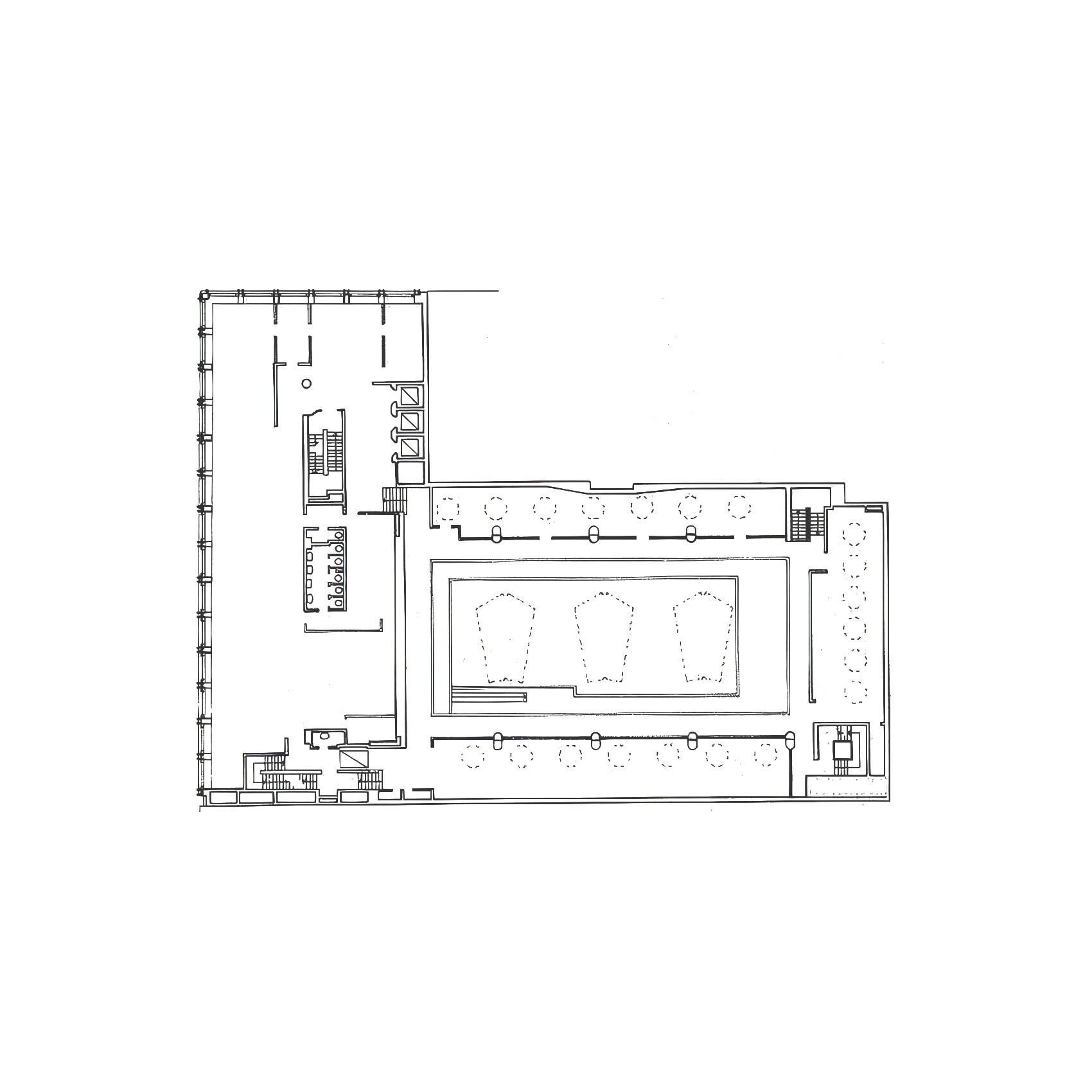
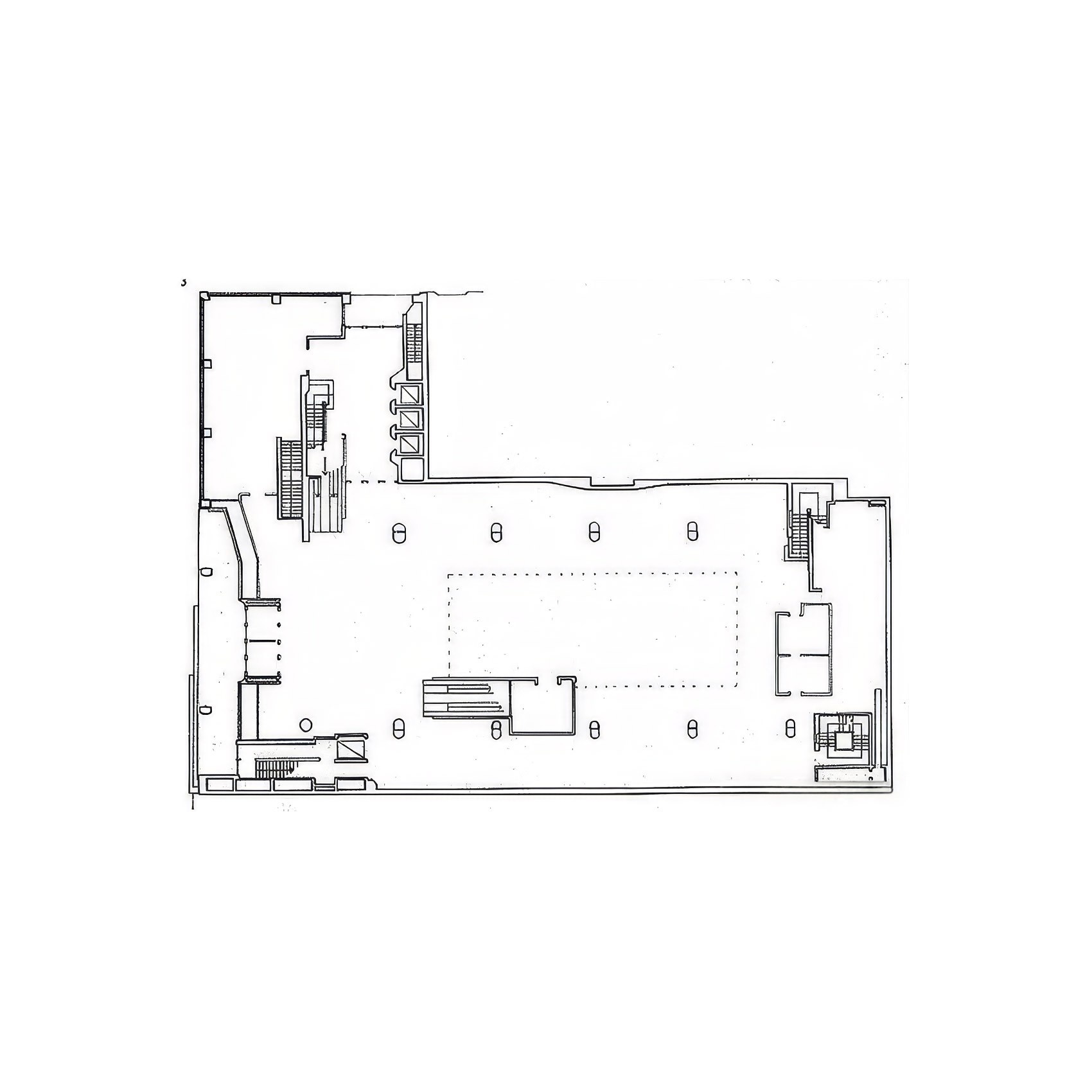
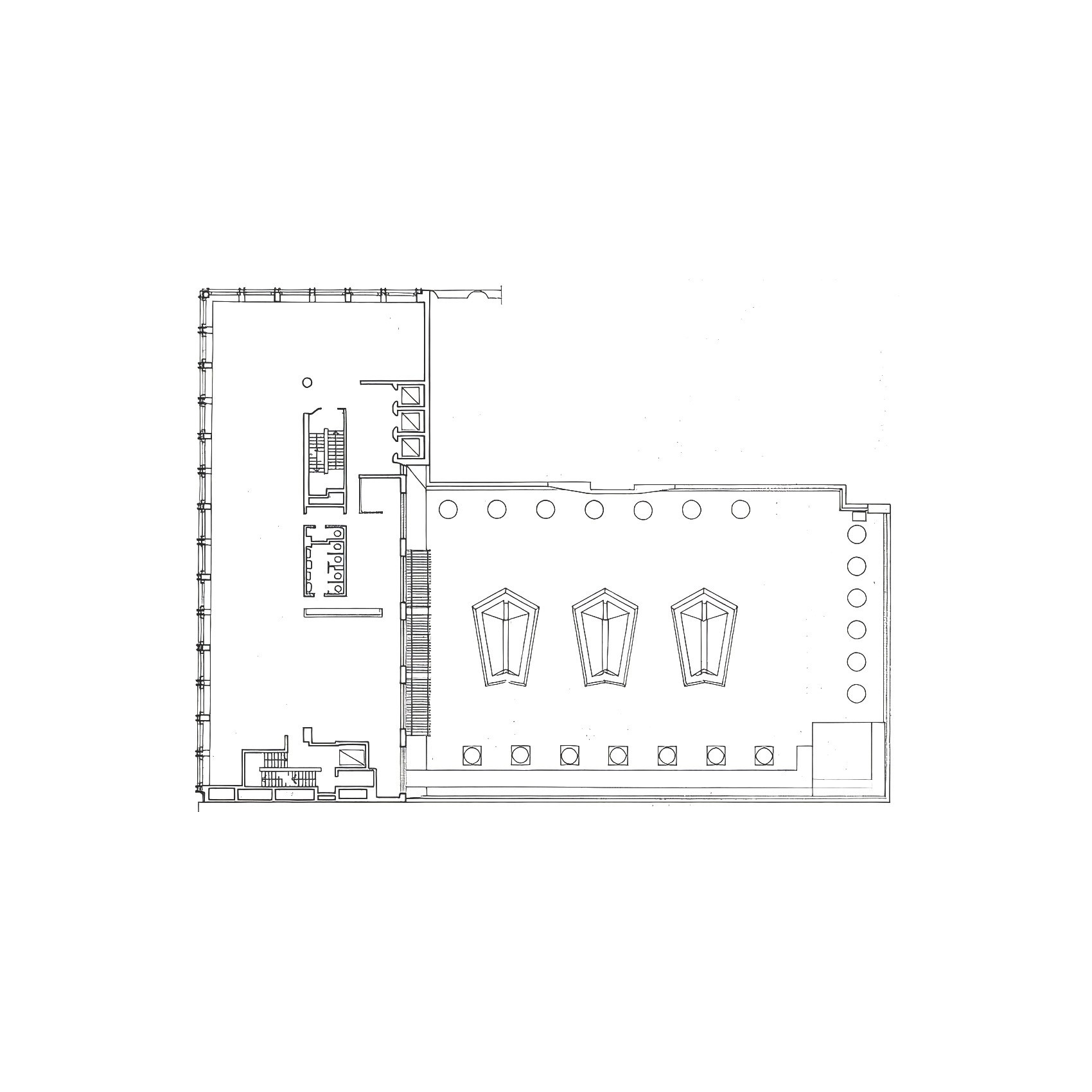
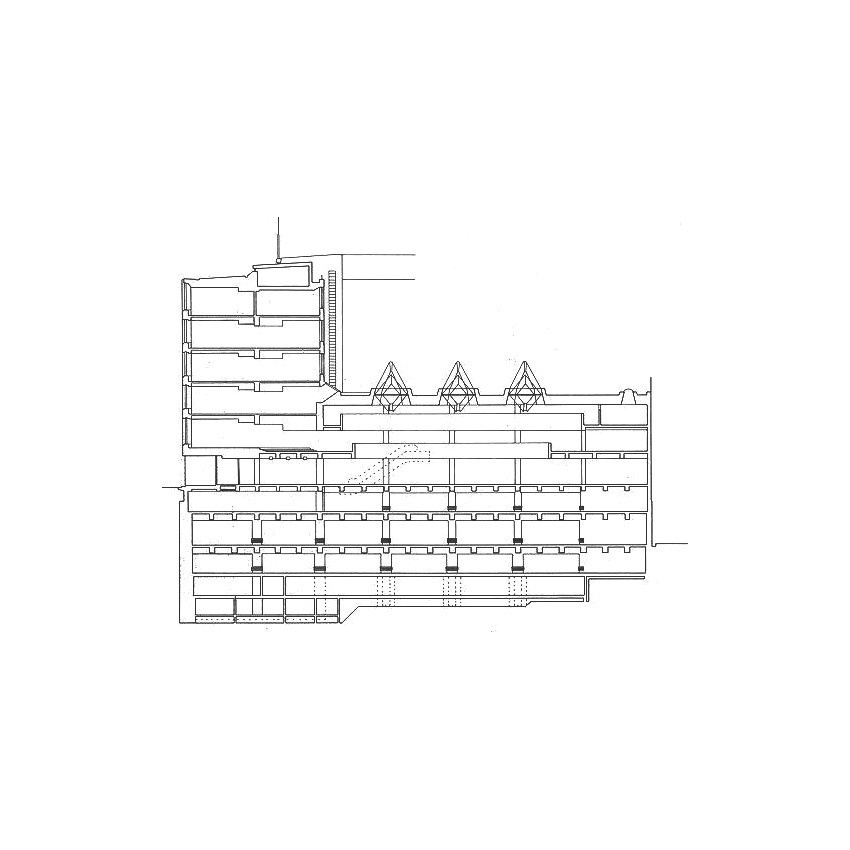
The section is the project’s main architectural instrument. A rectangular three-story hall is set behind the street facades and wrapped by retail levels, balconies, and circulation. The atrium is not an empty spectacle inserted into a commercial plan; it organizes the plan’s social and visual structure. From the ground floor, the visitor sees books arranged across multiple levels, while upper balconies return the gaze toward the collective activity below.
The section is the project’s main architectural instrument. A rectangular three-story hall is set behind the street facades and wrapped by retail levels, balconies, and circulation. The atrium is not an empty spectacle inserted into a commercial plan; it organizes the plan’s social and visual structure. From the ground floor, the visitor sees books arranged across multiple levels, while upper balconies return the gaze toward the collective activity below.
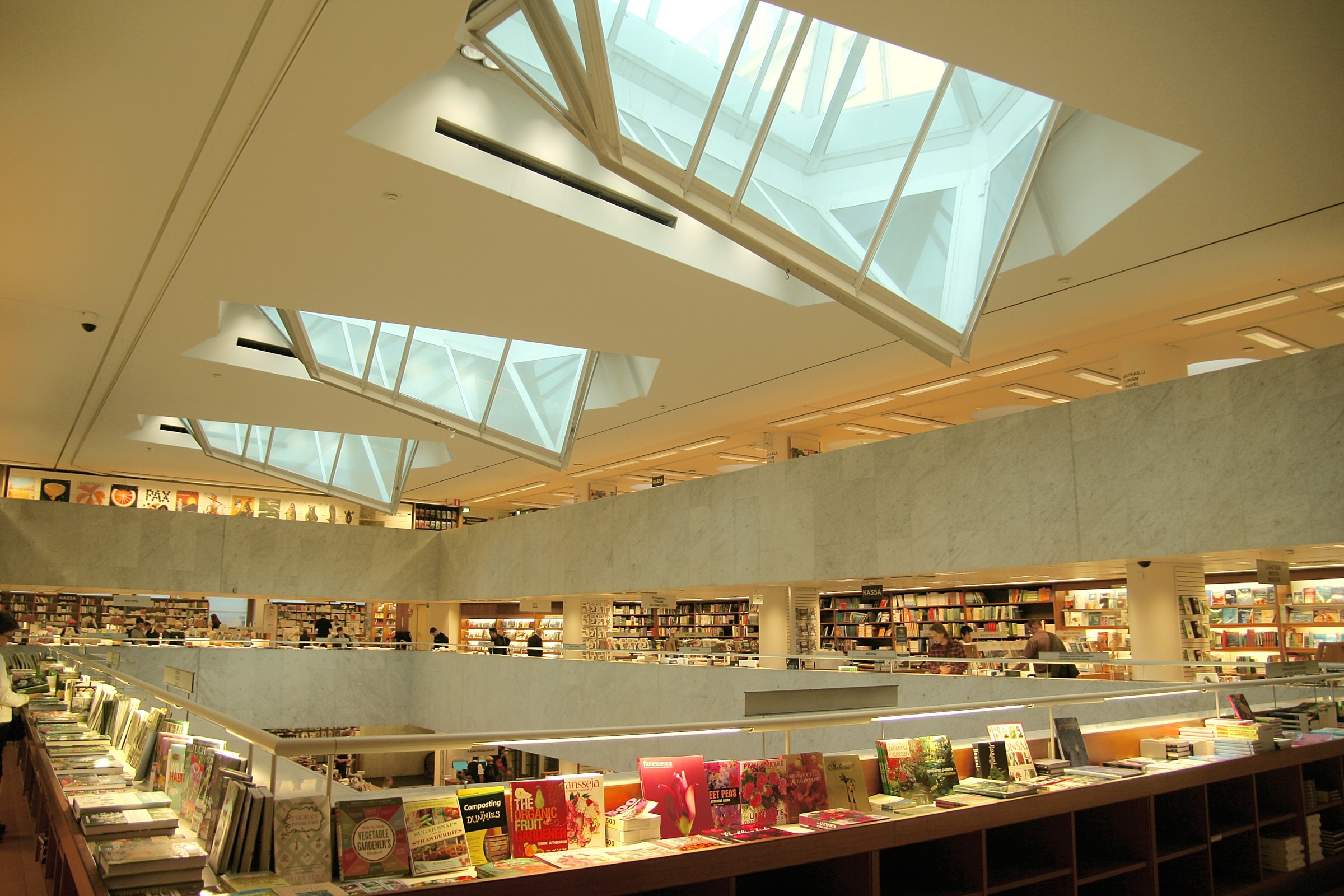
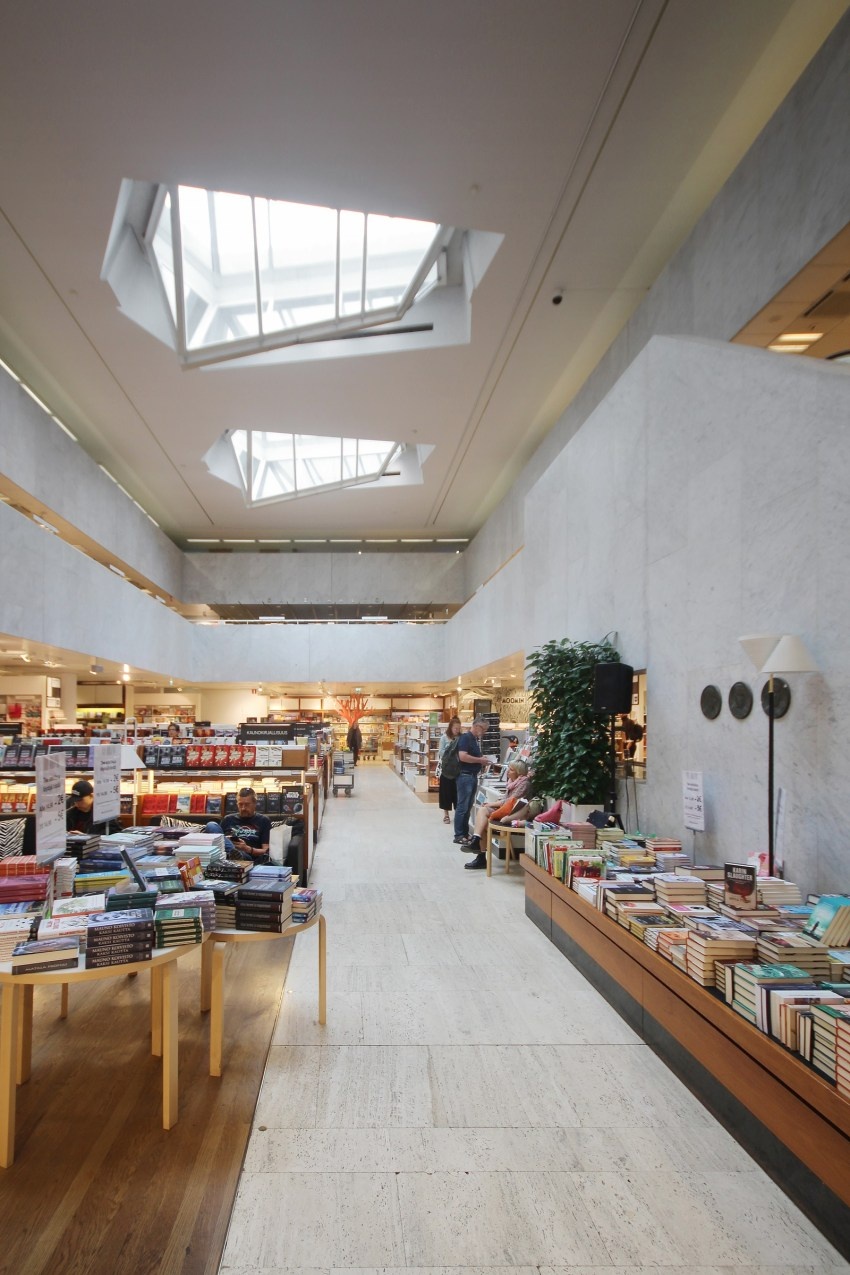
Aalto calibrates the movement between compression and release with particular care. The perimeter zones, where book stacks and display areas are located, have lower ceilings and a more intimate scale suited to browsing. These areas open suddenly toward the marble void, where the space expands upward, and the eye is drawn to the skylights. The contrast gives the act of moving through the bookstore a rhythm closer to urban walking than to linear shopping.
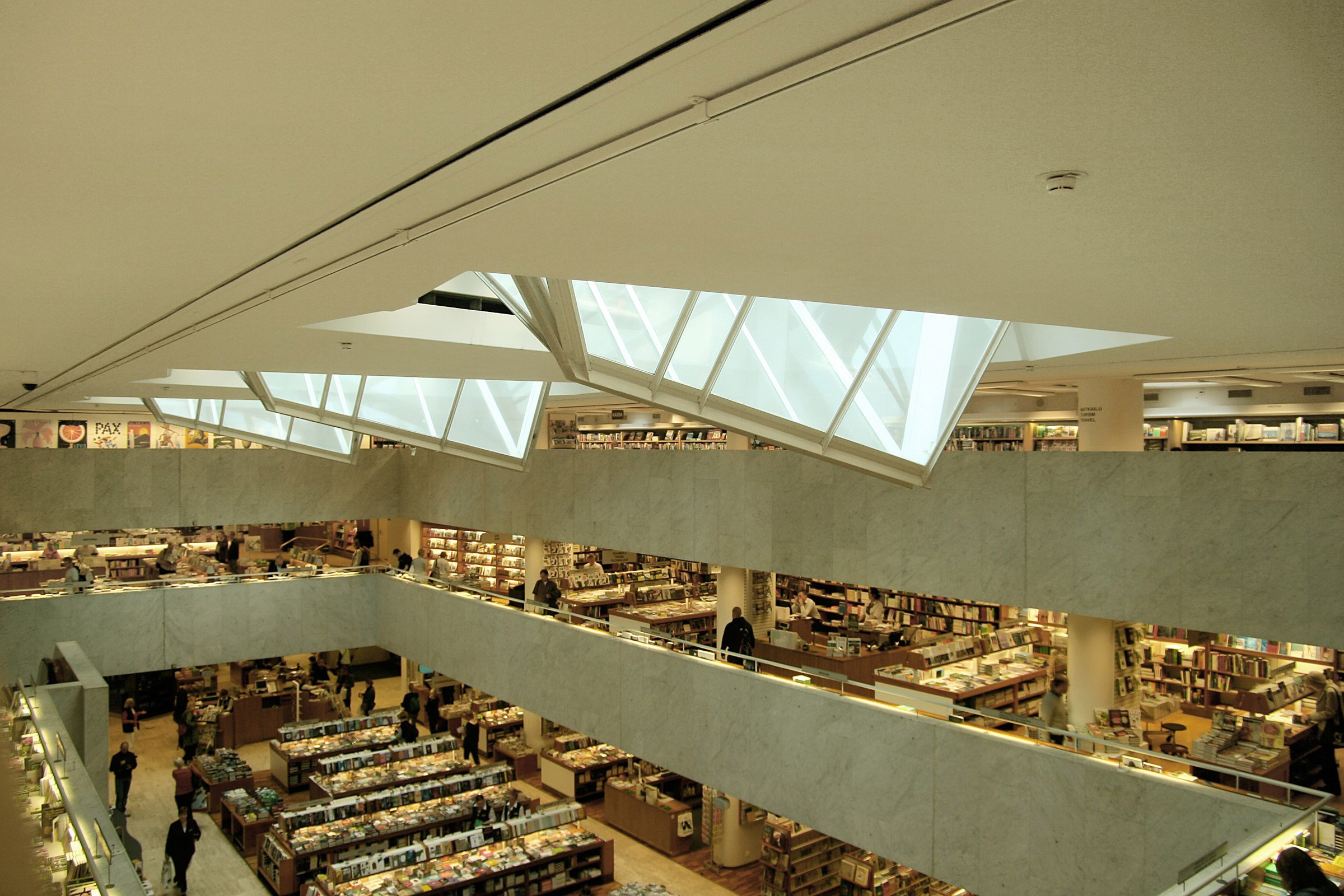
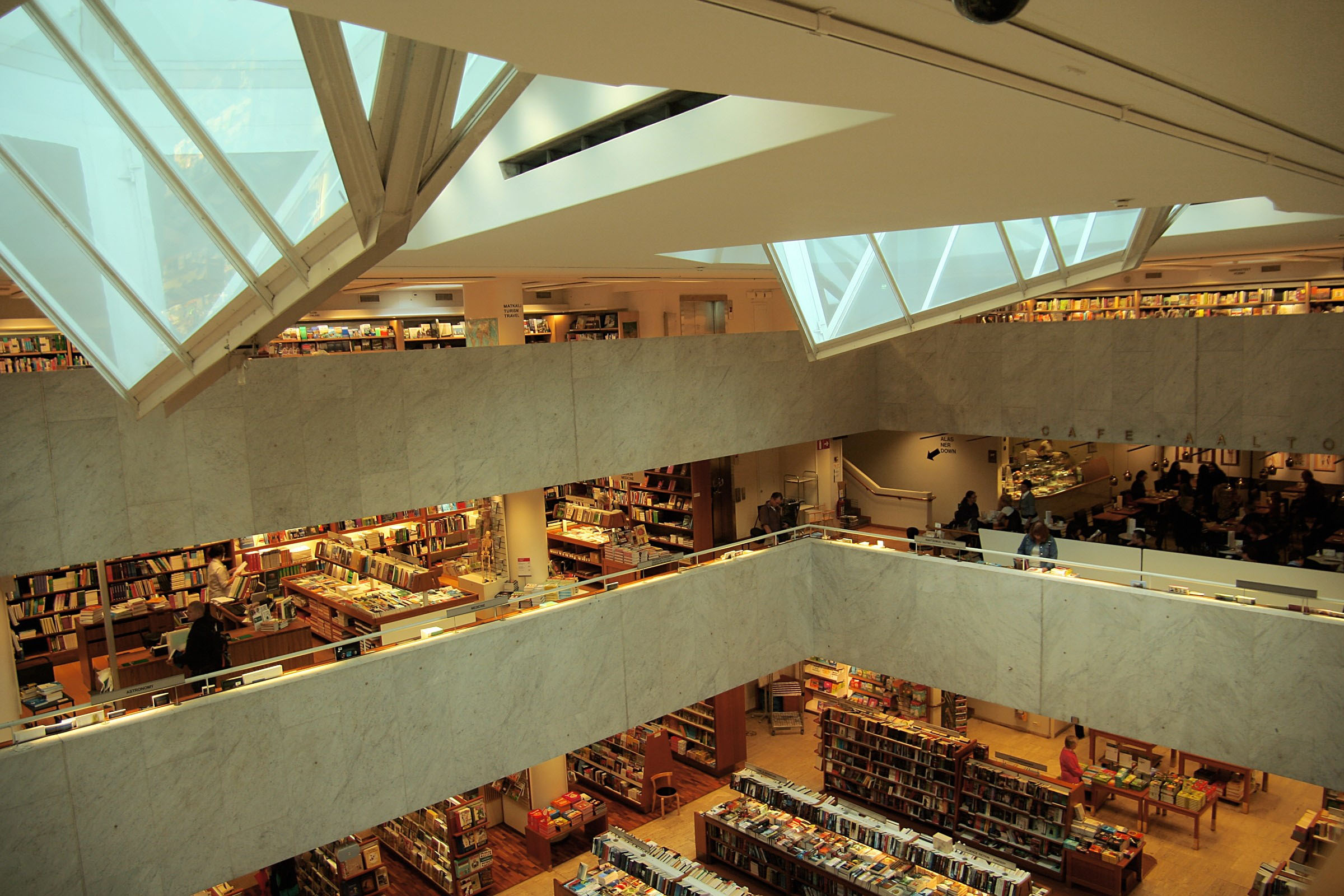
The balcony system gives the hall its architectural discipline. Closed Carrara marble balustrades form continuous horizontal bands that frame the void and moderate its height. Their vertical veining and white surfaces create a stable datum against which books, people, furniture, and escalators introduce movement and color. The result is a section that can absorb change without losing its legibility, as later expansions of the bookstore into former office areas have demonstrated.
Light, Material, and Architectural Atmosphere
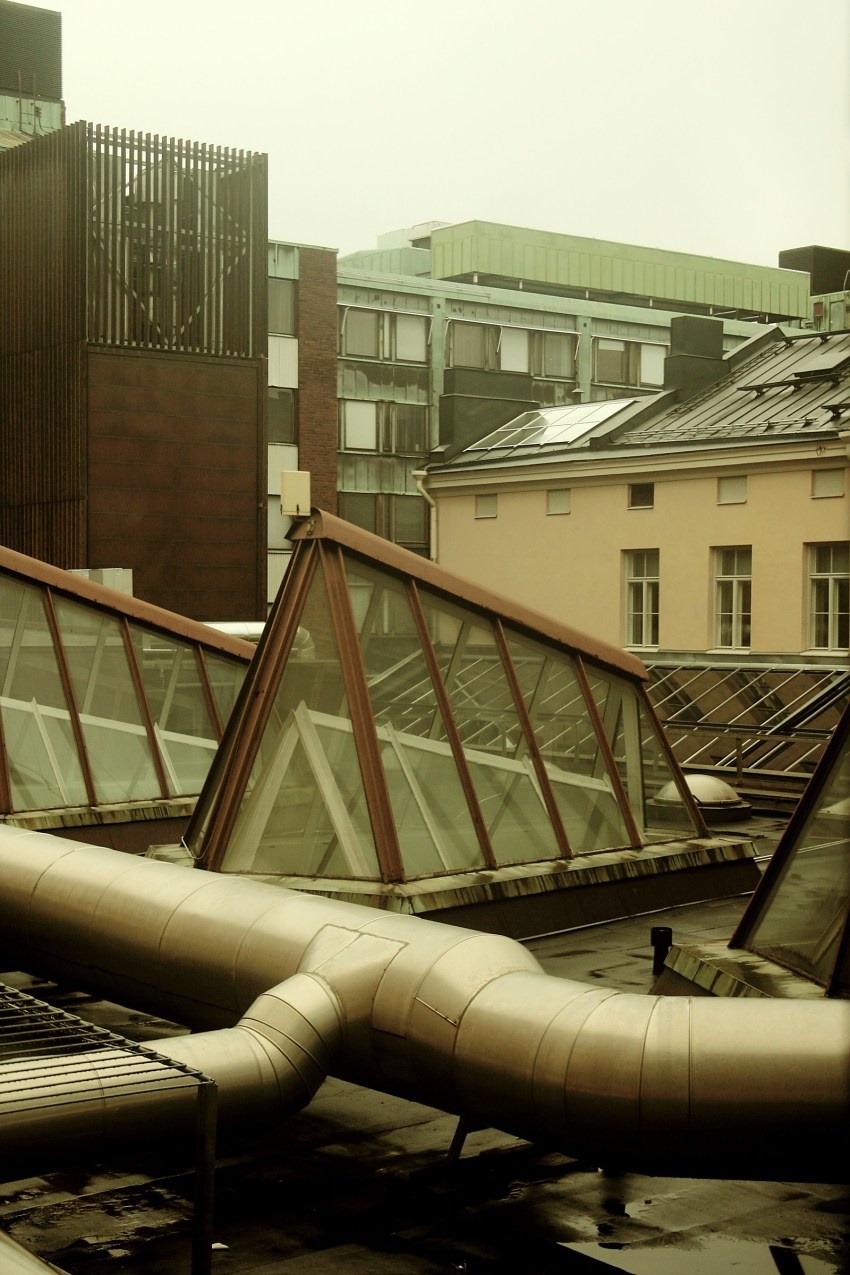
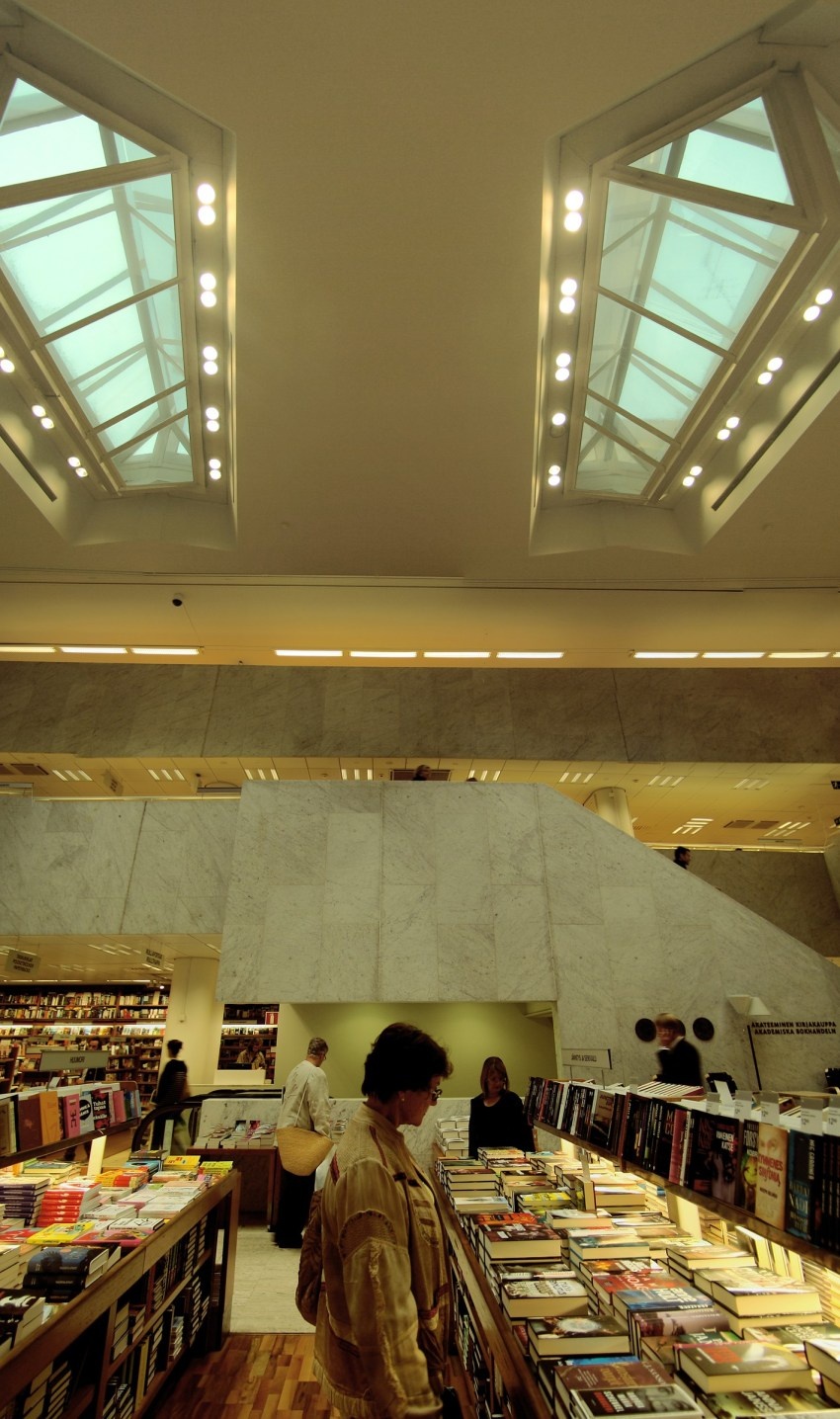
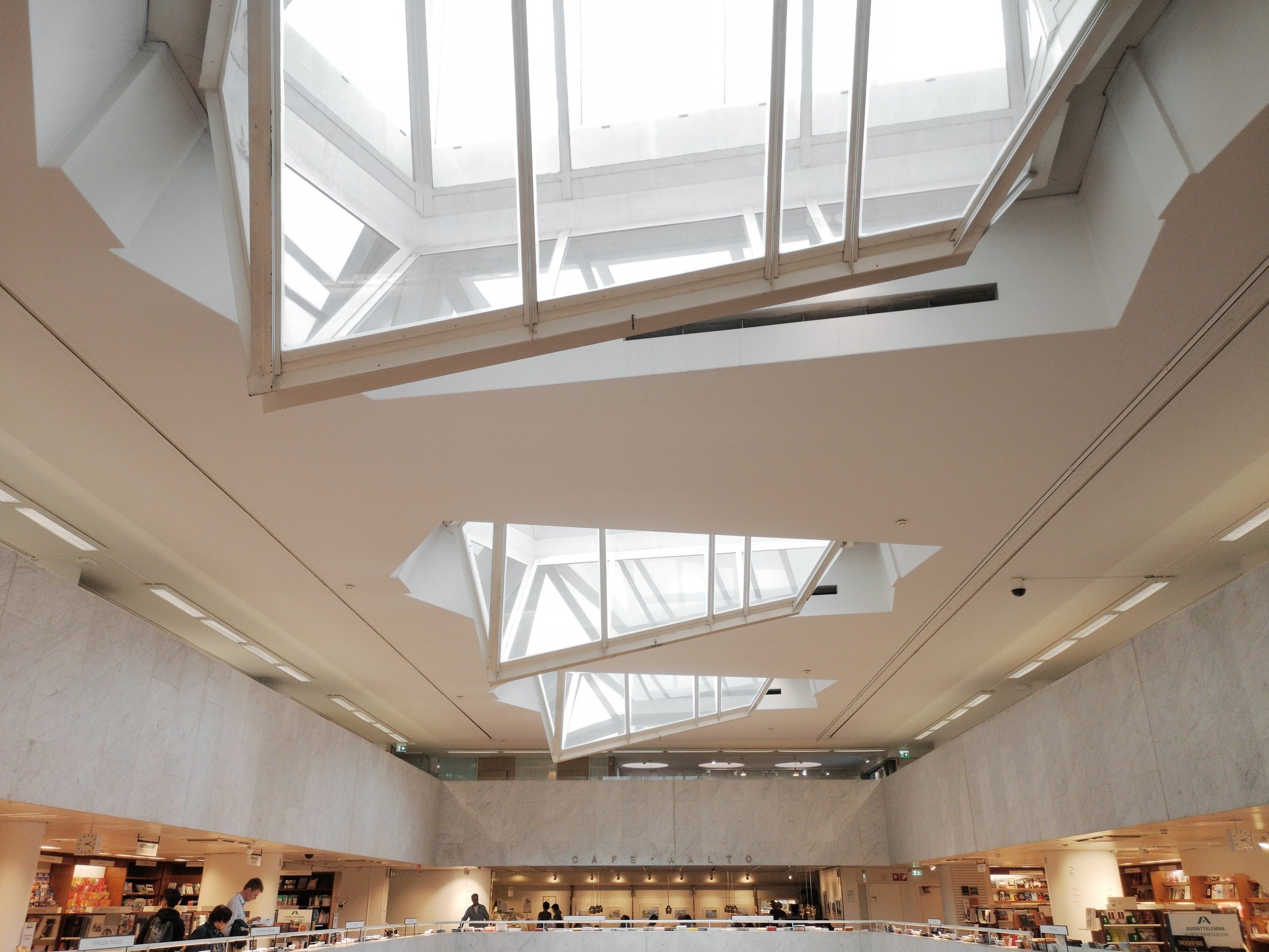
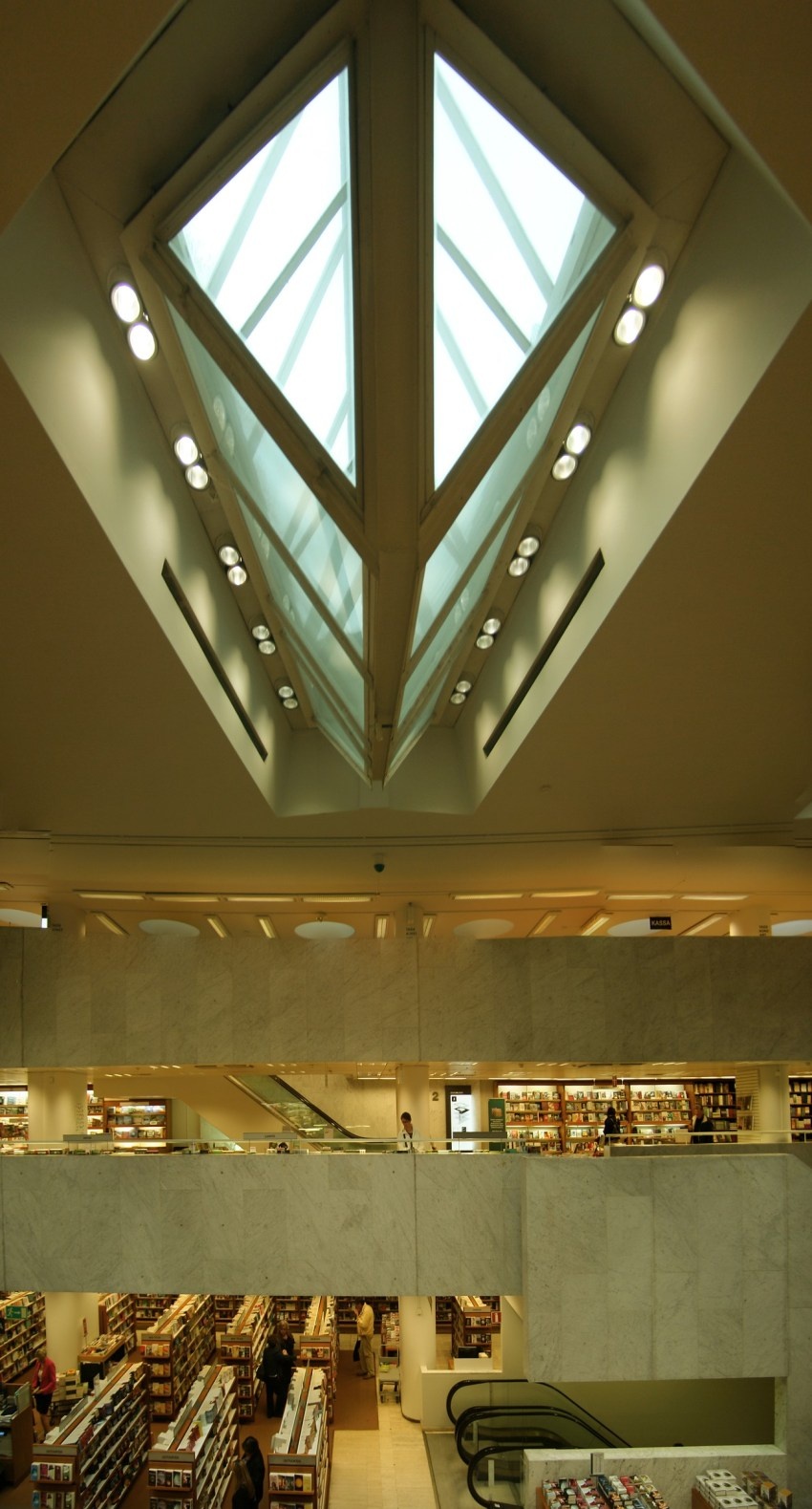
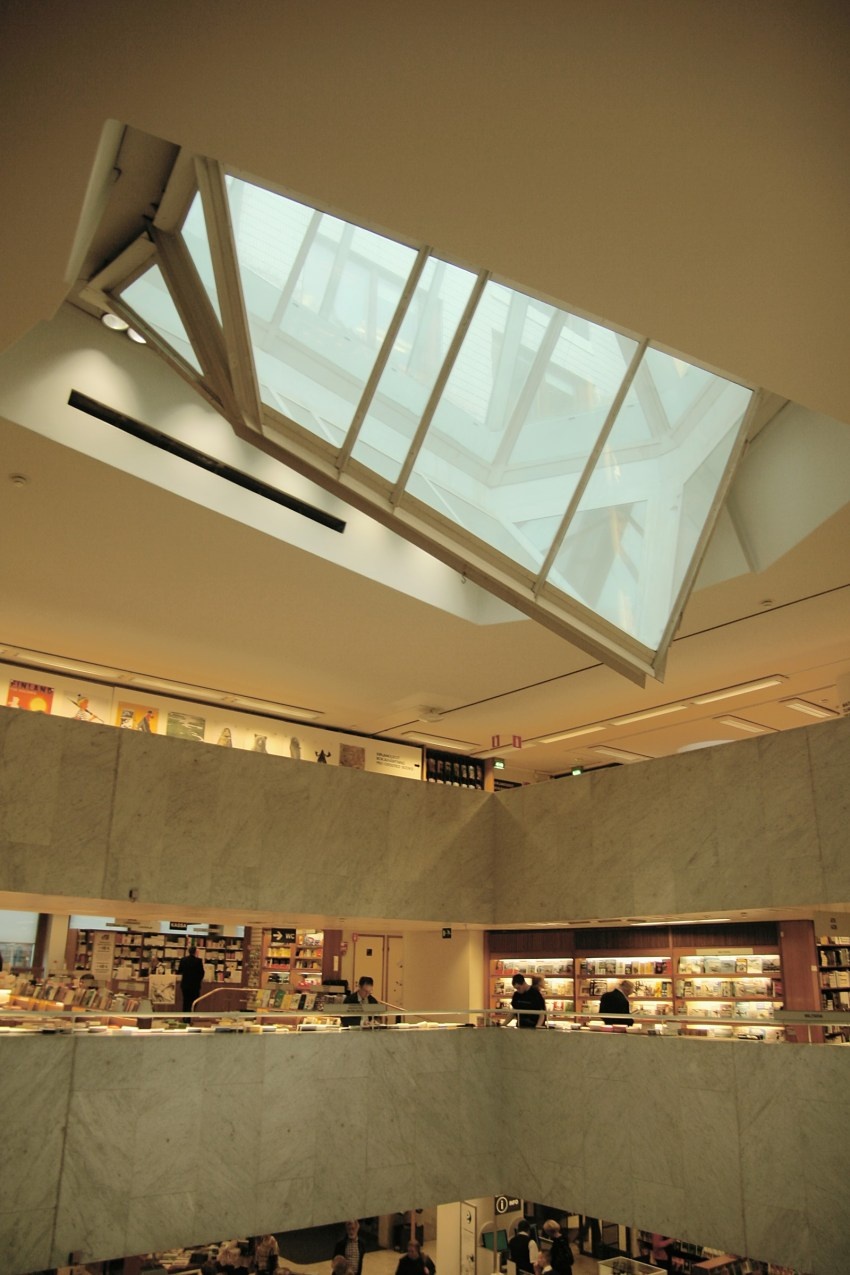
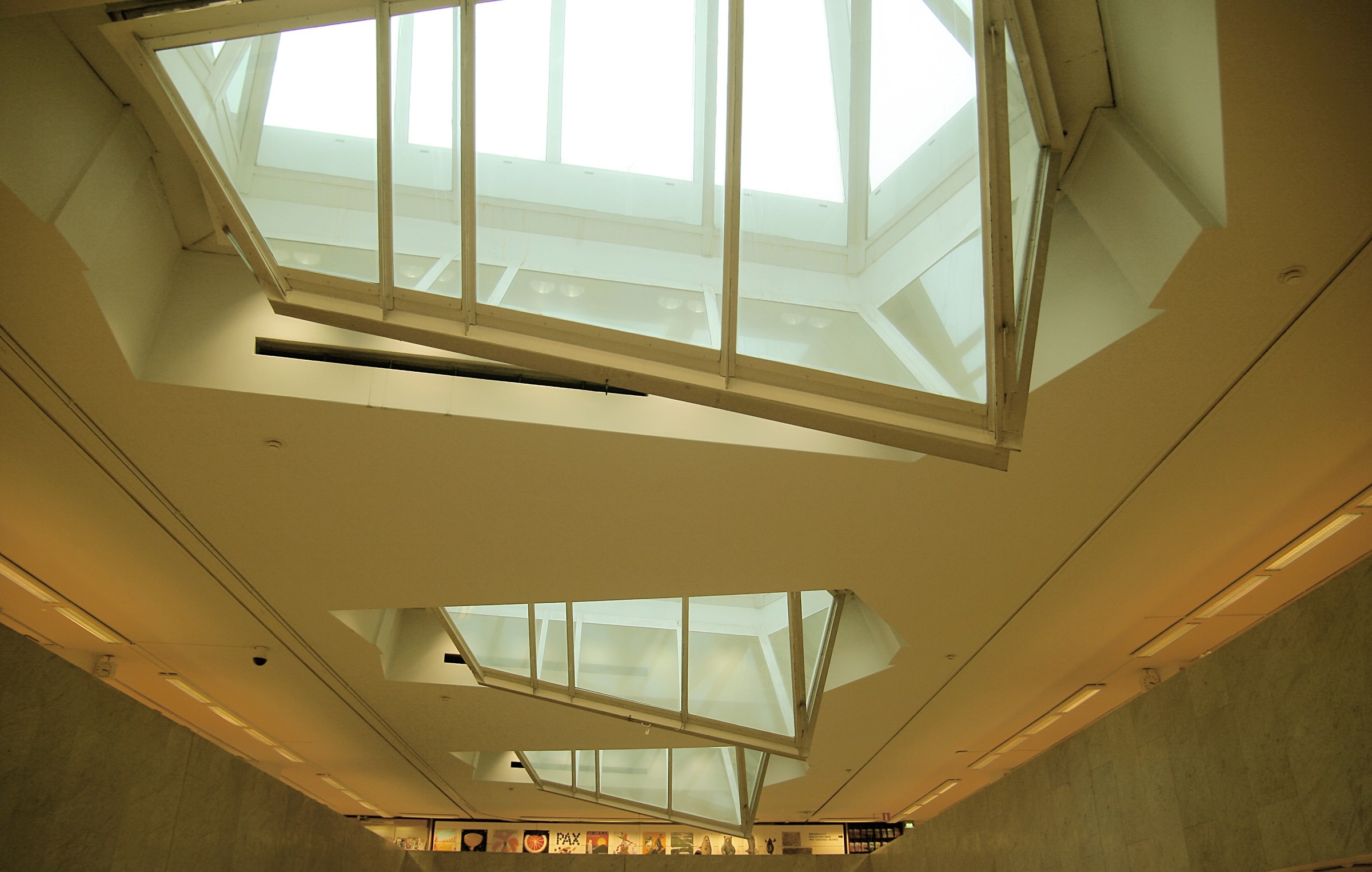
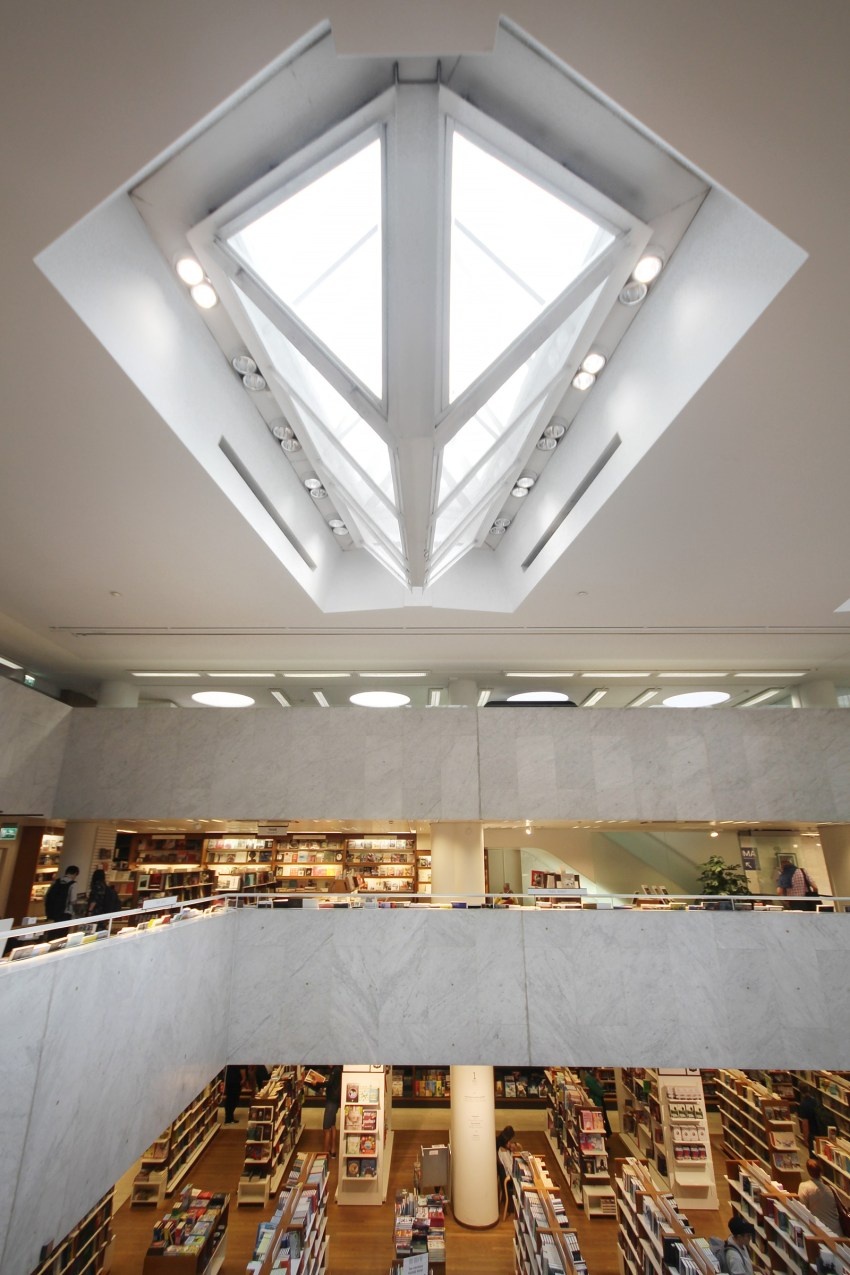
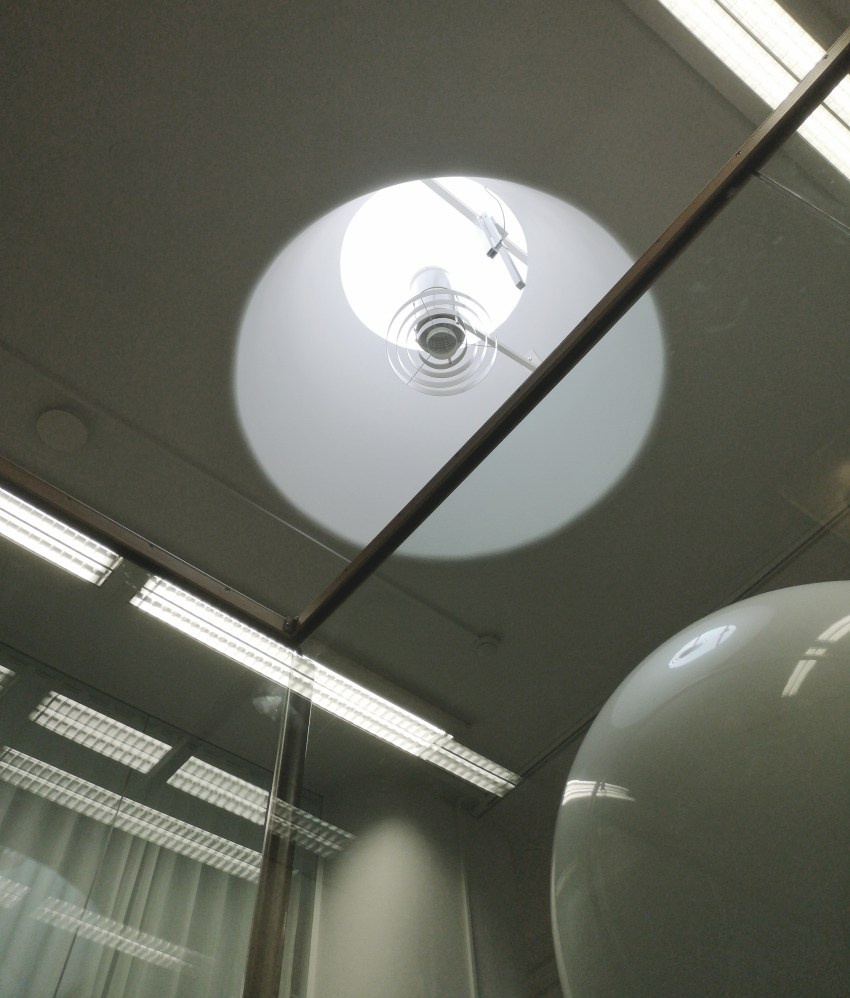
Three prismatic skylights define the interior’s environmental character. Rather than lying flat on the roof, they project downward as faceted glass volumes, making the ceiling appear both constructed and luminous. Their geometry responds to Helsinki’s low sun angles, catching oblique northern light and distributing it into the plan’s depth. The skylights also operate as sculptural devices, giving the hall a roofscape that can be read from below as a sequence of crystalline forms.
Three prismatic skylights define the interior’s environmental character. Rather than lying flat on the roof, they project downward as faceted glass volumes, making the ceiling appear both constructed and luminous. Their geometry responds to Helsinki’s low sun angles, catching oblique northern light and distributing it into the plan’s depth. The skylights also operate as sculptural devices, giving the hall a roofscape that can be read from below as a sequence of crystalline forms.
Carrara marble intensifies this light strategy. Used for the floor and balcony balustrades, the stone reflects daylight laterally and vertically, softening contrasts that would otherwise be severe in a deep urban block. The material also links the bookstore to Aalto’s Rautatalo, where a marble court had already tested the idea of an interior public space. In the Academic Bookstore, the marble is less a sign of luxury than an optical surface, turning the hall into a diffuse reflector.
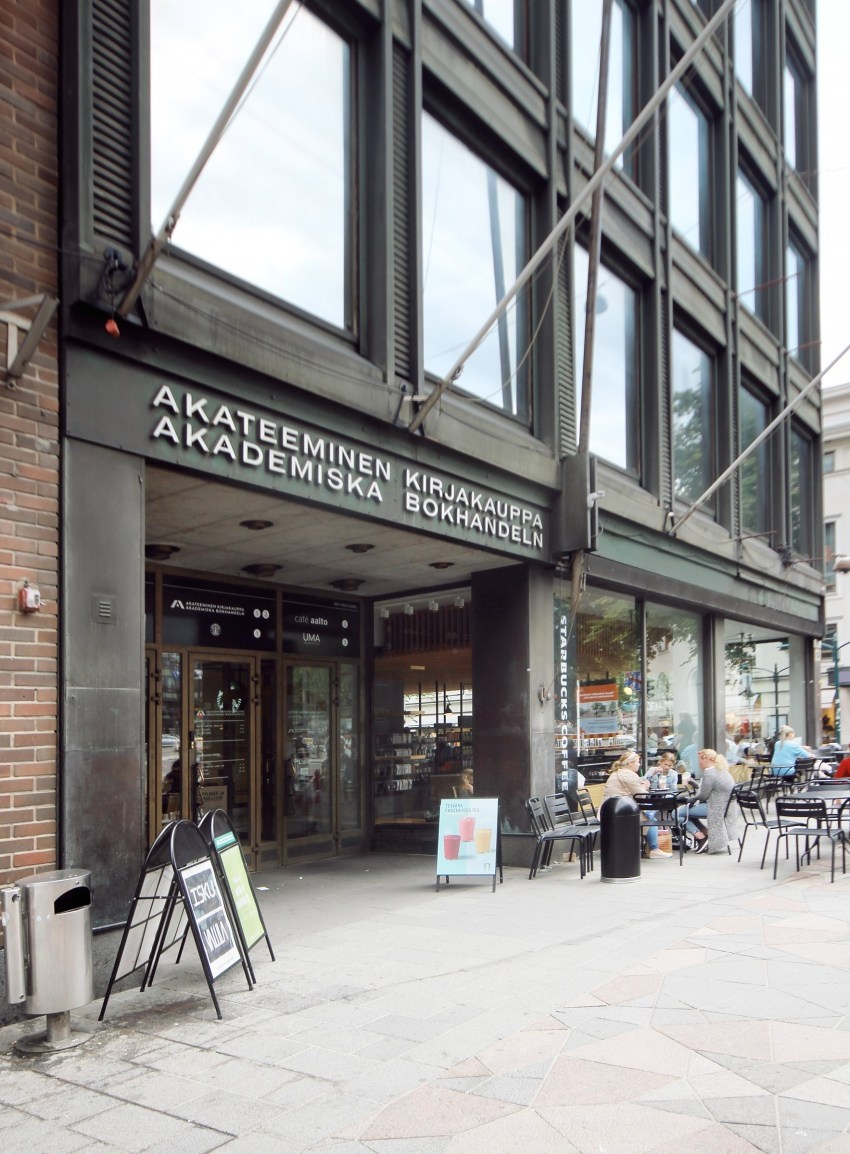
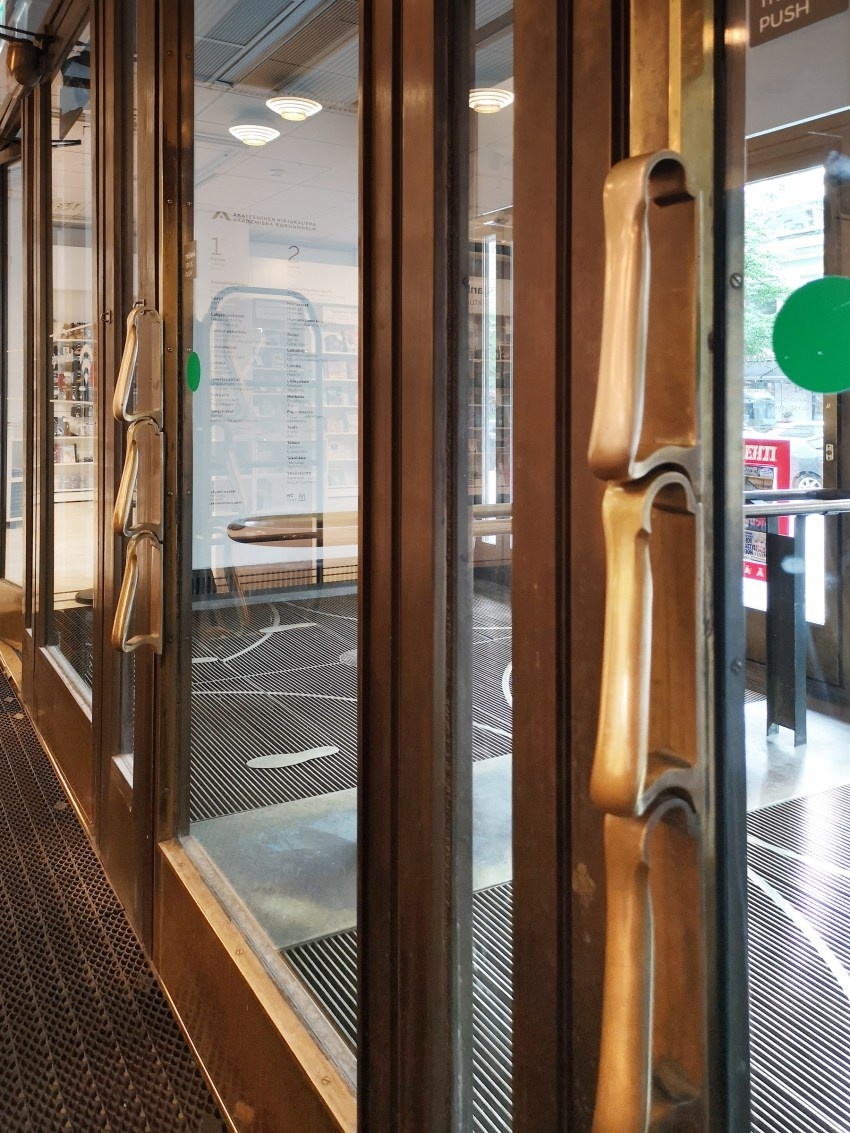
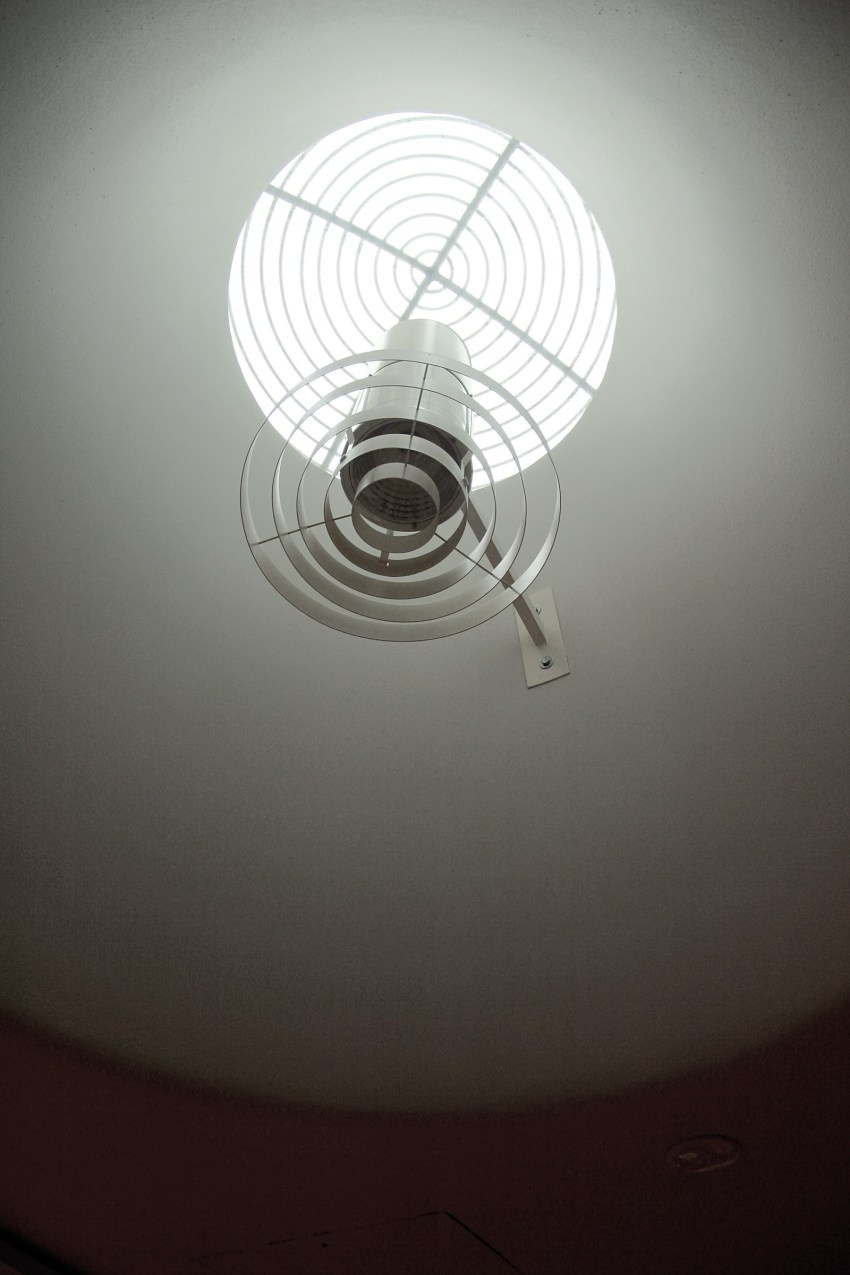
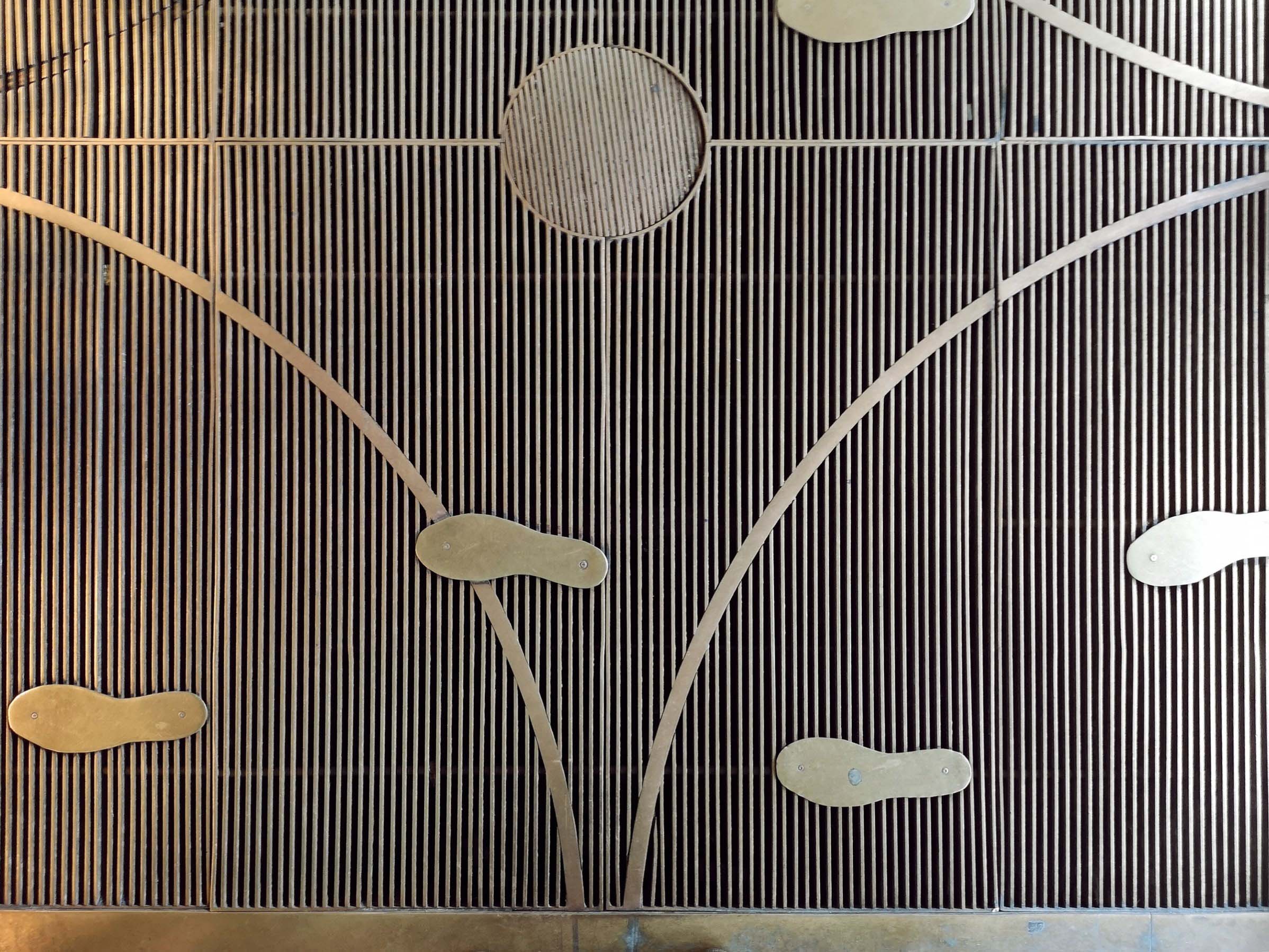
The smaller details extend the same architectural logic. Bronze door pulls, threshold grilles, handrails, lighting coves, and suspended fixtures are not treated as applied decoration. They mediate touch, orientation, and scale. The sculpted handles register the body at the entrance, while ceiling lamps and integrated spotlights supplement daylight without breaking the spatial continuity of the hall. Aalto’s work across furniture, lighting, and architecture is evident in the continuity between the building fabric and the interior atmosphere.
Facade, Context, and Later Adaptation
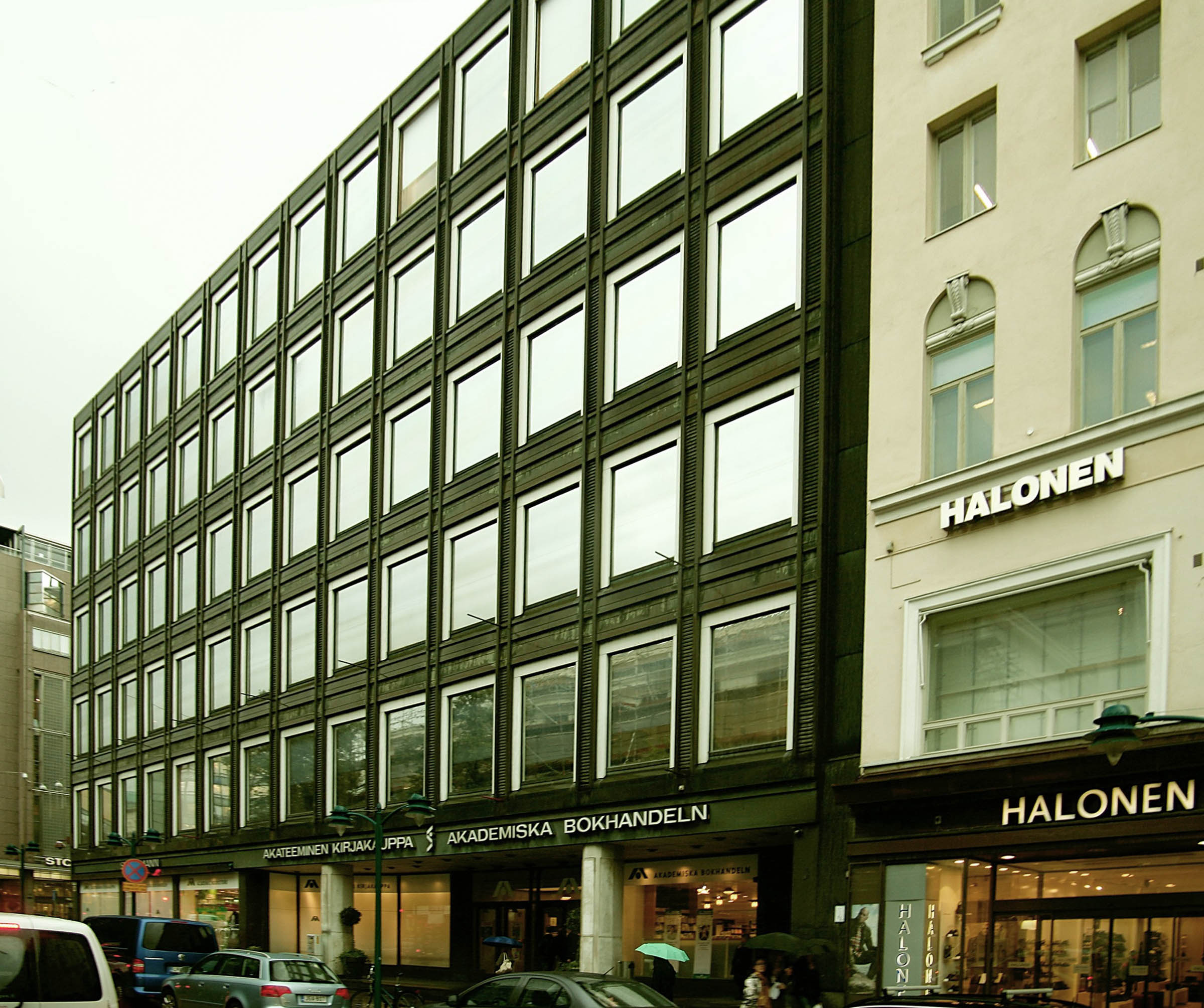
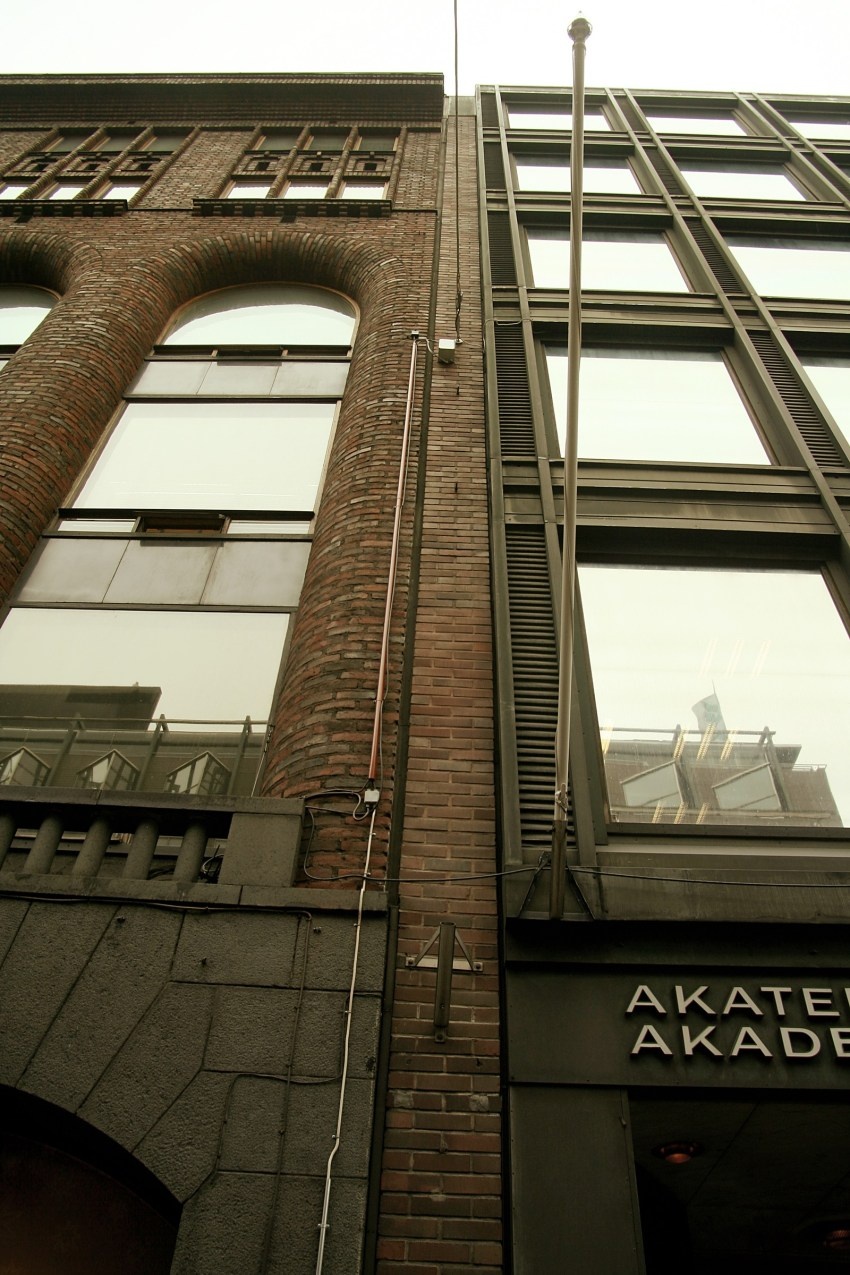
The building presents two distinct urban faces. Along Keskuskatu, the elevation is dark, regular, and metallic, using copper and bronze-toned elements to align with the tighter commercial street and with the adjacent Rautatalo. Toward Pohjoisesplanadi, where the building addresses a broader landscaped axis, the facade is lightened by marble bands around the window openings. Aalto’s own explanation of this adjustment points to a precise reading of street character rather than a uniform facade strategy.
The building presents two distinct urban faces. Along Keskuskatu, the elevation is dark, regular, and metallic, using copper and bronze-toned elements to align with the tighter commercial street and with the adjacent Rautatalo. Toward Pohjoisesplanadi, where the building addresses a broader landscaped axis, the facade is lightened by marble bands around the window openings. Aalto’s own explanation of this adjustment points to a precise reading of street character rather than a uniform facade strategy.
The envelope mediates between modern commercial construction and Helsinki’s inherited urban fabric through restraint. The building accepts the street wall, maintains a disciplined modular order, and avoids formal rupture at the block edge. Its architectural generosity is concentrated inside, where the hall provides the public spatial depth that the facade withholds. This inversion is central to Aalto’s urban method in the city center: the exterior participates in continuity, while the interior constructs a new civic condition.
Later alterations have tested the resilience of this original organization. Office areas were gradually absorbed into the bookstore, confirming that the atrium had always implied a larger public program than the initial tenancy required. Cafe Aalto, added on the second floor in 1986, occupies the balcony edge as an extension of the hall’s social life. These changes have modified the building’s use, but they have not displaced its governing section: a marble room, ringed by books and animated by northern light.
Source: Alvar Aalto, Elissa Aalto
m i l i m e t d e s i g n – w h e r e t h e c o n v e r g e n c e o f u n i q u e c r e a t i v e s
m i l i m e t d e s i g n – w h e r e t h e c o n v e r g e n c e o f u n i q u e c r e a t i v e s


TYPE OF WORKS

Most Viewed Posts









Since 2009. Copyright © 2026 milimetdesign. All rights reserved. Contact: milimetdesign@milimet.com